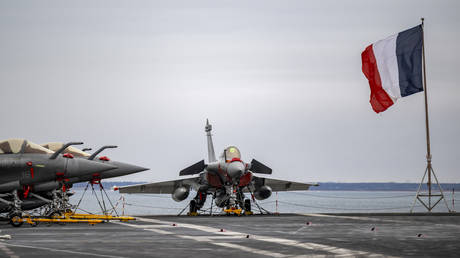
If you think your morning jog is just about closing rings and hitting a personal best, you're missing the bigger picture. In the world of high-stakes military operations, your fitness tracker is essentially a homing beacon. We've just seen this play out in a massive way: a French naval officer accidentally broadcast the exact location of the nuclear-powered aircraft carrier Charles de Gaulle to the entire world, all because he wanted to log a 36-minute run on Strava.
This isn't a plot from a spy novel. It’s the reality of a 2026 where "digital hygiene" is failing at the highest levels. While the French flagship was supposedly on a sensitive mission in the Eastern Mediterranean, one sailor's smartwatch was busy pinging GPS coordinates every few seconds. By the time he hit "save" on his 7-kilometer workout, the secret was out.
How a 36 Minute Jog Exposed a Fleet
On March 13, 2026, the officer—identified by Le Monde as "Arthur"—decided to get some cardio in. He ran laps on the deck of the Charles de Gaulle. Because his Strava profile was set to "public," the app did exactly what it’s designed to do: it mapped his route.
The result was a bizarre-looking GPS trail of tight loops in the middle of the Mediterranean Sea. For any amateur intelligence analyst, it wasn't hard to connect the dots. You don't see people running 8-minute miles in the open ocean unless they're on a massive ship.
- Location: Northwest of Cyprus, about 100 kilometers from the Turkish coast.
- The Fleet: The carrier wasn't alone. It was leading a strike group that includes frigates and a supply ship.
- The Stakes: This happened just days after French President Emmanuel Macron announced the carrier’s deployment to support allies amid escalating regional tensions.
It’s an embarrassing lapse for the French Navy, especially since they've been warned about this before. If a journalist can find a multi-billion dollar warship using a $300 watch, you can bet hostile actors are doing the same.
Why Military Bans Aren't Working
You'd think the military would have a handle on this. Technically, they do. There are strict rules about using personal electronic devices during active deployments. The French Armed Forces General Staff even has a term for it: "digital hygiene." But let’s be real—soldiers are humans. They want to track their fitness, compete with friends, and maintain a sense of normalcy while at sea for months.
The problem is that the "off" switch for location services isn't always as "off" as you think. Even when sailors aren't actively logging a run, apps often collect background data. In this specific case, the officer’s public profile also revealed his past movements in Denmark and Sweden, effectively mapping out the carrier’s entire deployment history over the previous months.
We’ve seen this movie before. Back in 2018, Strava’s "Global Heatmap" accidentally revealed the layouts of secret U.S. bases in Afghanistan and Syria. You could literally see the perimeter fences and patrol routes where soldiers were jogging. Fast forward to today, and we’re still making the same mistakes with higher-value targets.
The Problem With Public Profiles
Most users don't dive into the weeds of privacy settings. Strava, by default, often encourages sharing. It's a social network first and a utility second. For a civilian, a public profile means a "kudos" from a neighbor. For a sailor on a nuclear-powered vessel, it's a target on their back.
It wasn't just Arthur, either. Investigations found other crew members sharing photos of the ship's deck, specialized equipment, and fellow sailors. When you combine geotagged photos with GPS workout logs, you aren't just giving away a location; you're giving away a blueprint of daily operations.
The Larger Trend of Fitness App Leaks
This isn't just a French problem. It's a global security nightmare. Le Monde has been on a tear lately with its "Strava Leaks" series, proving that even the most elite security details are vulnerable.
- Presidential Bodyguards: Movements of security agents for Joe Biden, Donald Trump, and Vladimir Putin have been tracked through their exercise habits.
- Secret Service: Agents have accidentally revealed the hotels where world leaders are staying by logging runs starting and ending at the front door.
- Nuclear Submarines: Even crew members of French nuclear subs—the most secretive assets in any military—have leaked patrol dates by syncing their watches when they finally hit land.
The irony is thick. These are people trained to spot snipers and neutralize threats, yet they’re being undone by a "Quick Edit" pop-up they ignored on their phone.
What Needs to Change Immediately
If you’re in a sensitive position—or even if you just value your own privacy—you need to stop treating these apps like toys. The French military has promised "appropriate measures" against the sailor involved, but punishment doesn't fix a systemic culture of digital carelessness.
Here is the reality of what actually works to keep your data from becoming an intelligence asset:
- Go Dark: If you're in a sensitive area, your profile shouldn't just be "Private"—it should be non-existent.
- The 1-Mile Rule: Use privacy zones to hide the start and end of your workouts. If a spy knows where you start your run, they know where you sleep.
- Manual Uploads Only: Don't let your watch auto-sync. Review the data before it ever hits a server.
- Dumb Your Tech: Sometimes the best fitness tracker is a basic stopwatch and a known distance. It doesn't give you a fancy map, but it also doesn't tell a drone where to find you.
The Charles de Gaulle incident is a wake-up call that most people will probably sleep through. We’re addicted to the data, the gamification, and the social validation of our fitness. But when that data starts mapping out the movements of a nuclear strike group, the cost of those "kudos" becomes way too high.
Check your privacy settings right now. Don't wait until you've accidentally mapped out your office or your home for the world to see. Go to your app settings, find the "Privacy Controls," and set everything to "Only You" until you actually understand what you're sharing. If you don't control your data, someone else will use it for you.