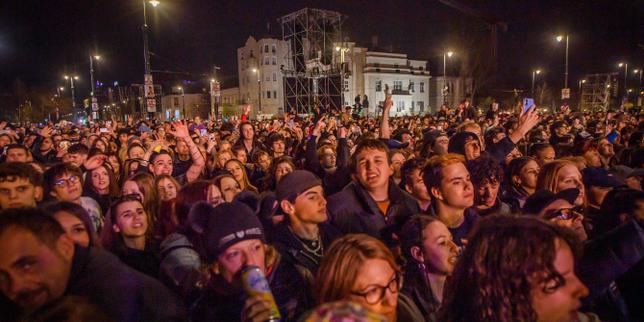
Viktor Orbán has spent over a decade building a fortress of "illiberal democracy" in Hungary. He’s controlled the media, rewritten the constitution, and neutralized most formal political opposition. But he didn't account for a sold-out stadium of Gen Z fans screaming lyrics about the end of his system. What happened recently at the Puskás Aréna isn't just a concert. It’s a shift in the tectonic plates of Hungarian society. For years, the narrative was that young people in Hungary were either apathetic or leaving for Western Europe. That narrative just died.
If you’ve been following Central European politics, you know the vibe has been stagnant. The opposition usually looks tired. They play by old rules. Then comes Azahriah, a twenty-something musician who started as a YouTuber and now sells out three consecutive nights at the national stadium. This is a feat even international superstars struggle to achieve in Budapest. But it’s the crowd's energy—and their sudden, sharp interest in the "end of the system"—that suggests something is breaking in the Fidesz hegemony.
Why Hungarian Youth Are Finally Tuning In
For a long time, the youth stayed out of it. Why wouldn't they? When the government controls the vast majority of local news outlets through the KESMA foundation, politics feels like a rigged game. Young Hungarians grew up in a world where Viktor Orbán was the only leader they really knew. They saw the corruption, the "Lőrinc Mészáros" jokes about the country's richest man and his ties to the Prime Minister, but they didn't see a way out.
That's changed. The "end of the system" concert wasn't just about the music. It was a physical manifestation of a digital rebellion. These kids don't watch state TV. They don't read the government-subsidized newspapers. They live on TikTok, YouTube, and Spotify. In these spaces, the government’s propaganda machine is less effective. When Azahriah or other artists like Krúbi poke fun at the regime, it doesn't feel like a dry political speech. It feels like a shared secret. It’s cool to be against the system again.
The numbers don't lie. We’re talking about tens of thousands of people under 30 gathered in one place, nodding along to critiques of a government that prides itself on "family values" while many feel those very values are a smokescreen for cronyism. It’s a wake-up call for the ruling party. They’ve lost the narrative with the next generation.
The Peter Magyar Factor and the New Resistance
You can't talk about the current political climate in Hungary without mentioning Peter Magyar. He’s the ultimate insider-turned-whistleblower who has electrified the protest scene. While the concert was a cultural moment, Magyar’s rise is the political equivalent. He’s managed to do what the traditional opposition couldn't: talk to Fidesz voters in a language they understand.
Young people see Magyar as a disruptor. He’s slick, he knows where the bodies are buried, and he’s using social media to bypass the state’s information blockade. When you combine his political momentum with the cultural weight of artists who aren't afraid to speak up, you get a volatile mix. The "system" isn't just a political structure anymore; it’s a target for cultural ridicule.
Look at the protests that followed the clemency scandal involving a pedophile’s accomplice. That was a turning point. It wasn't just the usual activists on the streets. It was influencers. People with millions of followers who usually post about fashion or gaming suddenly started talking about child protection and government accountability. This cross-pollination of pop culture and hard-nose politics is exactly what the Orbán government fears most. They know how to fight a political party. They don't know how to fight a vibe.
How the Information Blockade Cracked
The Hungarian government’s grip on information is legendary. By funneling advertising revenue to friendly outlets and using the state media as a mouthpiece, they created a bubble. If you live in a rural village, your only source of news might be a pro-government radio station or a local paper owned by an Orbán ally.
But the internet is the great equalizer. Even in the countryside, kids have smartphones. They see the contrast between the "prospering Hungary" depicted on the news and the reality of an education system in shambles and a healthcare sector that’s bleeding staff. When a popular singer mentions these issues during a set, it validates the frustration of the audience.
It’s not just about the lyrics. It’s about the community. Standing in a crowd of 40,000 people who feel the same way makes you realize you’re not the "fringe" or the "foreign-funded agent" the government says you are. You’re the majority of your generation. That realization is a powerful drug. It turns apathetic bystanders into voters.
The Economic Reality No Spin Can Hide
Let's get real about the economics. Hungary has dealt with some of the highest inflation rates in the EU recently. Food prices skyrocketed. While the government blames "Brussels" or the war in Ukraine, young people looking at their grocery bills aren't buying it. They see their peers in Austria or Germany earning three times as much for the same work.
The "Hungarian Dream" being sold by the government—one of stability, traditionalism, and sovereignty—doesn't pay the rent in Budapest. Gen Z is facing a housing crisis that the government’s subsidized loan programs (like CSOK) have actually exacerbated by driving up property prices. This isn't just a "liberal vs. conservative" debate. This is a "can I afford to live here" debate.
When a concert becomes a rally, it’s because the music reflects this material reality. The lyrics tackle the feeling of being trapped in a country that feels like it’s moving backward while the rest of the world moves on. This isn't a theoretical concern. It’s a daily struggle.
Why This Isn't Just Another Protest
We’ve seen protests in Budapest before. In 2014, it was the internet tax. In 2018, it was the "slave law." Each time, the government waited them out or made minor concessions and then moved on. But this feels different. The demographic has shifted.
The people at the "end of the system" concert aren't the same people who have been protesting since 2010. These are new faces. They don't carry the baggage of the failed 2006 socialist government that Orbán still uses as a bogeyman. You can’t blame a 19-year-old for the mistakes of a politician who was in power when they were in diapers.
The government’s usual tactics aren't working. Labeling a Gen Z pop star as a "Soros agent" just makes the government look out of touch and desperate. It’s a comedy of errors. The more the state media tries to discredit these cultural figures, the more they cement their status as heroes to their fans.
Organizing Outside the Box
The most impressive part of this movement is the organization. It’s decentralized. There’s no single "leader" that the government can smear or buy off. It’s a network of influencers, musicians, and regular citizens who are fed up. They use platforms like Discord and Telegram to coordinate. They raise money through crowdfunding, bypassing the state-controlled funding mechanisms.
This level of grassroots engagement is what makes the "this youth cares about politics" headline so significant. It’s not just a hobby. It’s a survival strategy. They’ve realized that if they don't take an interest in politics, politics will continue to take an interest in them—and not in a good way.
The concert was a proof of concept. It showed that you can mobilize a massive, young audience around a message of change without the help of traditional political parties. It’s a blueprint for the future. If this energy can be sustained and translated into actual votes in the upcoming elections, the "system" might really be facing its end.
What You Can Do Right Now
If you’re watching this from the outside, or if you’re a young Hungarian looking for a way to get involved, the path forward is clear. Stop waiting for a savior. The savior isn't a single politician; it’s the collective realization that the status quo is a choice.
- Diversify your news sources. Get out of the echo chambers. Read independent outlets like Telex or 444, but also look at international reporting to see the bigger picture.
- Support independent culture. The artists who speak up take risks. Their careers can be sidelined by state-controlled venues or festivals. Vote with your wallet.
- Talk to your family. The biggest divide in Hungary is often the dinner table. Talk to your parents and grandparents about why you’re worried. They might watch state TV, but they care about you more than they care about the news.
- Register and vote. It sounds cliché, but it’s the only way the "vibe" becomes law. The youth vote is the most untapped resource in the country.
The era of apathy is over. The stadium is full, the music is loud, and the system is finally hearing the noise. Don't let the momentum fade once the lights go down. Turn the energy of the concert into the work of the everyday. That’s how systems actually end.