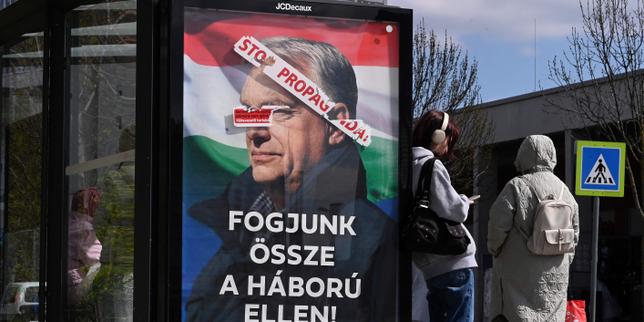
Walk through District V in Budapest as the sun dips below the Danube, and you will see a city that looks like a fortress of stability. The neo-Gothic spires of the Parliament glow with a defiant, golden permanence. For nearly fifteen years, this has been the stage of Viktor Orbán, a man who didn't just win elections but redefined the very physics of Hungarian politics. But look closer at the faces in the coffee houses away from the tourist tracks. There is a specific kind of exhaustion there. It is not the sharp pain of a sudden crisis. It is the heavy, grinding fatigue of a machine that has been running too hot, for too long, on the same set of gears.
Power does not always break. Sometimes, it simply wears thin.
In the hallways of the Carmelite Monastery—the Prime Minister’s seat—the air is thick with the scent of a long-standing incumbency. Viktor Orbán has survived everything: the 2008 financial crash, the migration crisis, clashes with Brussels, and the shifting tides of the White House. He built a system known as the "Illiberal Democracy," a structure designed to be an immovable object. Yet, even the most immovable objects are subject to friction. Today, that friction is coming from a source the Fidesz party never truly anticipated: the boredom and betrayal of their own.
The Man in the Mirror
Consider a hypothetical voter named András. He is fifty-two, lives in a mid-sized town like Székesfehérvár, and has voted for Fidesz in every election since 2010. For a decade, András felt like he was part of a winning team. He saw the new stadiums rise, felt the pride of a nationalist rhetoric that told him Hungary was a David standing up to the European Goliath, and enjoyed the family tax credits that put a few extra forints in his pocket.
But recently, the magic has curdled. When András goes to the grocery store, the prices aren't just higher; they are unrecognizable. Hungary has faced some of the highest inflation rates in the European Union, at points soaring above 25 percent. The "Hungarian Miracle" now feels like a ledger of rising costs. The narrative of the "Brussels sanctions" causing the pain has started to lose its punch. When you can’t afford the same quality of meat you bought three years ago, the geopolitical explanations start to sound like white noise.
This is the "usure du pouvoir"—the wearing down of power. It is the moment when the grand national myths collide with the reality of a leaky roof and a failing school system.
The Ghost in the System
The most dangerous thing for a long-term leader isn't a strong opposition; it is a mirror image of themselves. For years, Orbán benefited from a fragmented, almost comical opposition that couldn't agree on a lunch menu, let alone a platform. He lived in a world where he was the only serious person in the room.
Then came Péter Magyar.
Magyar wasn't an outsider. He was a creature of the system, an insider who knew where the skeletons were buried because he helped dig the graves. When he turned, the impact was seismic. It wasn't just another liberal protest in Budapest; it was a family feud made public. His rise signaled that the inner circle was no longer a monolith. When the people at the top start looking for the exits, the people at the bottom start looking for a new leader.
The scandal involving a presidential pardon in a child abuse case was the catalyst. It was the "black swan" event that no amount of state-controlled media could fully suppress. It struck at the very heart of the Fidesz brand: the defense of family values and the protection of children. For the first time in a decade, the fortress looked porous.
The Cost of an Eternal Enemy
To keep a populist engine running, you need fuel. That fuel is usually an enemy. Over the years, the Orbán administration has cycled through them with the efficiency of a factory: George Soros, the IMF, migrants, the EU bureaucracy, and "gender ideology."
But there is a psychological limit to living in a state of perpetual mobilization.
Imagine living in a house where the alarm system is screaming twenty-four hours a day. The first hour, you are terrified. The second day, you are alert. By the third year, you just want to find the wires and snip them so you can finally sleep. The Hungarian public is reaching that point of sensory overload. The "war" against external influences has become a background hum. It no longer triggers the same adrenaline.
Without the adrenaline, all that remains is the infrastructure of the state, and that infrastructure is showing signs of neglect. While billions of euros were funneled into elite-driven projects and friendly oligarchs, the public health system and the education sector began to groan. Teachers took to the streets not just for better pay, but for the basic dignity of a functional classroom. These are not professional revolutionaries; these are the people who form the spine of the nation. When the spine starts to ache, the body cannot stand straight.
The European Checkmate
Money is the ultimate lubricant of politics, and for the first time, the taps are running dry. The ongoing dispute with the European Commission over the rule of law has frozen billions in funding. For years, Orbán played a brilliant game of "veto poker," holding EU decisions hostage to extract concessions. It worked—until it didn't.
Brussels has grown tired of the game. The "Orbán fatigue" in the European Parliament is mirrored by the "EU fatigue" back home. The Prime Minister is trapped in a paradox: he needs the EU’s money to keep his domestic base happy, but he needs to attack the EU to keep his political narrative alive. You cannot indefinitely bite the hand that feeds you while simultaneously complaining that the meal is too small.
The geopolitical landscape has shifted beneath his feet as well. The once-solid Visegrád Four alliance—Hungary, Poland, Czechia, and Slovakia—is fractured. The war in Ukraine changed everything. Orbán’s continued "pragmatic" (some would say cozy) relationship with the Kremlin has isolated him from his most natural allies in Warsaw. Being a lone wolf is heroic in a movie; in international diplomacy, it is just being alone.
The Quiet Erosion
The erosion of power doesn't happen with a bang. It happens in the grocery aisles. It happens when a young graduate decides that their future isn't in Debrecen, but in Berlin or London, taking their talents and their taxes with them. It happens when a grandmother realizes her pension can no longer buy the medicine she needs, despite the flags flying high in the town square.
Orbán remains a formidable politician. He is a master of the chess board, capable of moves that catch his enemies off guard. He still controls the vast majority of the media landscape. He still has a core of devoted followers who see him as the only thing standing between Hungary and a sea of globalist chaos.
But the rust is there. It is in the cracks of the party’s discipline. It is in the rising polling numbers of new, charismatic challengers. It is in the simple, devastating fact that after fourteen years, you can no longer blame the previous government for the current mess.
The golden spires of the Parliament still reflect in the Danube. The statues are still in place. The speeches are still loud. But the foundation is no longer made of the solid rock of a national mandate. It is becoming a shifting sand of economic anxiety and a deep, cultural yearning for something—anything—new.
History is rarely kind to those who stay at the party until the sun comes up and the music stops. Viktor Orbán is realizing that the hardest part of building an eternal system is that eventually, the people inside it grow tired of eternity. They just want a tomorrow that looks different from today.
The light over the river is changing. The golden hour is passing, and the long, cold shadows of the evening are beginning to stretch across the stone.