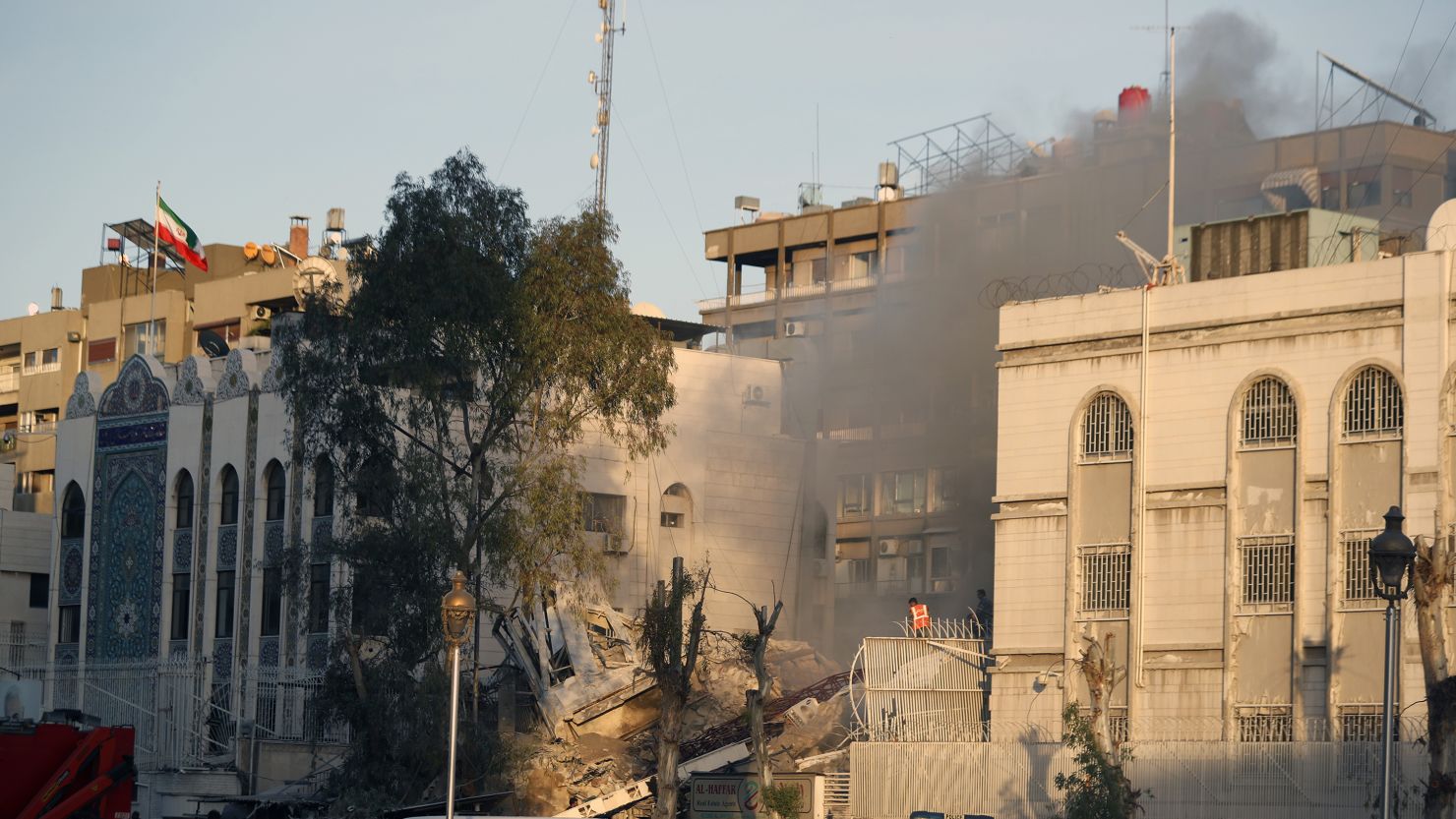
The targeted elimination of high-ranking Iranian officials, specifically figures like Ali Larijani—a veteran of the Islamic Republic’s inner circle and a frequent intermediary in regional backchannels—represents a fundamental shift in the cost-benefit calculus of Middle Eastern gray-zone warfare. This transition moves from a paradigm of managed friction to one of systemic decapitation, where the objective is no longer to deter specific actions but to dismantle the command-and-control architecture of the Iranian "Axis of Resistance." Understanding this shift requires a rigorous decomposition of the geopolitical variables: the erosion of red lines, the failure of legacy deterrence models, and the specific strategic functions Larijani served before his removal from the board.
The Triad of Iranian Strategic Depth
To analyze the impact of losing a senior advisor and negotiator, one must first categorize the three pillars that sustain Iran’s regional influence. The removal of a key architect affects these pillars unevenly, creating specific structural vulnerabilities.
- The Diplomatic-Ideological Vector: This involves the cultivation of state and non-state alliances through shared religious or anti-imperialist narratives. Larijani was a primary operator here, bridging the gap between the ideological rigidity of the IRGC (Islamic Revolutionary Guard Corps) and the pragmatic requirements of international diplomacy.
- The Kinetic Proxy Network: This is the operational arm, consisting of Hezbollah, Hamas, the Houthis, and various PMF groups in Iraq. While the IRGC-Quds Force manages the logistics, the strategic "green lighting" of major escalations often requires the consensus of senior figures who understand the broader geopolitical blowback.
- The Nuclear Hedge: This serves as the ultimate insurance policy. Any threat to the survival of the Iranian regime, such as the assassination of its most senior political assets, accelerates the internal logic for weaponization as the only remaining credible deterrent.
The Deterrence Decay Function
The core problem in the current US-Israel-Iran standoff is a phenomenon known as "deterrence decay." Traditional deterrence relies on the credible threat of a response that outweighs the benefit of an initial strike. However, when one side—in this case, Israel—perceives an existential threat or a unique window of opportunity, the cost of inaction begins to outweigh the cost of escalation.
This creates a feedback loop. Israel identifies a high-value target (HVT) whose removal degrades the enemy's coordination. Iran, feeling the pressure of these tactical losses, feels compelled to respond to maintain its "prestige" and prevent further internal dissent. Yet, if the Iranian response is calibrated to avoid a full-scale war, it is often interpreted by Israeli intelligence as a sign of weakness, which in turn justifies the next high-profile assassination. This cycle continues until a catastrophic threshold is crossed.
The "Larijani Warning" before his death serves as a case study in this decay. When a negotiator warns of "red lines" that have already been crossed without significant consequence, the warning loses its signaling value. It becomes noise rather than a credible threat.
Mechanisms of Tactical Decapitation
The strategy of targeting senior advisors like Larijani is built on the premise that certain individuals possess "institutional glue"—a combination of personal relationships, historical memory, and bureaucratic navigation skills that cannot be easily replaced by a successor.
- Network Fragmentation: The removal of a central node in a communication network forces the remaining nodes to communicate more frequently or via less secure channels, increasing their visibility to SIGINT (Signals Intelligence).
- Decision-Making Paralysis: In highly centralized authoritarian systems, the loss of a trusted advisor creates a vacuum. Subordinates become risk-averse, fearing that any decision made without the deceased leader's input could lead to political or literal execution if it fails.
- Intelligence Infiltration: The ability to strike a high-ranking official in a supposedly secure location (whether in Damascus, Beirut, or Tehran) suggests a deep compromise of the target's inner circle. This breeds paranoia within the regime, leading to internal purges that further degrade operational efficiency.
The Cost Function of Iranian Retaliation
Iran’s response to the loss of top-tier assets is constrained by a specific set of economic and military variables. It is a mistake to view Iranian "patience" as a lack of will; it is an exercise in resource optimization.
- Domestic Economic Stability: With inflation rates fluctuating and sanctions weighing on the energy sector, a full-scale war would likely trigger internal unrest. The regime must weigh the survival of the state against the need for revenge.
- Proximal Vulnerability: Hezbollah, Iran's most potent deterrent, is currently embroiled in its own survival struggle. Using Hezbollah's precision-guided munitions (PGMs) in a retaliatory strike for an Iranian official risks depleting the very arsenal meant to prevent an Israeli strike on Iran's nuclear facilities.
- Asymmetric Options: This is where the risk is highest for the US and its allies. If conventional military responses are too risky, Iran pivots to cyber warfare, maritime disruption in the Strait of Hormuz, or targeting Western assets in "soft" jurisdictions (Latin America, Africa, or Southeast Asia).
The Miscalculation Threshold
The most dangerous element of the current landscape is the "Information Gap." Israeli intelligence may believe they have mapped Iranian red lines accurately, while Iranian leadership may believe their warnings are being taken seriously.
When Larijani or similar figures issue warnings, they are attempting to calibrate the "escalation ladder." If the US or Israel misinterprets these signals as mere rhetoric, they may take an action—such as striking a target inside Iran’s sovereign borders or hitting a member of the supreme leadership's immediate circle—that triggers an automatic, uncalibrated response.
The logic of "maximum pressure" assumes that the target will eventually buckle. However, historical data on besieged regimes suggests that once a certain level of elite attrition is reached, the regime ceases to act rationally and instead moves toward a "Sampson Option," where the goal is to inflict maximum damage on the adversary regardless of the cost to oneself.
Realigning the Strategic Compass
The removal of Ali Larijani is not a standalone event but a signal that the "gray zone" has narrowed to a razor's edge. For regional players and global powers, the following structural realities now dictate the path forward:
The efficacy of HVT (High-Value Target) strikes is diminishing. While they provide short-term tactical advantages and satisfy domestic political demands for "action," they do not address the underlying proliferation of drone technology or the decentralized nature of proxy command structures. In fact, they may accelerate the transition toward more autonomous, harder-to-track cell structures within the Axis of Resistance.
Deterrence must be rebuilt on clear, communicated, and enforceable boundaries rather than ambiguous threats. The current "tit-for-tat" model is a race to the bottom where the final move is a regional conflagration that no party can afford.
The strategic play is to recognize that decapitation is a tool, not a strategy. The focus must shift from "who can we kill next" to "how do we reorganize the regional security architecture to make these individuals irrelevant." This requires a combination of robust missile defense (to nullify the proxy threat) and a diplomatic channel that is isolated from the kinetic theater—a channel that, ironically, figures like Larijani were once uniquely positioned to maintain.
The window for a managed de-escalation is closing. The next move will not be a warning; it will be a systemic shock.


