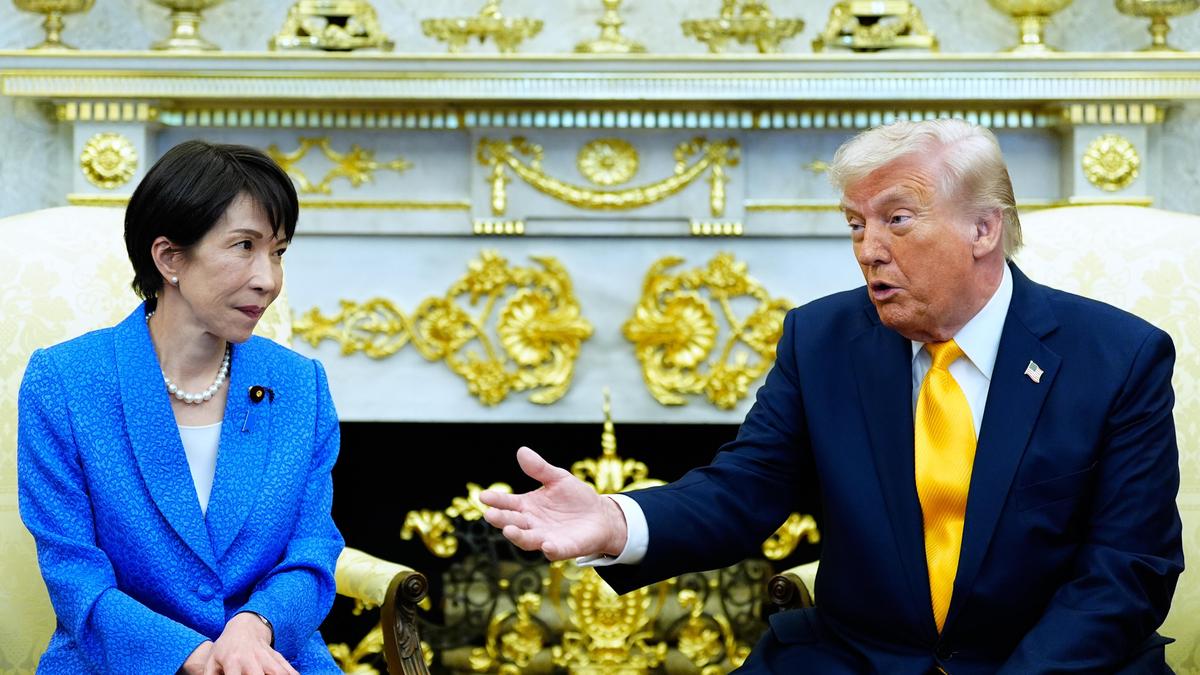
The utilization of historical trauma as a diplomatic instrument functions as a high-stakes signaling mechanism designed to reset bilateral expectations. When a U.S. President draws a parallel between the 1941 attack on Pearl Harbor and contemporary kinetic actions against Iranian military assets—specifically in the presence of a Japanese Prime Minister—the objective is not historical accuracy. It is the application of a Categorical Imperative of Deterrence. By invoking the precise event that forced a shift from isolationism to total war, the administration communicates a transition in its Rules of Engagement (ROE) from proportional response to "maximum pressure" escalation.
The Logic of Comparative Escalation
Geopolitical analogies serve as cognitive shortcuts for state actors to define the "Cost of Inaction." To understand the strategic intent behind the Pearl Harbor-Iran comparison, one must deconstruct the components of the analogy through the lens of Asymmetric Deterrence Theory.
- The Intent Component: Pearl Harbor represents a "Bolt from the Blue" (BFTB) attack—unprovoked, surprise aggression intended to decapitate a fleet. By mapping this onto Iranian activities (such as drone strikes, maritime harassment, or proxy militia actions), the U.S. executive branch redefines Iranian regional maneuvers as existential threats rather than manageable friction.
- The Response Component: The historical outcome of Pearl Harbor was not a limited strike; it was the total mobilization of the American industrial-military complex. This creates a "Shadow of the Future" where the adversary is warned that further escalation will trigger a non-linear, scorched-earth response.
- The Audience Component: Delivering this message alongside a Japanese leader is a calculated maneuver in Relational Diplomacy. It acknowledges Japan’s transition from a former adversary to a cornerstone security partner, effectively suggesting that those who strike the U.S. face two binary outcomes: total destruction or eventual total realignment under U.S. hegemony.
The Triad of Modern Iranian Kinetic Friction
To move beyond the rhetoric, we must categorize the specific friction points that the U.S. administration is attempting to solve via this analogy. These are not isolated incidents but parts of a Distributed Conflict Model.
1. The Maritime Chokepoint Variable
The Strait of Hormuz acts as a global economic jugular. When Iran utilizes "gray zone" tactics—limpet mines, fast-attack craft harassment, or drone surveillance—it creates a volatility premium in global energy markets. The Pearl Harbor analogy signals that the U.S. views the security of these sea lines of communication (SLOCs) with the same gravity it viewed the Pacific Fleet in 1941.
2. Proportionality vs. Disproportionality
International law generally dictates a proportional response to military provocation. However, the Pearl Harbor reference intentionally breaks the proportionality logic. It suggests a shift toward Punitive Deterrence, where the cost inflicted on the provocateur (Iran) will be orders of magnitude higher than the initial offense.
3. The Proxy Attribution Problem
A significant hurdle in U.S.-Iran relations is the "deniability" afforded by Iranian-backed proxies in Iraq, Syria, and Yemen. By invoking a direct state-on-state conflict like World War II, the administration is effectively collapsing the distinction between the proxy and the patron. The strategic message is clear: the U.S. will hold the central node (Tehran) accountable for the actions of its peripheral assets.
Decoding the Diplomatic Friction with Japan
The presence of the Japanese Prime Minister during this rhetorical exercise introduces a complex layer of Bilateral Stress Testing. Japan’s constitutional constraints (Article 9) and its historical reliance on Middle Eastern oil create a divergence in risk tolerance between Washington and Tokyo.
Japan’s strategic calculus is governed by the "Energy Security vs. Alliance Cohesion" trade-off. While the U.S. seeks to escalate rhetorical pressure to achieve deterrence, Japan often prefers a Mediator Paradigm. Invoking Pearl Harbor in the presence of a Japanese leader forces Tokyo into a difficult symbolic position: it must either validate the U.S. narrative of "righteous retaliation" or risk appearing out of sync with its primary security guarantor.
The effectiveness of this tactic depends on the Credibility of the Threat. If the U.S. uses the Pearl Harbor analogy but fails to act decisively when red lines are crossed, the analogy degrades from a strategic signal to "rhetorical inflation." This inflation lowers the cost for adversaries to test U.S. resolve, as they begin to view American statements as decoupled from American kinetic intent.
The Cost Function of Historical Hyperbole
While the analogy serves a specific signaling purpose, it carries inherent systemic risks that can destabilize the very regions it aims to secure.
- Diplomatic Alienation: European and Asian allies often view World War II analogies as inflammatory. This creates a "decoupling" effect where allies seek independent backchannels to Tehran to avoid being dragged into a "total war" scenario they did not sign up for.
- The Escalation Ladder Problem: When a state defines an adversary’s actions as equivalent to Pearl Harbor, it leaves very little room for de-escalation. Once the "total war" comparison is made, accepting a diplomatic compromise can be framed domestically as "appeasement," a term also loaded with World War II baggage.
- Intelligence Misalignment: Strategic analysts must distinguish between "Aggressive Posturing" and "Imminent Hostility." If the analogy causes Iran to believe a preemptive U.S. strike is inevitable (based on the Pearl Harbor precedent), Iran may be incentivized to strike first—creating a self-fulfilling prophecy known as the Security Dilemma.
Structural Vulnerabilities in the Maximum Pressure Framework
The transition from "strategic patience" to "strategic analogy" reveals a reliance on psychological warfare to compensate for a lack of regional consensus. The U.S. is attempting to solve a multi-variable problem (nuclear proliferation, regional hegemony, and maritime security) with a single-variable tool (threat of overwhelming force).
The bottleneck in this strategy is the Economic Resilience of the Target. Sanctions and rhetorical threats assume the target will eventually reach a breaking point. However, if the target (Iran) views the survival of its regime as being at stake—much like the Japanese Empire did after the 1941 oil embargo—the "Maximum Pressure" may actually accelerate the timeline toward kinetic conflict rather than preventing it.
Precision in definitions is required here. The U.S. is not currently in a state of "War" as defined by the Constitution or international law. It is in a state of Active Containment. Using "War" rhetoric during "Containment" phases creates a misalignment between public expectations and military reality.
The Operational Reality of Kinetic Strikes
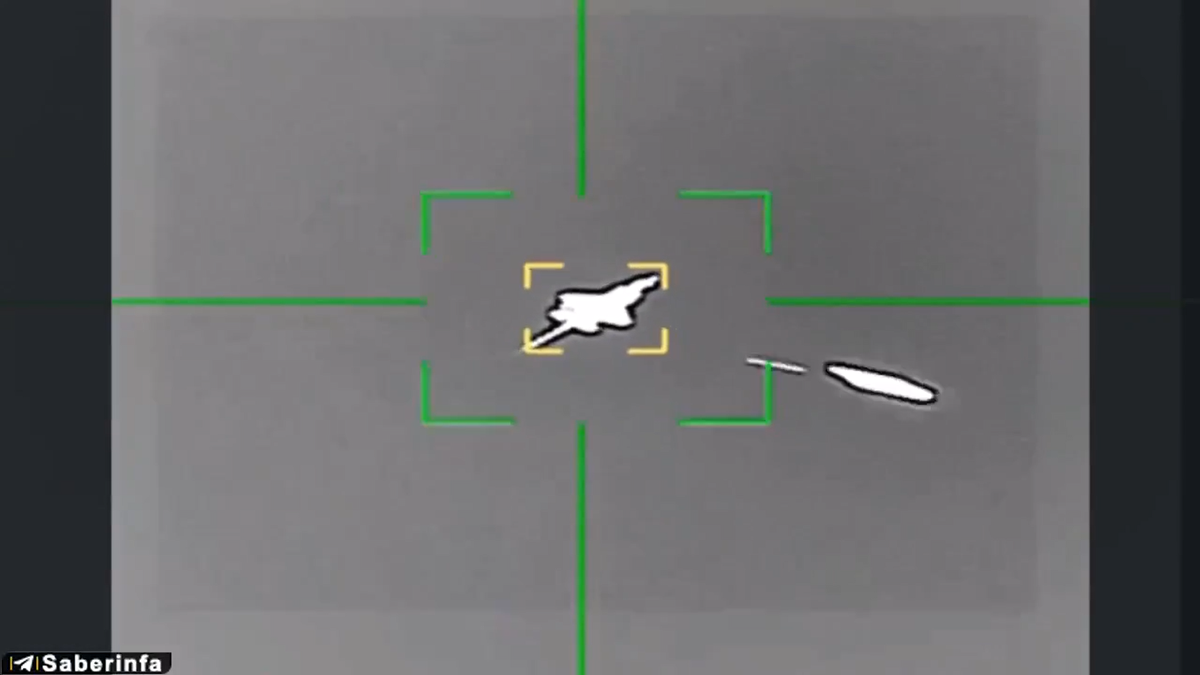
When the U.S. executes strikes—such as those targeting high-level military commanders or drone manufacturing sites—the "Pearl Harbor" framing serves as a retroactive justification. It moves the conversation from the legality of the strike to the necessity of the strike.
From a consultant’s perspective, this is an exercise in Narrative Asset Management. The administration is "spending" its historical capital to "purchase" domestic and international leeway for future military operations. The ROI (Return on Investment) of this strategy is measured by the degree to which Iran curtails its activity without the U.S. having to actually engage in a full-scale conflict.
The structural limitation of this approach is its "one-time-use" nature. You can only compare an event to Pearl Harbor or 9/11 a few times before the shock value diminishes and the audience becomes desensitized.
Strategic Vector Assessment
To navigate the current geopolitical volatility, decision-makers must treat the Pearl Harbor analogy as a data point in a broader Escalation Management Matrix.
The immediate tactical requirement is to decouple the "rhetorical signal" from "operational necessity." Allied nations should anticipate a continued use of high-variance analogies as a tool to maintain unpredictability in the Middle East. For corporate and energy interests, this signals a period of "High Regime Volatility," where the risk of sudden, non-linear market disruptions is elevated.
The objective for the U.S. is to achieve "Compellence"—getting the adversary to stop an action they have already started. The Pearl Harbor reference is the psychological component of this compellence. Success will not be found in the historical accuracy of the comparison, but in whether the comparison creates enough cognitive dissonance in Tehran to force a recalculation of their proxy-war costs.
Monitor the "Action-to-Rhetoric Ratio" over the next fiscal quarter. If kinetic actions decrease while the intensity of the analogies remains high, the deterrence is holding. If Iranian activity increases despite the high-level rhetoric, the signaling mechanism has failed, and a shift toward a more costly, direct military engagement becomes the baseline expectation. Establishing a robust backdoor communication channel is the only way to mitigate the risk of a "miscalculation-led escalation" triggered by this high-intensity rhetoric.