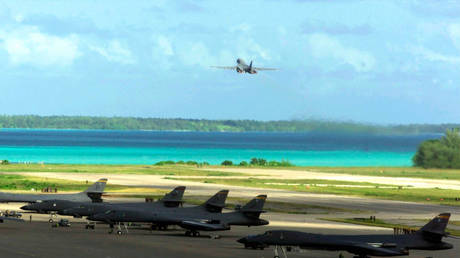
The global economy hinges on a narrow stretch of water that Donald Trump may soon turn into a geopolitical cage. If the returning administration follows through on threats to blockade or aggressively interdict Iranian oil tankers in the Strait of Hormuz, the fallout will not stay in the Middle East. It will land directly on the desk of Xi Jinping. This isn’t just about energy prices. It is a calculated move to strip China of its primary economic lifeline before a single diplomat sits down at a summit table. The strategy is clear. By choking the flow of sanctioned oil, Washington intends to force Beijing into a position of total desperation, effectively sabotaging any chance of a balanced bilateral agreement before negotiations even begin.
The Chokepoint as a Diplomatic Bludgeon
Military analysts and energy traders have long viewed the Strait of Hormuz as the world’s most sensitive artery. Roughly 20 percent of the world’s liquid petroleum passes through this corridor. For China, the stakes are existential. Beijing has spent the last decade building a "no-limits" partnership with Iran, largely to secure a steady flow of discounted crude that bypasses traditional Western-aligned markets.
A blockade or a "maximum pressure" interdiction campaign changes the math. When the U.S. Navy begins boarding vessels or the Treasury Department blacklists the "dark fleet" tankers moving Iranian oil to Chinese teapots—small, independent refineries—China’s energy security evaporates. This creates a volatile backdrop for any high-level summit. Xi Jinping cannot negotiate from a position of strength when his industrial base is staring at a sudden, massive supply deficit. The blockade is the leverage.
Why the Shadow Fleet Matters
To understand how this derailment happens, you have to look at the mechanics of the shadow fleet. These are aging tankers, often operating under flags of convenience with obscured ownership, that facilitate the trade between Tehran and Beijing. Under previous administrations, the enforcement of sanctions on these vessels was often inconsistent, a game of cat and mouse that allowed China to maintain its reserves.
Trump’s proposed "maximum pressure 2.0" is different. It targets the infrastructure of the trade itself. If the U.S. successfully shuts down these shipments, China loses approximately 1.5 million barrels of oil per day. Replacing that volume on the open market would drive global Brent prices toward the triple digits. For an economy like China’s, which is already struggling with a massive real estate debt crisis and sluggish consumer spending, an energy price shock is a terminal threat. Washington knows this. The intent is to make the cost of supporting Iran higher than the benefit of the oil itself.
The Xi Jinping Dilemma
Xi Jinping views energy security as a pillar of national sovereignty. Any attempt by the U.S. to physically or financially block oil transit is seen in Beijing not as a law enforcement action, but as an act of economic warfare. This makes a successful summit almost impossible. Leaders do not trade concessions while their primary energy sources are under siege.
The Risk of Retaliation
China has cards of its own to play, and they are equally dangerous. If the U.S. moves to squeeze the Strait of Hormuz, Beijing can respond in the South China Sea. We are looking at a potential "tit-for-tat" escalation where maritime trade globally becomes a target.
- Critical Mineral Embargoes: China controls the lion's share of rare earth processing.
- Targeted Sanctions: Beijing could blackball U.S. firms operating in the mainland.
- Naval Posturing: Increasing the pressure on Taiwan or Philippine-claimed reefs to distract U.S. naval assets from the Gulf.
The friction is cumulative. Every tanker seized in the Middle East adds a layer of hostility to the briefing binders in Beijing. By the time a summit date is set, the atmosphere is too poisoned for meaningful dialogue on trade, fentanyl, or regional security.
The Economic Ghost in the Machine
Wall Street is currently underpricing this risk. Most analysts assume that the "Art of the Deal" philosophy means Trump will use the threat of a blockade as a bargaining chip, only to pull back once he gets a concession on trade. This is a dangerous assumption. The personnel being tapped for key foreign policy roles are hawks who view the dismantling of the Iran-China axis as a prerequisite for American dominance.
They aren't looking for a deal. They are looking for a structural shift.
If the U.S. disrupts the Hormuz flow, the resulting spike in inflation will hit American consumers just as hard as Chinese factories. It’s a game of chicken where both drivers are blindfolded. The Federal Reserve would be forced to keep interest rates high to combat energy-driven inflation, further straining the global financial system. This creates a paradox. The very move intended to weaken China could destabilize the American economy enough to undermine Trump’s own domestic agenda.
The Logistics of Interdiction
How does a modern blockade actually work? It isn't just ships lined up in the water. It’s a digital and financial dragnet.
- Satellite Tracking: Using synthetic aperture radar to identify tankers that have turned off their transponders.
- Insurance Blacklisting: Pressuring global maritime insurers to deny coverage to any vessel that has docked in Iranian ports.
- Secondary Sanctions: Telling Chinese banks that they can either process Iranian oil payments or they can have access to the U.S. dollar system. They cannot have both.
This last point is the nuclear option. If the U.S. cuts off a major Chinese bank from the SWIFT system over oil imports, the summit isn't just derailed—the relationship is severed.
Miscalculating the Iranian Response
Tehran is not a passive observer in this. If they cannot export oil, their doctrine suggests they will ensure no one else can either. The Strait of Hormuz is only 21 miles wide at its narrowest point. Iran has spent decades perfecting "swarming" tactics with fast attack boats and mobile missile batteries.
If Iran lashes out to break a U.S.-led blockade, the resulting military conflict would force China to pick a side. Xi cannot openly support a war that closes the Strait entirely, but he cannot abandon his only major partner in the Middle East without looking weak to his own hardliners. A conflict in Hormuz effectively ends the "summit" era of diplomacy and begins the "containment" era.
The End of Strategic Ambiguity
For years, the U.S. and China have operated under a veneer of managed competition. We pretend we can separate trade from security. A Hormuz blockade strips that veneer away. It forces a direct confrontation over the most basic necessity of modern civilization: energy.
When the flow of oil is used as a tactical weapon to influence a diplomatic meeting, the meeting itself becomes irrelevant. The real negotiation is happening in the engine rooms of tankers and the combat information centers of destroyers. If the administration believes they can choke China into submission without burning the bridge to a peaceful resolution, they are ignoring forty years of diplomatic history. You cannot shake hands with a person whose throat you are squeezing.
The pressure is mounting. The ships are moving into position. The only question remains whether the desire to crush the Iranian economy will outweigh the need to maintain a functioning relationship with the world's second-largest superpower. As of now, the trajectory points toward a collision that no summit, regardless of the optics, can fix.