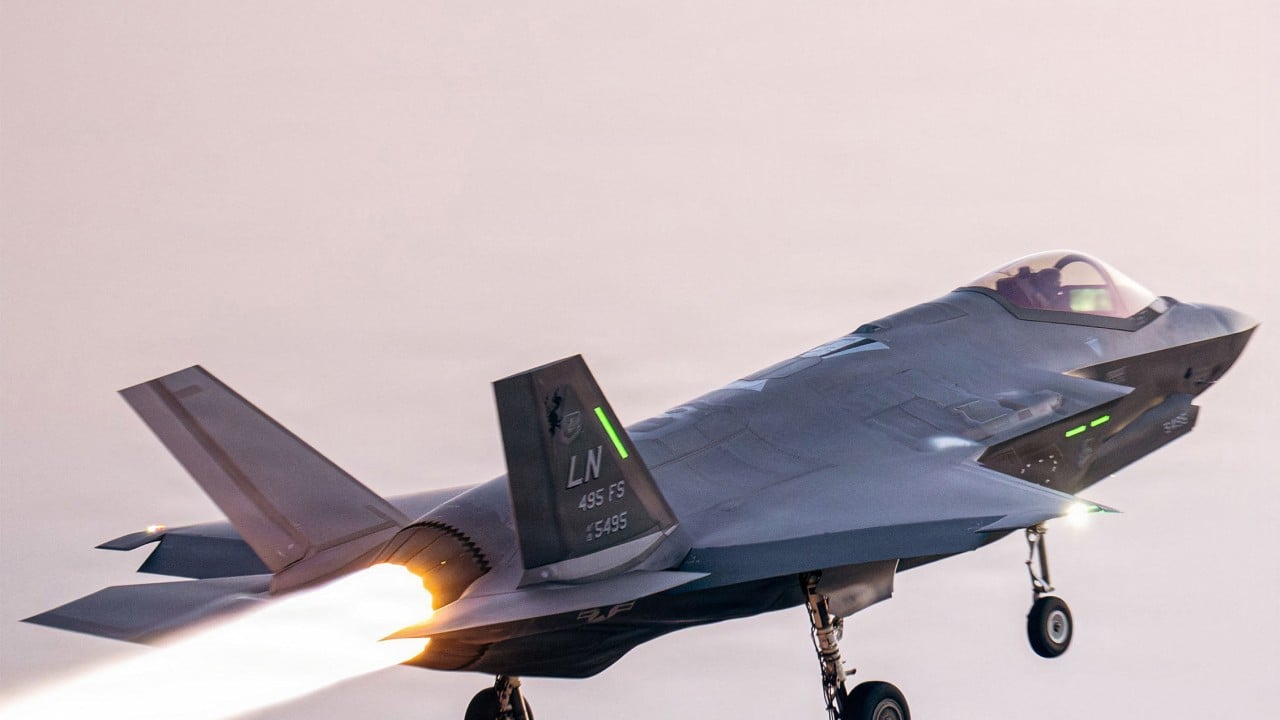
The myth of the invisible aircraft is dying in the high-frequency static of the Middle East. For decades, the United States has banked its entire strategic overhead on the assumption that "stealth" is a binary state—either you are seen, or you are not. But recent encounters over contested airspace suggest a far more precarious reality. Claims originating from regional tracking stations and analyzed by observers in Beijing point to a specific event where an F-35 Lightning II was not only tracked but physically engaged after its electronic signature was compromised. This isn't just about one jet taking a hit. It is about the systemic collapse of the most expensive weapon system in human history when faced with "multi-static" detection networks.
Stealth is not a magic cloak. It is a mathematical calculation of probability. By shaping an aircraft to deflect X-band radar waves away from the source, engineers reduce the distance at which a pilot can be targeted. However, the F-35 was designed to fight the wars of the 1990s against traditional monolithic radar arrays. Today, the sky is saturated with a digital mesh of low-frequency emitters, civilian cellular signals, and passive sensors that don't "ping" the target but listen for the "hole" the aircraft leaves in the background radiation of the atmosphere. When a stealth jet moves through this web, it creates a silhouette.
The Physics of the Catch
To understand how a peer or near-peer adversary like Iran, backed by Chinese technical doctrine, could damage a fifth-generation fighter, we have to look at the transition from "active" to "passive" detection. Traditional radar works like a flashlight in a dark room. If you hit a mirror (the stealth jet) at an angle, the light bounces away, and you see nothing.
However, modern detection uses a method known as passive coherent location (PCL). Instead of emitting a signal, these systems use existing ambient signals—FM radio, digital television, and mobile phone towers. When an F-35 flies between these transmitters and a sensitive receiver, it disrupts the signal phase. By using massive computing power to cross-reference these disruptions from dozens of different angles simultaneously, an integrated air defense system can triangulate a "track" even if the aircraft’s specialized coating is absorbing high-frequency military radar.
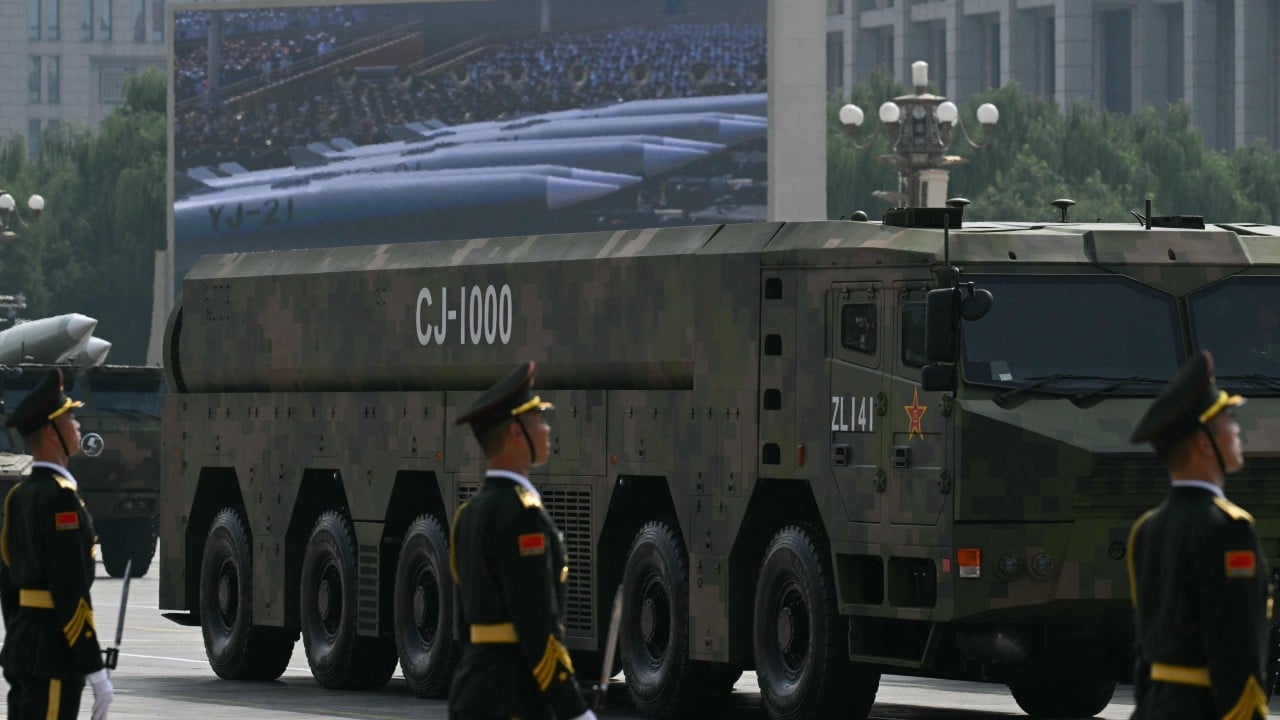
Chinese military analysts have been obsessed with this "counter-stealth" architecture for two decades. They argue that the F-35’s reliance on its internal jammer and its "low-observable" geometry is actually a liability in a dense electronic environment. Once the jet is localized within a few kilometers by passive means, a defender can flood that specific coordinate with infrared tracking or high-power VHF radar that ignores the jet's faceted shape entirely.
Why the F-35 is Vulnerable at Low Altitudes
The incident in question reportedly occurred while the aircraft was operating in a complex environment, likely attempting to evade traditional long-range sensors by hugging the terrain. This is where the F-35's design trade-offs become glaring. To maintain its stealth profile, the aircraft carries its weapons internally. This limits its cooling capacity and forces the engine to run hotter to maintain the same performance as its predecessors.
A hot engine is a beacon for infrared search and track (IRST) systems. While the F-35's front-facing profile is optimized to hide from radar, its rear and sides are significantly "louder" in the thermal spectrum. If an adversary uses passive ground sensors to guide a surface-to-air missile (SAM) into the general vicinity of the jet, the missile’s own seeker head only needs to lock onto that thermal bloom for the final few seconds of flight.
The "damage" reported in these encounters often isn't a direct catastrophic explosion. Instead, it is the result of proximity fusing. A missile detonates near the airframe, shredding the delicate radar-absorbent material (RAM) and damaging the sophisticated sensors embedded in the "skin" of the aircraft. Once the RAM is compromised, the jet is no longer stealthy. It becomes a very expensive, under-powered conventional target trying to limp back to a base that might already be under fire.
The Chinese Blueprint for Neutralization
Beijing isn't just watching; they are documenting the F-35's weaknesses to refine their own "Anti-Access/Area Denial" (A2/AD) envelopes. Their analysts highlight a critical flaw in the American "Sensor Fusion" concept. The F-35 relies on a constant stream of data from satellites and other aircraft to maintain its situational awareness. This data link is a two-way street. Every time the jet "talks" to its network, it risks an electronic emission that can be direction-found by sophisticated signal intelligence (SIGINT) hardware.
- Metric Wave Radar: China has deployed massive arrays that operate in the VHF and UHF bands. The physics of these long wavelengths means they don't "care" about the small edges and curves of a stealth fighter. To a VHF radar, an F-35 looks like any other metallic object.
- The "Silent" Battery: Iran’s localized versions of the Bavar-373 and other mobile SAM systems are designed to stay completely dark until the very last moment. They receive target data from remote, hidden sensors, popping up to fire only when the target is within the "no-escape zone."
- Quantity Over Quality: The F-35 is a boutique weapon. It is built in limited numbers and requires an immense logistical tail. A "mission-kill"—where the plane is damaged enough to be grounded for months—is just as effective for the adversary as a total shoot-down.
The Logistic Trap
We have spent $1.7 trillion on a platform that assumes we will always have "information dominance." But dominance is a fleeting state. If an adversary can successfully damage a stealth jet using "low-tech" solutions augmented by high-end processing, the cost-exchange ratio flips. It costs a few hundred thousand dollars to fire a volley of upgraded, older-generation missiles. It costs tens of millions to repair the specialized sensors and stealth coating on a single F-35.
Furthermore, the F-35’s ALIS (Autonomic Logistics Information System) requires constant connectivity to Lockheed Martin servers for maintenance data. In a high-intensity conflict where satellite links are jammed or "kineticized," these jets become bricks on the tarmac. The complexity that makes them superior in a vacuum makes them fragile in the mud and heat of a real-world battlefield.
The Intelligence Failure of Overconfidence
The real story isn't the hardware; it’s the hubris. Pentagon planners have long dismissed the capability of regional powers to integrate Russian and Chinese sensor tech into a cohesive net. They assumed that because Iran couldn't build a fifth-generation jet, they couldn't see one. That was a fatal misunderstanding of the "asymmetric" mindset.
When you can't build a better sword, you build a better shield. Or, in this case, you turn the entire room into a sensor that tells you exactly where the sword is moving. The damage reported to the F-35 represents the first cracks in a defense strategy that has relied too heavily on a single, expensive trick.
The F-35 was supposed to be the end of the conversation regarding air superiority. Instead, it has sparked a new arms race in signal processing and passive detection. If the United States continues to treat stealth as an invincible shield rather than a shrinking advantage, it will find its most prized assets being picked off by "obsolete" batteries directed by nothing more than the background noise of the modern world.
The digital net is closing. The pilots know it. The engineers know it. It’s time the planners acknowledged it before a mission-kill becomes a massacre.
Would you like me to analyze the specific radar cross-section (RCS) differences between the F-35 and its counterparts in these low-frequency detection scenarios?