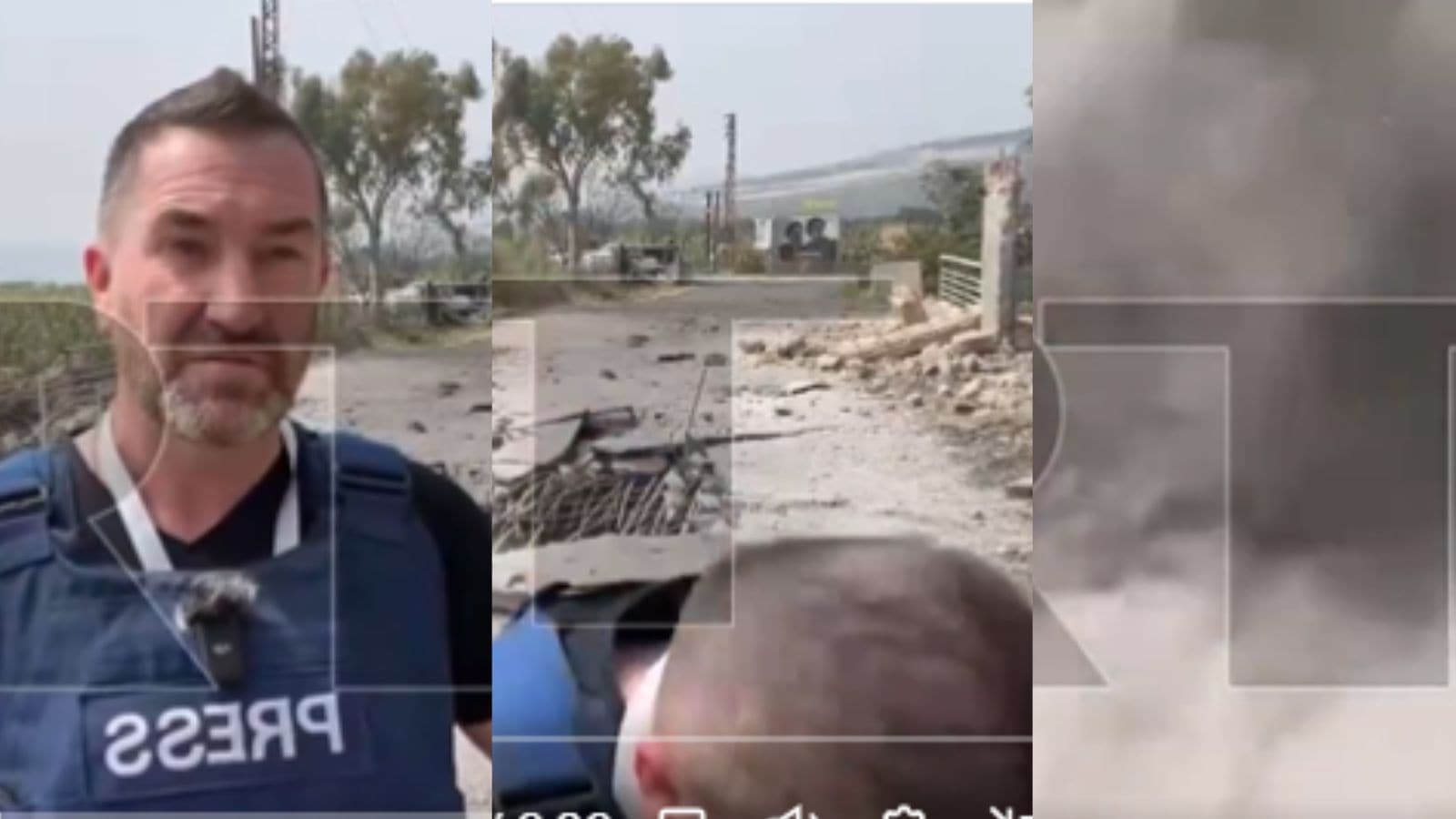
The red light on top of the camera is a tiny, steady heartbeat in the middle of a wasteland. For a television correspondent, that light is the only thing that matters. It means you are live. It means the world is watching. It means that, for a few fleeting minutes, your voice is the bridge between a comfortable living room thousands of miles away and the bone-shaking reality of a border defined by fire.
Steve Sweeney stood in that light. Beside him, Ali Rida held the frame steady. They were in South Lebanon, a place where the air usually tastes of dust and exhaust, but lately, it has carried the sharper, metallic tang of high explosives. They were doing the job—the repetitive, grueling, and increasingly suicidal task of explaining why the horizon was glowing.
Then the world folded in on itself.
A missile does not sound like it does in the movies. There is no long, whistling descent that gives you time to ponder your life choices. There is only a sudden, violent displacement of reality. A roar that you feel in your teeth before you hear it in your ears. When an Israeli missile struck the ground near the RT crew during their live broadcast, the professional veneer of "the news" evaporated instantly. In its place was the raw, frantic scramble for breath in a cloud of pulverized concrete and sulfur.
Sweeney and Rida weren't just names on a byline. They were men who, seconds earlier, had been worrying about signal strength and frame composition. Now, they were statistics in a ledger of escalating violence that doesn't care about press vests or "TV" stickers plastered across helmets.
The Anatomy of a Near Miss
To understand what happened in those seconds of blacked-out footage, you have to understand the geography of the target. South Lebanon is currently a checkerboard of "safe" zones that aren't safe and "targets" that are everywhere. When a missile lands near a film crew, the physical injuries—the shrapnel, the concussions, the broken skin—are only the surface of the story.
The real trauma is the erasure of the boundary between the observer and the observed.
Journalists are trained to be ghosts. They are supposed to move through the world without touching it, documenting the pain of others while remaining insulated by the camera lens. But a missile is a blunt instrument. It doesn't recognize the neutrality of the press. When the strike hit, Sweeney and Rida were forced into the very narrative they were trying to report. They became the breaking news.
Consider the physics of the moment. The pressure wave from a modern missile strike can liquefy the air in your lungs. It throws debris at speeds that turn pebbles into bullets. Sweeney and Rida were injured, but they survived. Many of their colleagues in this particular stretch of the woods have not been so lucky. Since the cross-border escalations began, the "Press" vest has started to feel less like a shield and more like a bullseye.
The Invisible Stakes of the Broadcast
Why stay? Why stand in a field in Lebanon when you know the sky is falling?
It isn't about bravado. It’s about the terrifying realization that if the cameras turn off, the violence becomes silent. And silent violence is the most dangerous kind. When a crew is hit during a live broadcast, the audience at home sees the screen jitter, hears the scream, and watches the feed cut to a studio anchor who looks suddenly, hauntingly pale.
That disruption is a glitch in the Matrix of modern warfare. It reminds the viewer that the "content" they are consuming is actually a life-and-death gamble played out by real people in real time.
The Israeli military often cites "operational necessity" or the presence of "hostile elements" in the vicinity of such strikes. The Lebanese side points to the targeting of journalists as a war crime intended to blind the world. But for Sweeney and Rida, the politics are secondary to the immediate, visceral need to find cover.
The ground in South Lebanon is hard. It is unforgiving. When you are lying flat against it, praying that the second strike isn't aimed ten meters to the left, you aren't thinking about international law. You are thinking about the smell of the dirt and the sound of your own heartbeat thudding against the earth.
The Cost of Documentation
We live in an era where we expect 24-hour access to every tragedy on the planet. We scroll through feeds of destruction while waiting for our coffee. We have become experts at distancing ourselves from the pixels.
But the injury of Steve Sweeney and Ali Rida strips away that distance. It highlights the staggering cost of the information we take for granted. Every frame of footage coming out of Lebanon or Gaza or any other corner of the burning world is paid for in the currency of human safety.
The "dry facts" tell us that a missile landed. They tell us two men were injured. They tell us the broadcast was interrupted.
The human truth is that two men went to work and nearly didn't come home because the world has decided that some borders are more important than the people standing on them. The truth is that the ringing in Sweeney’s ears will likely never truly stop. The truth is that Rida will probably look at the sky differently for the rest of his life, scanning for the glint of metal that heralds the end of everything.
The Silence After the Roar
After the explosion, there is a specific kind of silence. It isn't the absence of sound, but the presence of shock. It’s the sound of a camera lying in the dirt, still powered on, filming a patch of weeds or a gray sky while the humans who operated it are being dragged to safety.
This incident wasn't an isolated accident. It was a symptom. It was a data point in a trend where the rules of engagement have become so blurred that a "Press" badge offers about as much protection as a paper umbrella in a hurricane.
But the most remarkable thing about this story isn't the explosion itself. It’s what happens tomorrow.
Tomorrow, another crew will go out. They will check their batteries. They will wipe the dust off their lenses. They will stand in the same fields and look into the same cameras, hoping that the red light on top remains the only heartbeat they have to worry about. They do this because they know that if they stop, the only thing left will be the missiles and the silence that follows them.
The red light flickers. The dust settles. The world moves on to the next headline, but the men in the dirt are still breathing, and for now, that is the only victory that matters.
The camera is still there, somewhere in the rubble, a silent witness to a story that nearly ended in a flash of light.