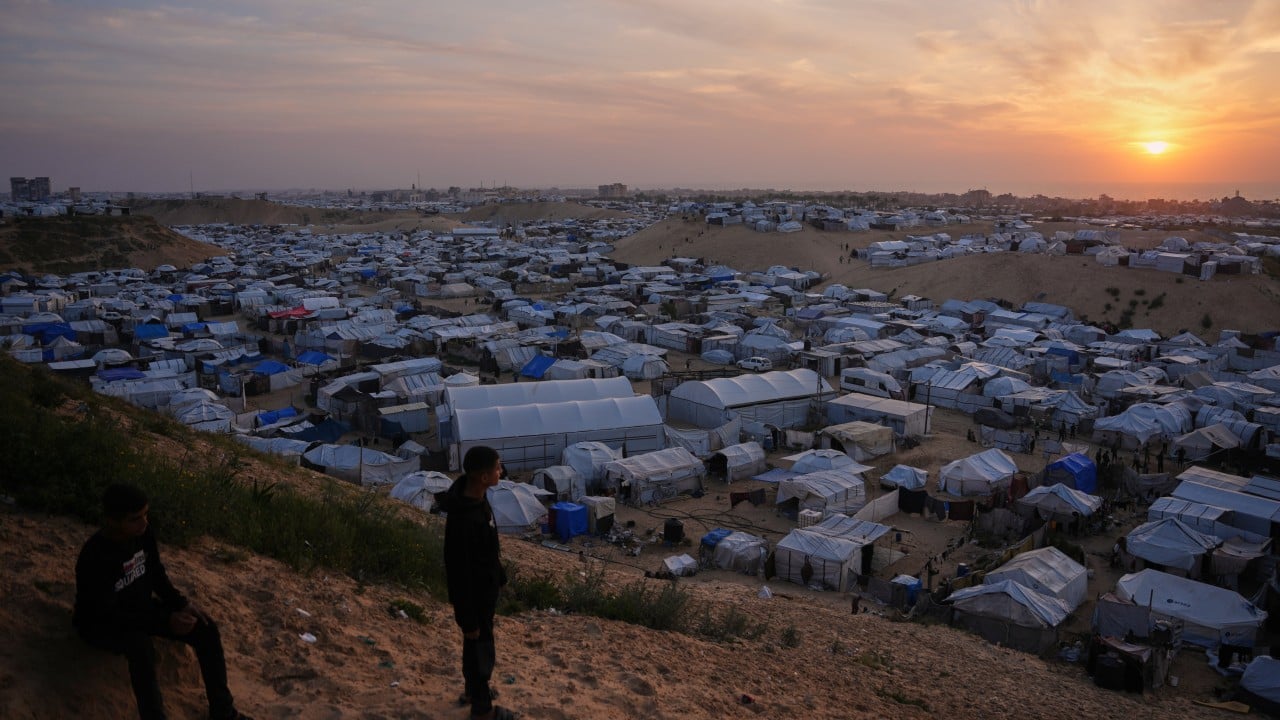
The dust in Puntland doesn’t just settle. It clings. It coats the throat of a young man we will call Abdi, a fictional composite of the many who live under the jagged peaks of the Cal Miskaat mountains. Abdi remembers when the primary threat was the sea—piracy or the grueling heat of the sun. Now, when he looks toward the caves honeycombing those limestone cliffs, he sees the black flag. It isn’t the flag of Al-Shabaab, the group that has haunted Somalia for decades. This one belongs to the Islamic State.
A quiet, brutal tectonic shift is happening in East Africa. For years, Somalia was seen as the exclusive territory of Al-Qaeda’s most powerful affiliate, Al-Shabaab. But the monopoly on violence has cracked. In the arid, inaccessible reaches of the north, a smaller, leaner, and increasingly lethal franchise of the Islamic State (IS-Somalia) is transforming from a fringe nuisance into a central nervous system for global terror.
The world looks at a map and sees a failed state. The Islamic State looks at a map and sees a boardroom.
The Mountain Fortress
The Cal Miskaat mountains are a nightmare for any standing army. They are a labyrinth of deep gorges and hidden caverns where the temperature swings violently between the blistering day and the shivering night. This is where IS-Somalia has dug in.
Consider the logistical genius of choosing this wasteland. To the north lies the Gulf of Aden, a busy maritime artery that connects the Indian Ocean to the Red Sea. Across that water sits Yemen, another fractured land where the Islamic State maintains a foothold. This isn't just a hiding spot; it’s a bridge.
Small boats slip across the water under the cover of darkness. They carry more than just weapons. They carry ideology, trainers, and, most importantly, the financial infrastructure of a movement that refuses to die. While the parent organization in Iraq and Syria was dismantled as a caliphate, its African limbs are growing stronger, more independent, and more integrated.
A Rivalry Written in Blood
To understand the stakes, you have to understand the hatred. In most of Somalia, Al-Shabaab remains the dominant force. They are the giants, boasting thousands of fighters and a shadow government that taxes everything from charcoal to cell phone credit. When the Islamic State first emerged in Somalia around 2015, Al-Shabaab didn't see them as brothers in arms. They saw them as a virus.
The purge was immediate. Al-Shabaab’s "Amniyat"—their dreaded internal security wing—hunted down anyone suspected of swearing loyalty to the distant caliph in Raqqa. They executed defectors. They burned hideouts.
But IS-Somalia survived. Led by Abdulqadir Mumin, a former Al-Shabaab commander with a penchant for fiery oratory, the group retreated into the mountains. They became the underdog in a civil war within a civil war. This competition has made them leaner. Because they cannot match Al-Shabaab’s raw numbers, they have pivoted toward a more sophisticated model of operations.
They aren't trying to hold vast swaths of territory yet. They are focused on the "Al-Karrar" office.
The Accountant of Chaos
War is expensive. Bullets cost money, but so does silence. In the world of counter-terrorism, officials have begun to notice a terrifying trend: the Somali branch of the Islamic State has become a financial hub for the entire continent.
The Al-Karrar office is the administrative heart of the group’s African operations. Think of it as a clearinghouse. Funds generated through extortion, smuggling, and "taxes" on local businesses flow into this mountainous region and are then redistributed to IS affiliates in the Democratic Republic of Congo, Mozambique, and beyond.
It is a dark irony. A country that lacks a functioning formal banking system has become the site of one of the most efficient illicit financial networks on the planet. They use hawala—the traditional, trust-based system of money transfer—to move millions of dollars under the noses of international monitors.
When a fighter in a jungle in the DRC buys a new shipment of rifles, there is a high probability that the transaction was green-lit or funded by a commander sitting in a cave in Puntland. The stakes are no longer local. Somalia has become the treasury for a continental insurgency.
The Human Toll of the Shadow Tax
Back to Abdi. He doesn't care about global financial hubs. He cares about his small kiosk where he sells tea and phone cards.
One afternoon, a man walks by and drops a slip of paper. There is no gun visible, but the threat is heavier than any rifle. The paper tells Abdi exactly how much he owes the "Caliphate." If he pays Al-Shabaab, he is a target for IS. If he pays IS, he is a traitor to Al-Shabaab. If he pays neither, he is a dead man.
This is the "invisible front line." It isn't fought with tanks. It is fought in the marketplace, in the mosques, and in the quiet whispers of terrified shopkeepers. The Islamic State has mastered the art of "targeted" extortion. They don't need to control the street if they control the people's fear.
Recent intelligence suggests that the group’s influence is creeping south toward Mogadishu. They are no longer content with their mountain hideout. They are carrying out assassinations in the capital, picking off government officials and businessmen who refuse to bow.
Why the World is Looking the Other Way
The tragedy of the Somali situation is a matter of bandwidth. The international community is exhausted. Between the war in Ukraine, the volatility in the Middle East, and the internal pressures of Western politics, a few hundred fighters in the Somali mountains feel like a distant problem.
But history is a cruel teacher. We have seen this pattern before.
In the early 2000s, a small group of extremists was overlooked while the world focused elsewhere. That group became Al-Shabaab. In the 2010s, a "defeated" insurgency in Iraq was dismissed as a "JV team." That group became the global Islamic State.
The current strategy relies heavily on drone strikes and local Puntland security forces. These are bandages on a sucking chest wound. Kinetic force—the act of dropping bombs—might kill a commander, but it doesn't dismantle a financial network. It doesn't clear the limestone caves. And it certainly doesn't provide an alternative for the young men who see the black flag as the only employer in town.
The Shifting Gravity
The "Front Line" has moved. For decades, the center of gravity for global jihadism was the Levant. Today, that center is drifting south. Africa is no longer a sideshow; it is the main stage.
The Islamic State’s Somali wing is the perfect microcosm of this evolution. They are decentralized. They are tech-savvy. They are financially independent. They have learned that you don't need a capital city to run a war; you just need a mountain, a satellite phone, and a population too terrified to say no.
As the sun sets over the Cal Miskaat, the shadows grow long, stretching across the sand toward the sea. In those shadows, the black flag stays planted. It is a reminder that while the world might be finished with the Islamic State, the Islamic State is nowhere near finished with the world.
The quiet in the mountains isn't peace. It's preparation.