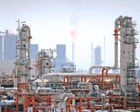
The metal was never meant to scream. In the deep, salt-crusted industrial heart of Kharg Island, there is a specific frequency that high-pressure gas makes when it passes through a turbine—a steady, industrial hum that sounds like the heartbeat of a nation. For decades, this sound has been the background noise of survival. But lately, the engineers who walk these gantries have started listening for a different sound. They are listening for the silence that follows an explosion.
When a country like Iran talks about "zero restraint," the world tends to look at maps, missile ranges, and troop movements. We treat geopolitics like a game of Risk played on a polished table. But the reality of an energy war isn't found in a briefing room. It is found in the trembling hands of a technician staring at a digital monitor as a cyber-attack tries to override a cooling valve. It is found in the sudden, terrifying realization that the flick of a switch in a remote command center can plunge forty million people into a cold, dark kitchen.
The stakes have shifted. We are no longer talking about skirmishes in the desert. We are talking about the jugular vein of the global economy.
The Ghost in the Pipes
Consider a hypothetical worker named Reza. He has spent twenty years maintaining the infrastructure that keeps the lights on in Tehran. To Reza, the pipes aren't just steel; they are the literal circulation system of his world. If the refineries stop, the hospitals go to backup generators. If the generators fail, the ventilators stop. This isn't abstract. It is the physics of catastrophe.
When the Iranian leadership declares that any strike on their oil or gas facilities will be met with a response that knows no limits, they aren't just making a military threat. They are acknowledging a terrifying vulnerability. Iran sits on the world’s second-largest gas reserves and fourth-largest oil reserves. It is a giant built on a foundation of fossil fuels, and that foundation is currently sitting in the crosshairs of a regional storm.
The threat of "zero restraint" is a desperate attempt to create a perimeter of fear around these assets. If the "ghosts"—the invisible missiles or the silent lines of code—hit the energy grid, the retaliation won't be a measured, proportional exchange. It will be a chaotic, unbridled lashing out. Imagine a cornered animal that no longer cares if it gets hurt, as long as it bites back. That is the doctrine currently being signaled to the West and its allies.
The Invisible Dominoes
Most of us view a gas station as a convenience. We don't see it as the first domino in a global collapse. But if the Persian Gulf becomes a "no-go" zone for tankers because of a tit-for-tat escalation, the shockwaves won't stay in the Middle East. They will travel through the underwater cables of the financial markets and emerge as a spike in the price of bread in Chicago or a factory shutdown in Dusseldorf.
The technology of modern warfare has stripped away the luxury of distance. A drone that costs less than a used car can successfully disable a hydro-cracking unit that costs a billion dollars to build and years to replace. Iran knows this because they have pioneered the use of these "asymmetric" tools. Now, they are seeing that same vulnerability reflected in their own mirrors.
There is a specific kind of tension that exists when two sides are holding matches near a powder keg. Each side claims they don't want to strike first, but both are terrified that if they don't, they will lose everything. This is the paradox of the "zero restraint" policy. By promising a total war in response to an infrastructure hit, Iran is trying to make the cost of an attack so high that it becomes unthinkable. But "unthinkable" is a word that history has a habit of making look foolish.
The Human Cost of a Blown Fuse
While the diplomats argue over the wording of sanctions and the range of ballistic trajectories, the people living within the blast radius of these decisions are checking their flashlights. They are hoarding fuel. They are looking at the sky.
The tragedy of energy warfare is that it targets the civilian life-support system under the guise of "strategic objectives." When a power plant is hit, it isn't the generals who suffer first. It is the mother trying to keep insulin cold in a dead refrigerator. It is the small business owner whose entire inventory rots in a darkened freezer.
The Iranian energy sector is a labyrinth of aging valves, patched-up software, and high-pressure lines. It is an engineering marvel held together by the ingenuity of people who have lived under sanctions for a lifetime. To target this infrastructure is to target the very breath of the country.
The response being promised—this "zero restraint"—suggests a move toward the "Samson Option." If the temple is going to fall, the leadership is signaling they will pull the pillars down on everyone's head. It is a vow of mutual destruction.
Beyond the Boiling Point
We often assume that there is a rational ceiling to conflict—that eventually, cooler heads will prevail because "it’s just business." But we are entering an era where energy is no longer just business. It is the ultimate lever of sovereignty.
The language coming out of Tehran isn't just a press release; it is a scream of defiance from a nation that feels its back is against the wall. They are watching their primary source of income—and their primary source of domestic stability—become a target.
When the restraint goes to zero, the math of war changes. Proportionality vanishes. The goal is no longer to win a point, but to ensure the other side can never play again.
Tonight, somewhere on the coast of the Persian Gulf, a technician is likely standing on a catwalk, looking out over the dark water. He knows that his workplace is a landmark on a target list in a city he will never visit. He adjusts a valve, listens to the hiss of the gas, and hopes that the hum of the machinery stays steady for one more hour. He knows what the politicians won't admit: once the metal starts screaming, there is no way to turn the sound down.
The pressure gauge is shaking, and the needle is moving into the red.