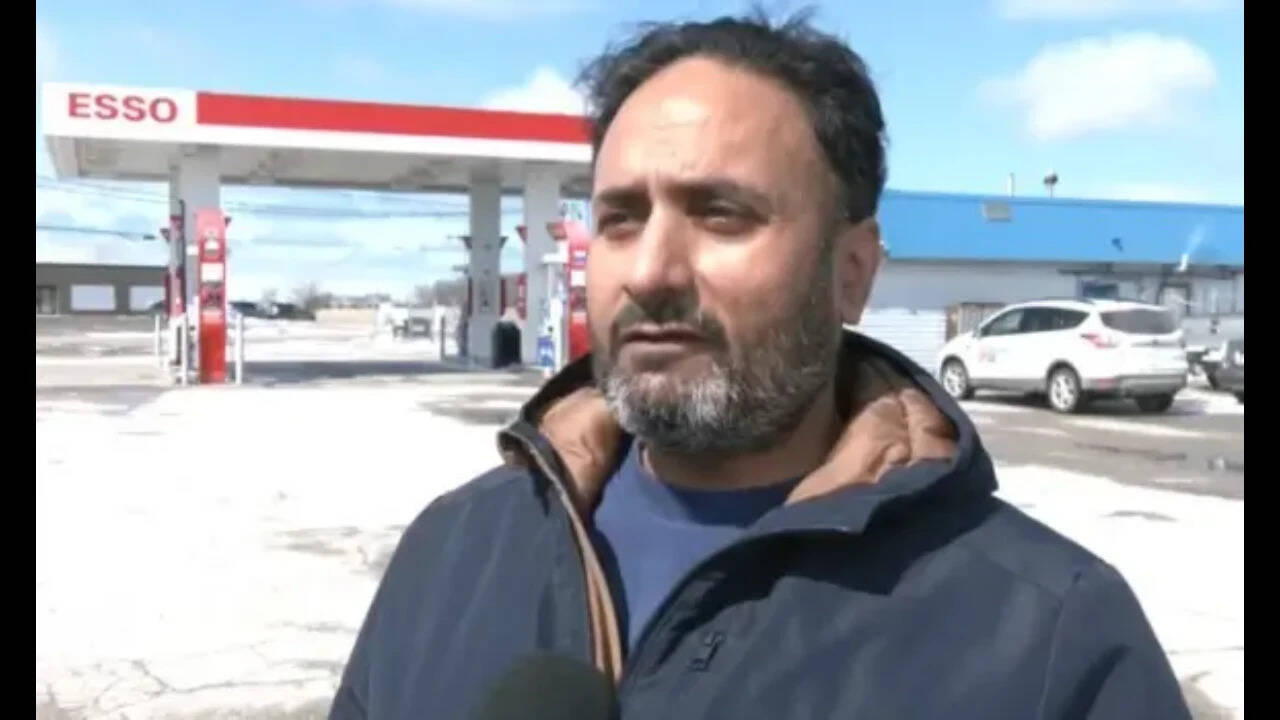
The transition from a localized operational error to a systemic social crisis occurs when business failure intersects with pre-existing demographic tensions. In the case of the contaminated fuel incident involving an Indian-origin gas station owner in Canada, the crisis is not merely a technical glitch but a failure of Operational Redundancy and Reputational Risk Mitigation. When a service station dispenses "bad gas"—typically defined as fuel contaminated with water, sediment, or incorrect octane levels—the financial liability is immediate, but the sociological liability is contingent upon the owner’s identity and the community’s perception of competence.
The Mechanics of Fuel Contamination
Fuel quality is governed by strict chemical standards, yet the supply chain remains vulnerable at the point of storage. Contamination usually follows three primary vectors:
- Phase Separation in Ethanol Blends: Most modern gasoline contains up to 10% ethanol. Ethanol is hygroscopic, meaning it attracts water. If water enters a storage tank through a faulty seal or condensation, the ethanol binds with the water and settles at the bottom. This "slug" of water-ethanol mix is what the pump eventually draws, leading to immediate engine stalling or long-term fuel system corrosion.
- Cross-Contamination During Delivery: Human error during the offloading process—depositing diesel into a gasoline reservoir—creates a chemical mismatch that can destroy internal combustion engines.
- Infrastructure Degradation: Older underground storage tanks (USTs) can develop hairline fractures. This allows groundwater ingress, particularly during heavy rainfall or rapid snowmelt, common in the Canadian climate.
The owner’s claim of "not doing it on purpose" is technically irrelevant to the Strict Liability standards of Canadian consumer law. In Ontario or British Columbia, a merchant is responsible for the merchantable quality of goods sold. Intent does not mitigate the $2,000 to $15,000 repair cost per vehicle for fuel system flushes, fuel pump replacements, or engine overhauls.
The Racialization of Technical Incompetence
When a business failure occurs, the public seeks a narrative framework to explain the lapse. For minority business owners, particularly those of Indian origin in Western markets, technical errors are frequently misinterpreted through a lens of "essentialist" bias.
- The Competence Bias Gap: Research in organizational behavior suggests that when a majority-group business owner fails, it is often attributed to external circumstances (the "bad luck" hypothesis). When a minority owner fails, the public often attributes it to an inherent lack of integrity or technical skill (the "cultural deficiency" hypothesis).
- The Proxy for Grievance: In regions experiencing rapid demographic shifts or economic pressure, a contaminated fuel pump becomes a physical proxy for broader anxieties. The "racist attack" reported by the owner is the manifestation of this friction. The fuel error provides a "justifiable" outlet for latent xenophobia, where the legitimate anger of having a damaged vehicle provides cover for racial slurs and targeted harassment.
The Cost Function of Social Friction
The economic impact of this incident scales far beyond the cost of the fuel. We can model the total loss through the Triple-Deficit Framework:
1. The Operational Deficit
This includes the direct cost of remediation. Emptying the 20,000 to 50,000-liter tanks, disposing of the contaminated hazardous waste, and cleaning the lines.
2. The Legal and Indemnity Deficit
Small-scale gas station owners often operate on thin margins, sometimes as low as $0.02 to $0.05 per liter after overhead. A single batch of bad gas affecting 50 vehicles creates a liability wall that can exceed $250,000. Without comprehensive Environmental and Pollution Liability Insurance, the business faces immediate insolvency.
3. The Social Capital Deficit
For an Indian-origin owner in a polarized climate, the recovery of "brand equity" is significantly harder. The intersection of "foreignness" and "failure" creates a persistent digital footprint. A Google search for the business will forever link the station to "contaminated gas," a label that acts as a permanent tax on future revenue.
Quantifying the Backlash
Data on hate crimes and bias incidents in Canada shows a marked increase in "retaliatory" harassment following public grievances. When a business dispute arises, the escalation follows a predictable path:
- Phase I: Digital Aggregation: Negative reviews transition from technical complaints about engines to personal attacks on the owner's origin.
- Phase II: Physical Confrontation: The storefront becomes a site for "protest," which, as the owner noted, frequently involves racial epithets.
- Phase III: Institutional Scrutiny: Regulatory bodies, feeling the pressure of public outcry, may apply more rigorous or frequent inspections than they would to a "legacy" business owner, creating a higher administrative burden.
Strategic Mitigation for High-Risk Retailers
To survive the intersection of operational failure and social volatility, owners must move beyond the "it wasn't on purpose" defense. That defense assumes the audience is rational and concerned with intent. In a crisis, the audience is emotional and concerned with Restitution.
Implementation of Automated Fuel Quality Monitoring
Manual "sticking" of tanks to check for water is no longer sufficient. Owners must install Automatic Tank Gauging (ATG) systems with water-detection probes capable of detecting 0.1-inch changes in water levels. This transforms the defense from "I didn't know" to "I have a logged, verifiable record of quality control up to the point of sale."
Rapid Decoupling of Identity and Error
The owner’s communication strategy failed by centering his personal feelings and the "accidental" nature of the event. A masterclass in crisis management would have prioritized:
- Immediate Admission of Physical Fact: "Water ingress occurred in Tank 3."
- The Claims Portal: Creating a dedicated, streamlined process for repair reimbursements before the media picks up the story.
- Third-Party Auditing: Hiring an independent firm to certify the tanks as clean, removing the "owner's word" from the equation entirely.
The surge in racialized attacks suggests that the owner's identity stripped him of the "benefit of the doubt" usually afforded to long-standing community institutions. In a high-trust society, an error is a mistake; in a low-trust or polarized society, an error is a character flaw or a conspiracy.
The Demographic Reality of Canadian Small Business
According to Statistics Canada, South Asians represent a significant portion of the small business and franchise ownership sector, particularly in the petroleum and convenience retail space. This concentration makes the group a high-visibility target for economic frustration.
- Economic Contribution: Indian-origin entrepreneurs are overrepresented in the "essential service" retail sector, which requires high capital investment but offers low social prestige.
- The Fragility of the Model: These businesses often rely on family labor and high debt-to-equity ratios. A single contamination event is not just a bad week of sales; it is an existential threat to the family's multi-generational wealth.
The "racist attack" the owner described is the social cost of a technical failure in a fractured environment. The attackers are using the contaminated gas as "evidence" to validate a pre-existing bias. For the analyst, the takeaway is clear: in the modern market, your technical safeguards are your only defense against social incineration. If you cannot prove the integrity of your product via automated, objective data, your identity will be used to fill the narrative void left by your lack of documentation.
Future-proofing this business model requires shifting from "reactive apology" to "preventative transparency." This means publishing real-time fuel quality data and having a pre-funded indemnity account. Relying on the community's sense of fairness or the "accidental" nature of a mistake is a high-risk strategy that fails to account for the current sociological climate. The only way to kill a racialized narrative is to smother it with undeniable, cold, technical data.