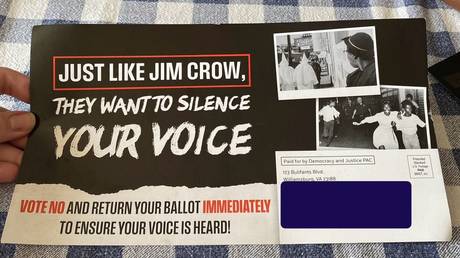
The outrage machine is broken. Every time a grainy photo of a Republican staffer or a local candidate surfaces with something vaguely resembling a pointed hood or a burning cross, the media erupts in a predictable, synchronized scream. The narrative is always the same: the GOP is "weaponizing" Ku Klux Klan imagery to signal to a secret army of white supremacists.
It’s lazy. It’s cheap. And it’s fundamentally wrong.
I’ve spent fifteen years in the trenches of political strategy and corporate crisis management. I’ve seen how these "scandals" are manufactured, packaged, and sold to a public that is hungry for moral superiority. The truth isn't that the GOP is trying to revive the 1920s; the truth is that both sides are trapped in a feedback loop of aesthetic obsession that ignores the actual mechanics of power.
The Aesthetic Trap
Most political commentators couldn't tell the difference between a genuine extremist symbol and a poorly designed campaign flyer if their careers depended on it. We live in an era of "aesthetic radicalism," where the silhouette of a hat or the choice of a font is treated as a blood oath.
When critics accuse Republicans of "weaponizing" KKK imagery, they are usually looking at ghosts. They see a white robe in a poorly lit Instagram story and ignore the fact that the actual, organized Klan has the membership density of a failed bowling league. We are chasing shadows while the real shifts in American policy happen in boring, fluorescent-lit rooms where nobody wears a mask.
The "lazy consensus" dictates that these symbols are "dog whistles." This assumes the average voter is a highly trained semiotician capable of decoding sub-perceptual signals. They aren't. Most people are just trying to pay their rent. The obsession with imagery is a luxury of the pundit class.
The Historical Amnesia of the Modern Left
Here is the nuance the "Republicans are the KKK" crowd misses: the history of racial political violence in America is a history of partisan utility, not just ideological purity.
In the 1870s, the KKK wasn't just a group of racists; they were the paramilitary wing of the Democratic Party, used specifically to suppress Republican voters. This isn't a "whataboutism" point; it's a structural one. Political violence and its imagery are tools used by the out-of-power to claw their way back in, or by the in-power to maintain a crumbling status quo.
Today, the roles have flipped, but the tactic remains the same. The accusation of KKK imagery is the Democratic Party's own "paramilitary" tactic—a rhetorical bludgeon used to enforce a moral blockade around their opponents. By branding the GOP as the party of the hood, they effectively disenfranchise millions of voters from the "respectable" conversation.
Why Branding Campaigns Fail (and Why This One Won't)
If a corporation tried to use "edgy" imagery that offended 50% of its customer base, it would be bankrupt by Tuesday. Yet, we are told the GOP is doing exactly this to win elections. It doesn't track.
In my experience, when you see "extremist" imagery in a mainstream campaign, it’s rarely a calculated signal. It’s usually incompetence.
- A junior staffer uses a stock photo without checking the background.
- A volunteer prints a banner with a font that looks "traditional" but has dark historical ties.
- A candidate takes a photo with a "supporter" they’ve never met.
The media interprets these blunders as "strategic weaponization." This gives the GOP far too much credit for organization and the Left far too much credit for "detecting" a threat. It turns a comedy of errors into a grand conspiracy.
The Real Danger: Normalization through Overexposure
By screaming "KKK" at every shadow, the media is doing something far more dangerous than what any Republican staffer could achieve: they are devaluing the currency of the accusation.
When everything is white supremacy, nothing is. If a slightly-too-pointy hat in a parade is treated with the same level of alarm as actual, systemic legislative exclusion, the public eventually tunes out. We are building a "boy who cried wolf" scenario on a national scale.
The actual "weaponization" isn't happening on the Right; it's happening in the newsrooms that realize "GOP" and "KKK" in the same headline generates 400% more clicks than an article about tax code or infrastructure. This is a business model, not a moral crusade.
The Strategy of the Absurd
If you want to understand why this imagery persists, look at the incentives.
- For the GOP fringe: Using provocative imagery provides a sense of "anti-establishment" credibility to a base that feels ignored by the elite.
- For the Democratic establishment: Accusing the GOP of using this imagery provides a moral high ground that bypasses the need for actual policy debate.
- For the Media: The conflict provides endless content.
It’s a perfect, self-sustaining ecosystem of outrage.
Stop Looking at the Clothes
If you actually care about radicalism, stop looking at what people are wearing and start looking at what they are doing with the budget. I’ve seen more damage done to minority communities by a pen stroke in a zoning board meeting than by every "alt-right" meme combined.
The fixation on KKK imagery is a distraction. It allows us to feel like we are fighting "the good fight" from our keyboards while the actual mechanisms of inequality—housing, education funding, and judicial appointments—remain untouched.
We are arguing over the costume while the play continues behind us. The "weaponization" is a ghost story told by people who are afraid of the real monsters: the ones who don't need hoods because they already have the gavels.
The next time you see a headline about "Republicans using KKK imagery," ask yourself: who benefits from you being angry about a photo instead of being informed about a policy?
The answer is never the voter.
Follow the money, not the fashion. The hood is a decoy.


