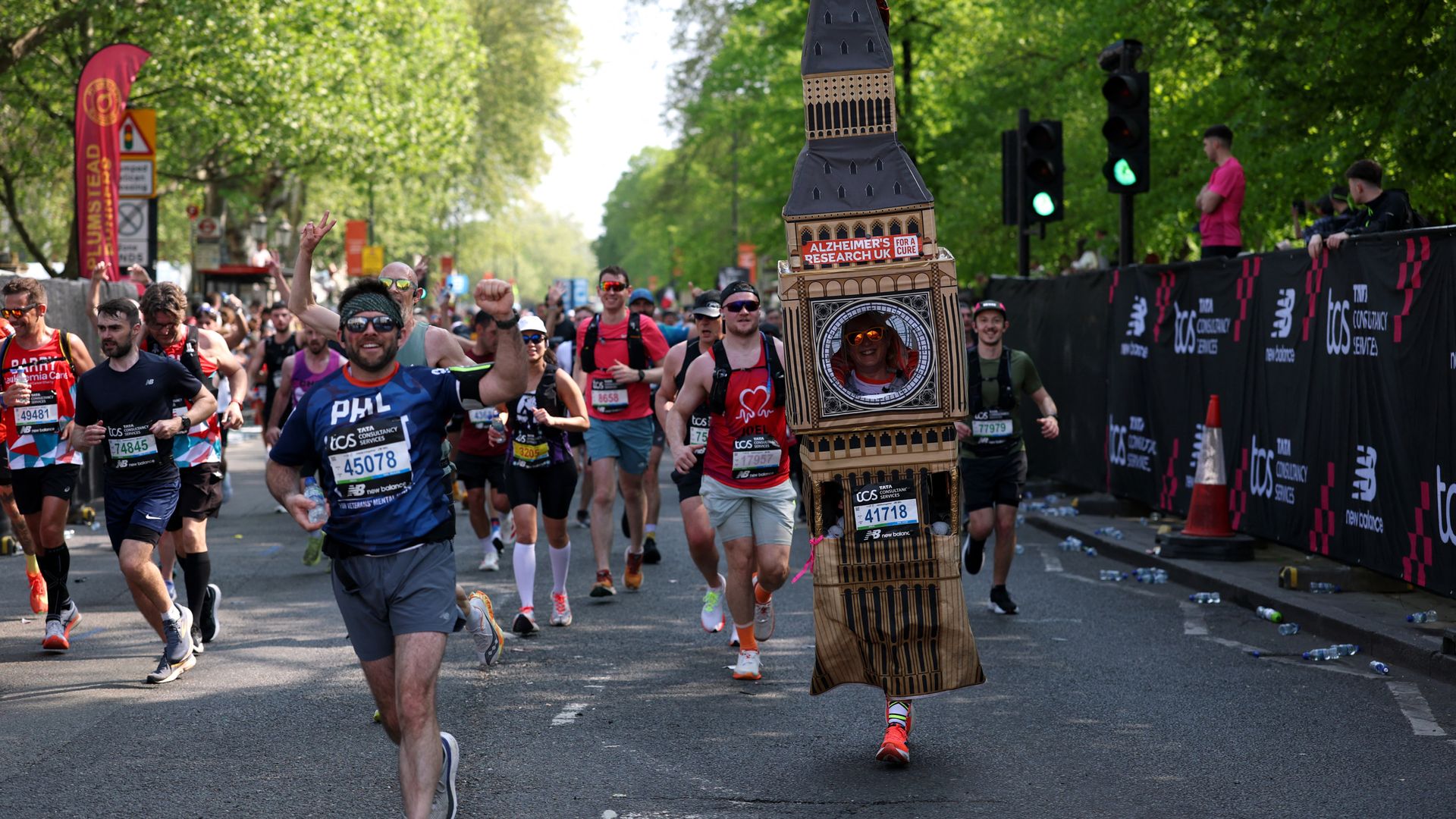
The rumors are swirling that the London Marathon—that sacred cow of the World Marathon Majors—is eyeing a move to a two-day format. On the surface, the logic feels bulletproof to a certain type of corporate middle manager. More runners mean more registration fees. More days mean more broadcast slots. More "inclusivity" means better PR for the sponsors.
It is a spreadsheet-driven fantasy that ignores the fundamental physics of why the London Marathon matters.
We are witnessing the "Disney-fication" of elite endurance sport. By turning a world-class race into a weekend-long carnival of mass participation, the organizers are diluting the very prestige that allows them to charge premium prices in the first place. You cannot scale excellence indefinitely without it becoming mediocrity.
The Myth of Boundless Growth
The argument for a two-day split usually rests on "meeting demand." With over 578,000 people entering the ballot for the 2024 race, the organizers see a supply-and-demand problem. They think they are sitting on a gold mine. They are actually sitting on a bubble.
The scarcity of the London Marathon is its primary product.
When you make a marathon easier to get into, you strip away the social capital of the finish line. If everyone has a medal, the medal is just a piece of zinc alloy. We have seen this play out in the triathlon world. Once Ironman started "expanding the brand" into every sub-region imaginable, the qualification for Kona lost its luster. When excellence becomes accessible, it stops being excellence.
Logistics Are a Zero-Sum Game
Running a major city marathon is a logistical nightmare. It involves shutting down the heart of one of the world's most dense financial hubs. The "two-day" proponents suggest we could have the "slow" runners on Saturday and the "fast" ones on Sunday, or perhaps a gender split.
They are hallucinating.
- Volunteer Fatigue: London relies on thousands of volunteers. Asking a medical team or a water station crew to pull back-to-back 12-hour shifts in the rain isn't "expanding capacity." It is a recipe for a catastrophic safety failure.
- The Resident Rebellion: If you think Londoners are annoyed by road closures now, try telling a resident in Greenwich or Tower Hamlets that they can't move their car for 48 hours. The political capital required to shut down London for a full weekend is non-existent.
- The Course Integrity: Marathons aren't run on pristine tracks. They are run on asphalt. By the time 50,000 "day one" participants have shuffled, sweated, and spilled sticky electrolyte drinks across 26.2 miles, the course is a biohazard. Do we really expect the elite men and women to hunt for a World Record on a surface that has been hammered by 100,000 sneakers 24 hours prior?
The Inclusivity Trap
The "People Also Ask" sections of the internet are filled with queries like, "How can I make the London Marathon more inclusive?"
Here is the uncomfortable truth: Professional sports are not meant to be inclusive. They are meant to be exclusive.
By pivoting toward a two-day festival model, London is signaling that the experience of the 7-hour jogger is equal to the pursuit of the sub-2:00:00 world record. While every runner's journey is valid on a personal level, a World Marathon Major is—or should be—a theater for the limits of human physiology.
When you prioritize the "festival atmosphere" over the competitive integrity, you lose the interest of the purists. And when the purists leave, the casuals eventually follow because the event no longer feels "big." It just feels like a very expensive local 5k that went on for too long.
Revenue Isn't Recovery
The organizers will point to the economic impact. "Double the runners, double the hotel nights!"
This is flawed math. Most London Marathon participants are domestic. They are not booking three-night stays at the Savoy. They are taking the Thameslink in and out on the same day. By doubling the duration, you increase the overhead costs—policing, private security, sanitation, and transit diversions—faster than you increase the marginal revenue from registration fees.
I have consulted for events that tried to "double up" to save their balance sheets. What they found was that the second day almost always runs at a lower margin. You lose the "big bang" effect of a single, massive Sunday. You end up with two half-hearted events instead of one world-stopper.
The Solution Nobody Wants to Hear
If the London Marathon actually wants to improve, it shouldn't expand. It should contract.
It should become harder to enter. It should raise the "Good For Age" standards. It should lean into its identity as a pinnacle of performance.
Instead of trying to accommodate 100,000 people over two days, they should be looking at how to make the 50,000-person experience more elite. Better flow, faster pen releases, and a return to focusing on the race rather than the costume count.
We are currently obsessed with the idea that more is better. In the world of elite endurance, less is almost always more.
Stop trying to turn the London Marathon into a weekend-long corporate retreat. Some things are meant to be a singular, fleeting moment of intensity.
If you want a two-day event, go to a music festival. If you want to run the greatest race on earth, keep it on Sunday.
Tell the ballot-losers to train harder for next year. That disappointment is the only thing that makes the finish line worth crossing.
Would you like me to analyze the specific economic impact data of the 2024 race to show where the two-day model's revenue projections fall short?