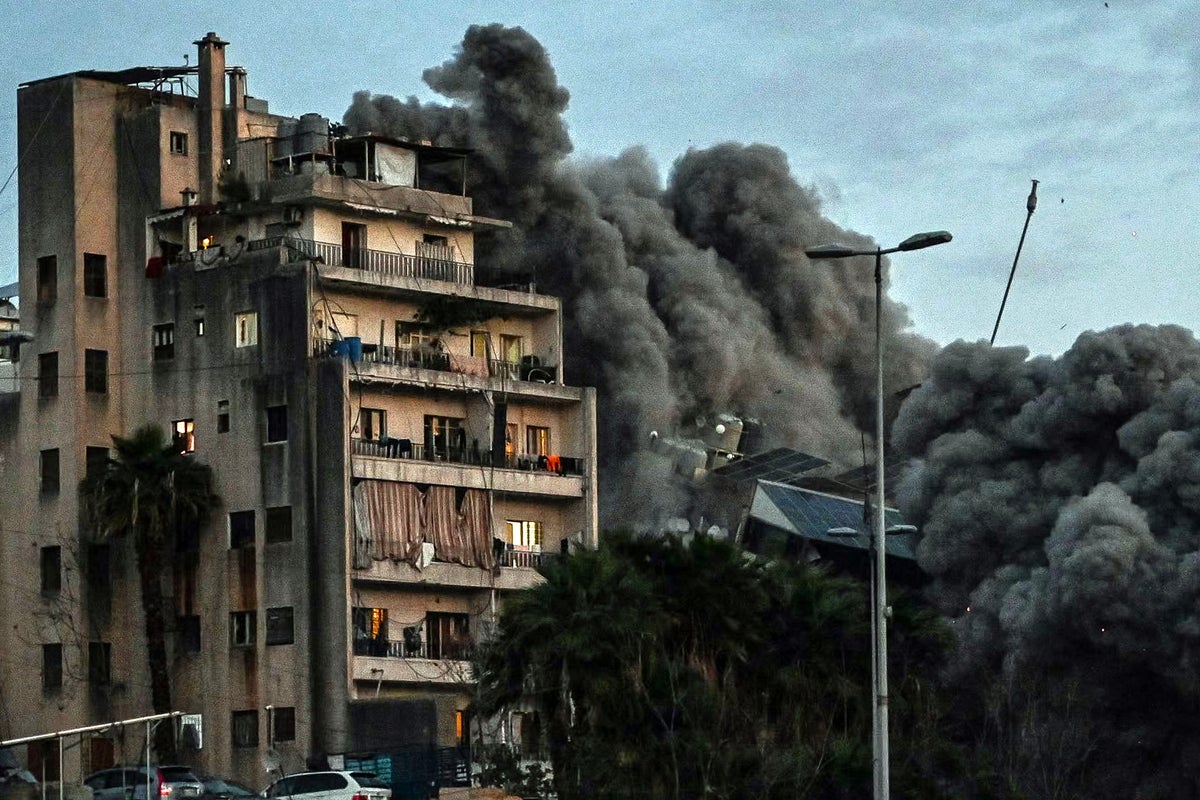
The recent engagement between Israeli Defense Forces (IDF) armored units and United Nations Interim Force in Lebanon (UNIFIL) positions represents more than a tactical error; it is a breakdown in the deconfliction protocols that govern modern hybrid warfare. When an IDF Merkava tank fires upon a UN observation tower in Naqoura, the immediate impact is physical, but the structural impact is the total degradation of the "Buffer Logic" that has stabilized the Blue Line since 2006. This event signals a transition from managed friction to an era of operational primacy where international observer status no longer functions as a hard constraint on kinetic maneuvers.
The Triad of Operational Friction
The incident at the UNIFIL base is best understood through three distinct layers of failure. Each layer contributes to a compounding risk profile that makes future injuries to non-combatants statistically inevitable under current Rules of Engagement (ROE).
- The Identification Failure (The Sensor-to-Shooter Gap): Modern armored warfare relies on rapid target acquisition. If an observation tower is flagged as a potential ATGM (Anti-Tank Guided Missile) launch site due to its elevation and proximity to Hezbollah launch zones, the biological decision-maker has seconds to verify the target. The failure to distinguish between a UN observer and a hostile combatant suggests either a collapse in real-time intelligence sharing or a shift in the "Acceptable Risk" threshold regarding neutral casualties.
- The Tactical Encroachment: IDF operations in Southern Lebanon are characterized by "Area Clearing" rather than "Point Defense." As the IDF moves to dismantle Hezbollah’s tunnel infrastructure—often located within hundreds of meters of UNIFIL outposts—the geographic overlap creates a "Danger Close" environment. The physical footprint of a UN base acts as a topological obstacle that IDF commanders now view as a liability rather than a protected zone.
- The Political Decoupling: Historically, the presence of UNIFIL served as a diplomatic shield for Israel, providing a third-party witness to Hezbollah violations. The shift toward direct fire indicates that the Israeli high command has determined the diplomatic cost of UNIFIL casualties is now lower than the operational cost of restricted movement.
The Cost Function of Neutrality in Active Corridors
In a theater where non-state actors like Hezbollah utilize "Human Shielding" and "Infrastructure Integration," the value of a neutral third party diminishes. We can analyze this through the Neutrality Utility Curve. In a low-intensity conflict, the presence of UNIFIL provides high utility by preventing accidental escalation. However, in high-intensity urban and subterranean warfare, the utility of a fixed, immobile observer drops toward zero as they become a static variable in a dynamic fire-zone.
The injury of peacekeepers is the output of an equation where the IDF prioritizes the Minimum Time to Objective (MTO) over the Collateral Diplomatic Mitigation (CDM). By firing on the tower, the IDF sends a non-verbal strategic signal: the mission parameters for "Operation Northern Arrows" do not include a "Zero-Harm" mandate for UN personnel who remain in the path of the advance.
Deconstructing the Tank Fire Mechanism
The IDF's explanation—that the fire was directed at a threat near the base—reveals a specific failure in Bore-Sight Discipline.
- Line of Sight (LOS) Obstruction: If a tank crew is tracking a target through thermal optics, the silhouette of a UN tower can easily mask a combatant’s movement.
- Fragmentation Radius: Even if the primary kinetic energy penetrator (the sabot or HEAT round) misses the tower, the secondary fragmentation or the collapse of structural supports due to the overpressure of a 120mm smoothbore gun can cause the "injuries" reported.
- Rules of Engagement (ROE) Compression: In the current environment, IDF tank commanders are likely operating under a "pre-emptive response" protocol. If a sensor indicates a laser paint or an electronic signature from the direction of the UN base, the crew is authorized to return fire immediately. The lag in verifying that the signature did not come from the UN tower itself is where the system fails.
The Erosion of UN Security Council Resolution 1701
Resolution 1701 was built on the assumption of a Binary Border. It assumed that the Lebanese Armed Forces (LAF) and UNIFIL would hold the South, while the IDF remained behind the Blue Line. That binary has shattered.
The current conflict has replaced 1701 with a Zone-Based Security Model. In this model, the IDF seeks to create a "Cordon Sanitaire"—a 5-to-10-kilometer deep strip of land where no standing structures (UN or otherwise) can be allowed to obscure the view of the IDF’s advanced sensors. The strike on the Naqoura tower is a physical manifestation of the IDF's desire to "Clear the View." By making the environment untenable for UNIFIL, Israel exerts pressure on the UN to withdraw its forces, thereby removing the "eyewitness" constraint from the battlefield.
Structural Blindness and Intelligence Silos
A recurring theme in the IDF’s defense is the lack of "Intentionality." However, in a data-rich environment, "unintentional" fire is often the result of Intelligence Siloing.
- Horizontal Information Flow: Do the ground-level tank commanders have the same GPS-overlay of "No-Strike Zones" that the division-level planners have?
- Signal Interference: In a zone heavy with electronic warfare (EW), GPS-guided munitions and digital maps can drift. If the IDF is jamming Hezbollah's communications, they may also be degrading the precision of their own blue-force tracking systems.
The result is a phenomenon known as Targeting Drift, where the operational urgency to neutralize a threat causes the operator to ignore the "Protective Halo" surrounding a neutral site.
The Strategic Pivot for International Observers
The injury of peacekeepers creates a secondary effect: the Delegitimization of the Mandate. If UNIFIL cannot protect its own towers from tank fire, its ability to "monitor" Hezbollah’s disarmament is non-existent. This creates a feedback loop.
- The UN remains in place but is neutralized by kinetic fear.
- Hezbollah utilizes the "dead space" around UN bases for cover.
- The IDF strikes these areas to flush out Hezbollah.
- UN casualties rise, leading to international condemnation.
- The IDF ignores the condemnation, citing the failure of the UN to prevent Hezbollah’s presence.
This cycle ensures that the "Peacekeeping" model is being replaced by a "Combatant-Only" model. The UN tower is no longer a symbol of international law; it is a high-ground asset that must be controlled or neutralized.
Logistics of the "Withdrawal Demand"
Israel’s formal and informal requests for UNIFIL to move five kilometers north are not merely for the peacekeepers' safety. They are a tactical requirement for the use of Heavy Artillery and Air-to-Ground Munitions.
Large-scale demolition of Hezbollah’s "Nature Reserves" (fortified forest zones) requires the use of unguided or high-yield explosives that have a significant circular error probable (CEP). The presence of UNIFIL personnel within that CEP forces the IDF to use more expensive, precision-guided munitions (PGMs) or, worse, to send in infantry to clear areas manually. By "hitting" the base with tank fire, the IDF increases the "Personal Risk Index" for UN member states, hoping they will unilaterally decide to withdraw their contingents (such as the Irish, Italian, or French troops) to avoid domestic political fallout.
Forecasting the Deconfliction Collapse
The trajectory of this conflict suggests that deconfliction will continue to fail as the IDF moves deeper into the "Second Line" of Hezbollah defenses. We should anticipate three specific developments:
- Total Sensor Blindness: UNIFIL will likely retreat into bunkers, ceasing all visual and electronic monitoring of the Blue Line. This grants the IDF total freedom of movement but also allows Hezbollah to move more freely in the "interstitial spaces" between IDF columns.
- The Rise of "Collateral Justification": IDF spokespeople will increasingly use the "Necessity Defense," arguing that the proximity of Hezbollah assets to UN bases makes the bases legitimate tactical targets under the principle of proportionality.
- European Contingent Fracturing: If injuries continue, we will see a split in UNIFIL. Nations with high risk-aversion will withdraw, while others may stay, leading to a "Swiss Cheese" peacekeeping line that serves no functional purpose.
The IDF’s kinetic pressure on UNIFIL is a deliberate recalculation of the costs of war. The "buffer" is being cleared to make way for a "firewall."
For any organization or state actor involved, the next move is not a diplomatic protest, but a technical overhaul of the Common Operational Picture (COP). If the IDF and UNIFIL do not integrate their digital tracking systems—allowing every tank commander to see the exact real-time location of every UN peacekeeper on their heads-up display—the "accidental" fire will become a permanent feature of the Lebanese landscape. Until that integration occurs, the UN tower is not a sanctuary; it is a target.
Establish a hardened, encrypted "Direct-to-Commander" link between the Naqoura headquarters and the IDF Northern Command to replace the currently failing multi-step deconfliction chain. This is the only mechanism to prevent the total transition of the Blue Line into a permanent "Free-Fire Zone."