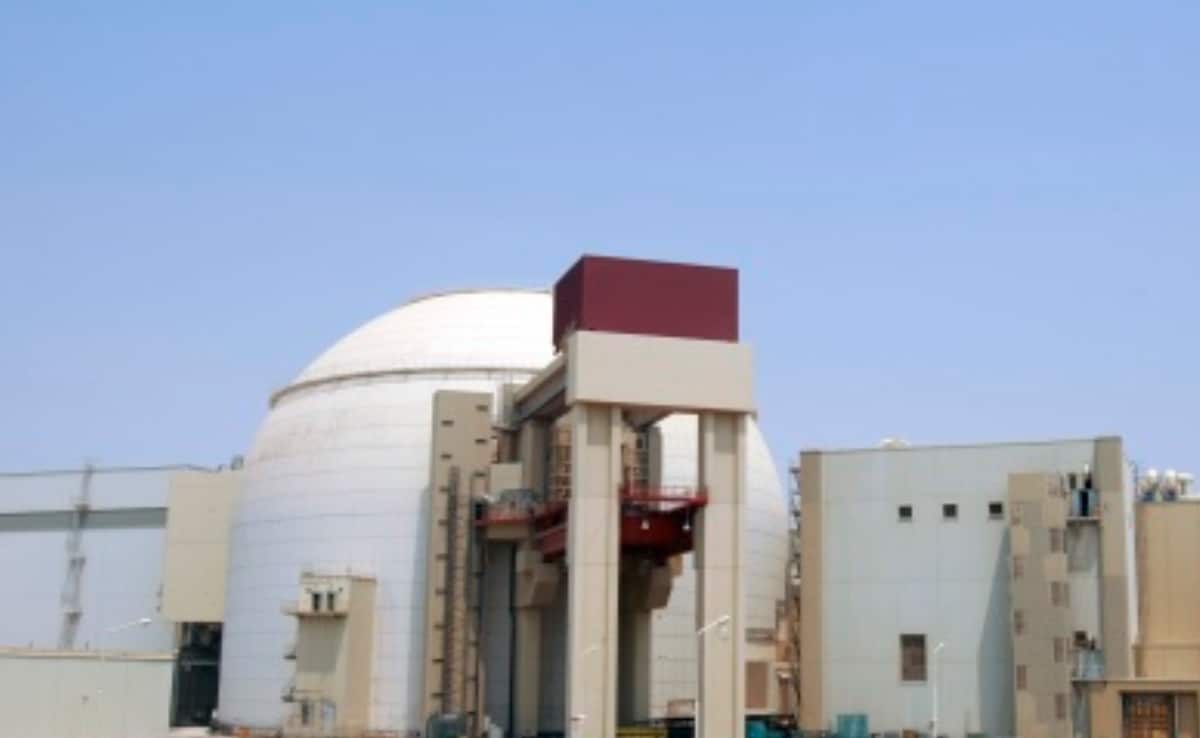
The targeting of the Bushehr Nuclear Power Plant (BNPP) represents a fundamental shift in the doctrine of counter-proliferation and regional escalation. While previous kinetic interventions—such as the 1981 Operation Opera or the 2007 strike on Al-Kibar—targeted facilities in the developmental or pre-operational phases, the strike reported by international monitors at Bushehr involves a grid-connected, light-water reactor (LWR). This act shatters the long-standing "nuclear taboo" regarding operational civilian infrastructure. To evaluate the impact, one must look past the immediate physical damage and analyze the intersection of radiological risk, regional energy security, and the degradation of Iran's "Sanctuary Logic."
The Triad of Operational Vulnerability
The vulnerability of the Bushehr site is not merely a function of its geographic coordinates, but a product of three specific structural vectors. Analysts often mistake the containment dome for the only target of consequence; however, the functional neutralization of a nuclear site rarely requires the breach of the reactor core itself.
- The Cooling Loop Bottleneck: A pressurized water reactor (PWR) like the VVER-1000 at Bushehr relies on a continuous exchange of heat. Striking the ultimate heat sink—the intake structures drawing water from the Persian Gulf—is more strategically efficient than attempting to penetrate several meters of reinforced concrete. If the external cooling supply is severed, the facility faces a forced shutdown, rendering the multi-billion-dollar asset a liability.
- Switchyard and Grid Integration: The physical link between the 1,000 MW(e) generated at Bushehr and the Iranian national grid is the high-voltage switchyard. Disruption here does not cause a meltdown, but it induces "Load Shedding" across Southern Iran. By targeting the electrical outflow, an aggressor achieves the economic objective of a blackout without the international pariah status associated with a radiological release.
- Logistical Sequestration: Bushehr operates on a fuel-cycle agreement with Russia (Rosatom). The specialized infrastructure required to handle spent fuel rods and fresh assemblies is highly specific. Damage to the fuel handling cranes or the specialized cooling ponds creates a terminal bottleneck. Even if the reactor is intact, the inability to cycle fuel ends its operational life.
The Radiological Cost Function
The primary deterrent against striking Bushehr has historically been the "Radiological Blowback" theory. This framework suggests that the environmental and humanitarian cost of a breach would outweigh any tactical gain. However, the precision of the reported strikes suggests a shift toward Surgical Neutralization.
In a standard VVER-1000, the inventory of fission products—specifically $I^{131}$ and $Cs^{137}$—is massive. The release of these isotopes depends on the "Source Term," which is the fraction of radioactive material that escapes the containment. If an attack targets the turbine hall or the administrative control centers (the "soft" components), the Source Term remains zero.
The strategic calculation has evolved from Destruction to Functional Deniability. By hitting the auxiliary systems, an attacker forces the Iranian Atomic Energy Organization (AEOI) to keep the reactor offline indefinitely for "safety inspections," effectively achieving the same result as a total demolition but without the atmospheric contamination that would drift over neighboring Gulf states like Kuwait or the UAE.
Degradation of the Sanctuary Logic
For decades, Tehran operated under the assumption that Bushehr was "off-limits" due to its civilian status and Russian involvement. This is the Sanctuary Logic: the belief that certain assets are too high-profile or internationally integrated to be targeted. The recent strike dismantles this pillar in several ways:
- Erosion of Russian Deterrence: As the primary architect and fuel provider for Bushehr, Russia served as a diplomatic shield. The strike demonstrates that the presence of Russian technical personnel is no longer a "tripwire" sufficient to prevent kinetic action.
- The Precedent of Proportionality: By successfully hitting the site without causing a core breach, the attacker has set a new threshold for "proportional response." It signals that nuclear sites are now fair game, provided the strike is technically sophisticated enough to avoid a catastrophe.
- Intelligence Primacy: Striking a site as heavily defended as Bushehr requires not just munitions, but a "Map of the Invisible." This includes real-time telemetry on air defense cycles (S-300 and local variants) and internal facility schedules. The strike serves as a signal of total transparency; it tells the defender that their most sensitive interiors are mapped and monitored.
Energy Security as a Kinetic Variable
Iran’s energy architecture is increasingly fragile. While the country sits on vast gas reserves, the domestic grid is plagued by inefficiency and seasonal deficits. Bushehr provides roughly 2-3% of Iran’s total electricity, but its role in the Southern Energy Corridor is more significant.
The loss of 1,000 MW from a single node creates a voltage instability that ripples through the industrial sectors of Khuzestan and Bushehr provinces. When a nuclear plant trips offline, the grid cannot simply "ramp up" a hydro or gas plant to compensate instantly. The sudden deficit requires immediate rolling blackouts to prevent a total grid collapse (Black Start scenario).
This makes the BNPP strike a form of Economic Warfare by Proxy. The target is the reactor, but the victim is the industrial output of the region. This creates a domestic pressure variable: the Iranian government must choose between the high cost of repair and the social unrest generated by prolonged energy poverty in the south.
Technical Constraints and Defense Limitations
The failure of the Tor-M1 and S-300 batteries surrounding the site to intercept the strike points to a specific technological gap: the Low-Observable/High-Saturation Paradox.
Traditional air defenses are optimized for high-altitude, high-speed threats. Small, low-RCS (Radar Cross Section) drones or sub-sonic cruise missiles utilizing terrain-following maneuvers can exploit the "clutter" of the coastal landscape. Furthermore, if the attack used electronic warfare (EW) to blind the radar arrays at the moment of impact, the density of the defense becomes irrelevant.
The "Shield" at Bushehr was shown to be reactive rather than proactive. In a modern kinetic environment, once a missile is in its terminal phase, the probability of intercepting it over a sensitive nuclear site is a losing bet—even a successful interception could result in debris hitting the sensitive infrastructure.
The Shift to Sub-Critical Sabotage
Moving forward, the doctrine of attacking nuclear targets will likely bifurcate. We are seeing the end of the "Stuxnet Era" (purely cyber) and the "Osirak Era" (total kinetic destruction). We have entered the era of Sub-Critical Sabotage.
This involves:
- Kinetic Precision: Hitting specific pumps or transformers that are not easily replaced due to international sanctions.
- Psychological Attrition: Ensuring the technical staff feels unsafe, leading to a "Brain Drain" of the nuclear elite.
- Regulatory Paralysis: Triggering the IAEA's safety protocols so that the facility is legally mandated to shut down, even if it is physically capable of running.
The strategic play is no longer to "stop" the program—as the knowledge is already resident in Iranian scientists—but to make the Cost of Operation exceed the Benefit of Presence.
The immediate requirement for regional actors is a recalibration of Civil Defense. If operational reactors are now valid targets, the "Safety Zones" around civilian centers must be expanded, and the deployment of Point Defense Systems (C-RAM, directed energy) must be prioritized over long-range strategic SAMs. The strike on Bushehr is the first page of a new manual on high-intensity, controlled escalation.
The focus must now shift to the "Post-Strike Recovery Curve." The speed at which Tehran can restore the switchyard or cooling systems will dictate the long-term deterrent value of the strike. If the repairs take years due to supply chain restrictions on VVER-specific components, the strike will be categorized as a strategic success. If the grid is restored in weeks, the intervention will be viewed as a mere tactical annoyance, likely necessitating a second, more aggressive wave.