Shigeru Ishiba is walking into a room where the floor is made of thin glass. The Japanese Prime Minister is preparing for a series of high-stakes conversations with Donald Trump, and the timing couldn't be worse. Between a volatile Middle East and a shifting American presidency, Tokyo finds itself squeezed. Japan isn't just worried about trade tariffs or military base costs. It's about a decades-old energy security strategy that's currently screaming "red alert" because of the brewing conflict in Iran.
If you think this is just another standard diplomatic meet-and-greet, you're wrong. Japan imports nearly 90% of its oil from the Middle East. When the Strait of Hormuz gets twitchy, the Japanese economy feels a literal shiver. Ishiba has to convince a "Peace through Strength" American administration that Japan’s specific relationship with Tehran is an asset, not a betrayal of the alliance. It's a tough sell. Trump has historically favored maximum pressure on Iran. Japan, conversely, has spent years playing the role of the quiet mediator.
The Energy Trap No One is Talking About
Most analysts focus on the military hardware. They talk about F-35s and the Aegis Ashore system. Those matter, sure. But the real nightmare for the Kantei—the Prime Minister's office—is the literal flow of crude oil. Japan is one of the few G7 nations that has maintained a functional, if strained, diplomatic channel with Iran. This isn't because they're fans of the regime. It's because they have to be.
Ishiba knows that if the U.S. pivots toward a hot conflict or even a more aggressive blockade of Iranian exports, the ripple effects hit Tokyo first. We're talking about a potential spike in manufacturing costs that could derail Japan's fragile post-pandemic recovery. Ishiba's task is to explain to Trump that a total collapse of the Iran nuclear deal—or what's left of it—might lead to a regional explosion that Japan simply cannot afford to subsidize.
It's a gamble. Trump doesn't usually do "nuance." He does deals. Ishiba needs to frame Japan’s Iran policy as a way to keep the region from falling entirely into a sphere of influence dominated by competitors.
Why This Meeting is Different from the Abe Era
Everyone remembers the "golf diplomacy" between the late Shinzo Abe and Donald Trump. It was performative, but it worked. Abe knew how to stroke an ego. Ishiba is different. He's more academic, more blunt, and frankly, less interested in being a sidekick. This creates a friction point.
Trump’s "America First" 2.0 isn't going to be a carbon copy of the 2016-2020 term. The world is more fractured now. Russia is entrenched in Ukraine. China is more assertive in the South China Sea. Japan is caught in the middle. When Ishiba sits down with Trump, he isn't just representing Japan; he’s representing the stability of the entire Pacific rim.
The Iran conflict looms large because it’s the ultimate distraction. If the U.S. gets bogged down in another Middle Eastern quagmire, the security umbrella over Japan starts to look a lot thinner. Ishiba has to argue that keeping the peace with Iran—or at least preventing a total war—is actually in the best interest of American "greatness." He has to make Trump see that a stable Middle East allows the U.S. to focus on the "real" threat in the East.
The Cost of Defense and the Price of Peace
There is also the "checkbook" problem. During his previous term, Trump frequently complained that Japan wasn't paying enough for the 50,000+ U.S. troops stationed there. Since then, Japan has significantly increased its defense budget, aiming for 2% of GDP. This is a massive shift for a country with a pacifist constitution.
Ishiba will likely use this as leverage. "Look," he’ll say, "we’re buying your jets. We’re upgrading our ports. We’re standing with you on China." But the unspoken "but" is the Iran situation. Japan wants a "hall pass" to keep talking to Tehran. They want to ensure that if sanctions tighten, Japan’s energy needs are grandfathered in or protected.
It’s a lopsided trade-off. Japan gives on military spending and gets a bit of breathing room on energy diplomacy. Whether Trump buys that deal is the billion-dollar question.
Strategic Patience is Running Out in Tokyo
You can feel the anxiety in the Japanese Ministry of Foreign Affairs. They remember 2019. Abe went to Tehran to try and lower the temperature, and while he was there, tankers—including one linked to Japan—were attacked. It was an embarrassment. It showed the limits of Japanese "soft power."
Ishiba doesn't want a repeat of that. He’s likely to take a more pragmatic approach. Instead of trying to be the "Great Mediator," he’ll focus on risk management. He needs to know exactly where Trump’s "red line" is with Iran. If the U.S. plans to strike, Japan needs to know so it can pivot its energy sourcing immediately. Uncertainty is the enemy of the Japanese markets.
The "difficult" nature of these talks stems from the fact that Ishiba cannot give Trump what he really wants: a total severance of ties with Iran. Doing so would leave Japan entirely dependent on American goodwill for its energy security. In a world where "America First" is the guiding principle, that’s a dangerous place for an island nation to be.
Moving Beyond the Handshake
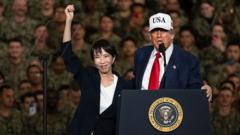
Watch the body language in the photos. If Ishiba looks stiff, it’s because he’s carrying the weight of a national energy crisis on his shoulders. He needs to walk away with a clear understanding of U.S. naval intentions in the Persian Gulf.
For Japan, the goal isn't just a successful meeting. It's a survival strategy. You should keep an eye on the official joint statements for any mention of "maritime security" in the Middle East. That's code for how much Japan is willing to help the U.S. police the region in exchange for keeping the oil flowing.
The next step for Tokyo isn't just talking. It’s diversifying. Expect Japan to accelerate its transition to hydrogen and nuclear power even faster now. They’ve realized that being at the mercy of a meeting in Mar-a-Lago or the White House regarding Iranian drones is a strategic failure they can't repeat.