In a windowless basement in lower Manhattan, or perhaps a high-tech lab in California, a cursor blinks on a spreadsheet. It is waiting for a number. This isn't just any digit; it is the "social cost of carbon." To most people, it sounds like the driest possible phrase in the English language. It sounds like something meant to be buried in a 400-page regulatory filing that no one will ever read.
But this number is the ghost in the machine of modern civilization.
When a government decides whether to allow a new coal plant, or how many miles per gallon your car should get, they use this number to calculate the future pain of every ton of carbon dioxide we pump into the sky. It is a price tag on the end of the world. If the number is high, green energy looks like a bargain. If the number is low—or if you find a way to make it vanish—fossil fuels suddenly look like free money.
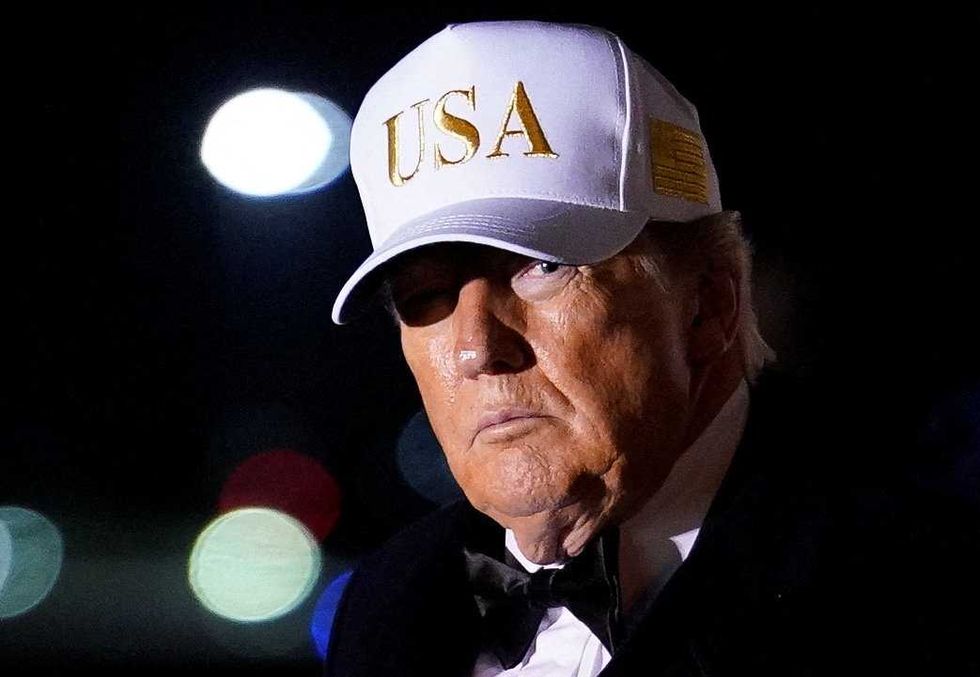
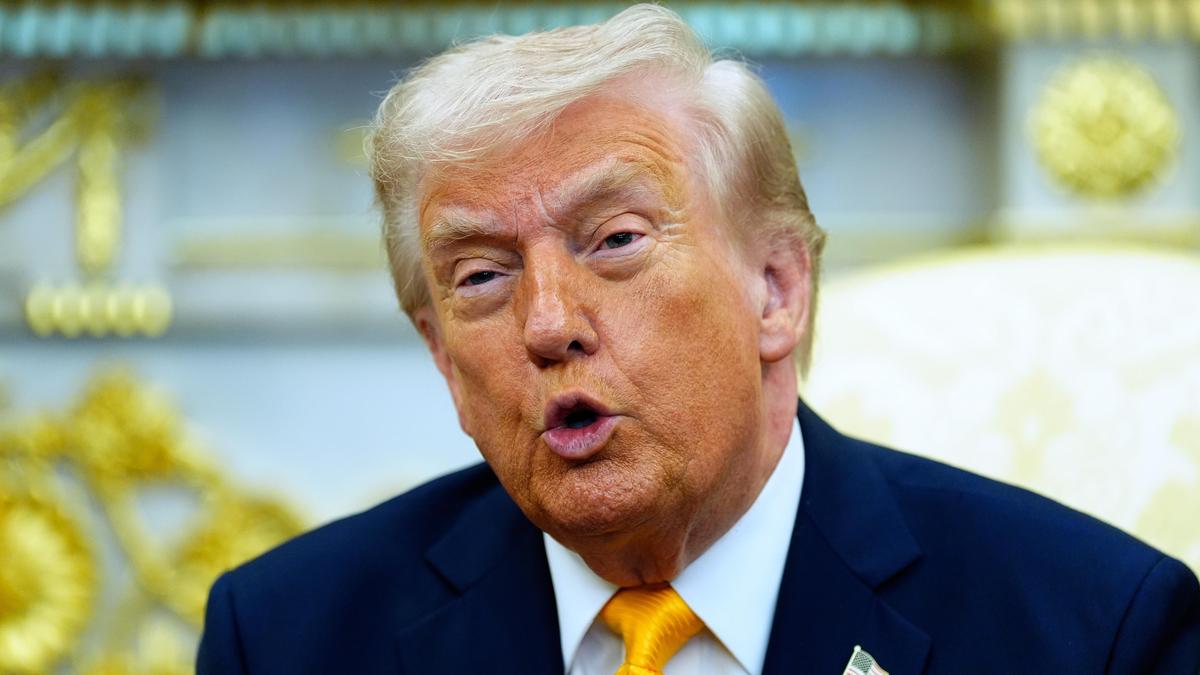
Recently, the gears of this invisible clock were intentionally jammed. A decision from the Oval Office sought to revoke the very basis of how we calculate the damage we do to our own future. It wasn't just a policy shift. It was an attempt to rewrite the physics of the next century.
The Man in the Flood Zone
Consider a hypothetical man named Elias. Elias lives in a modest home in coastal Louisiana. He doesn’t spend his days thinking about federal regulatory frameworks or the nuances of the Administrative Procedure Act. He thinks about the humidity. He thinks about the way the water in the bayou seems to be inching closer to his porch every hurricane season.
When the federal government decides to ignore the "social cost of carbon," they are essentially telling Elias that his home has a value of zero in the grand equation of progress. By revoking the standard used to measure climate impact, the administration wasn't just cutting red tape. They were deleting the financial incentive to protect Elias’s driveway from the sea.
The logic used to justify this revocation was simple: focus only on the domestic "benefits" of deregulation today, and ignore the global "costs" of tomorrow. It’s a bit like a man deciding to save money on his water bill by letting his neighbor’s house burn down. It works for a moment. But eventually, the fire spreads.
The Rebellion of the States
The pushback didn't come from a single voice. It came as a roar from a coalition of states—California, New York, Washington, and others—who realized that if the federal government stopped counting the cost of carbon, the states would be the ones left holding the bill.
These states filed a massive legal challenge against the revocation of the climate metrics. Their argument wasn't just emotional; it was deeply, stubbornly practical. They argued that you cannot solve a global problem by looking through a peephole. If a wildfire in the Sierras is fueled by a global rise in temperature, how can a federal regulator claim that only "domestic" carbon matters?
Climate change is the ultimate boundary-breaker. It does not recognize state lines. It does not care about national borders. When the U.S. government tried to narrow the scope of climate regulations, it was attempting to perform a sort of legal magic trick—trying to make the global atmosphere disappear.
The states knew better. They saw the price of insurance premiums skyrocketing. They saw the cost of rebuilding bridges washed away by "once in a century" storms that now happen every five years. They understood that if the federal government stopped using the social cost of carbon, the true cost wouldn't go away. It would just be transferred to the taxpayers in the form of disaster relief and ruined lives.
The Weight of a Single Ton
To understand why this legal battle matters, you have to understand the math. For years, the federal government used a complex formula to determine that every ton of $CO_2$ emitted caused roughly $50 of damage to the planet. That $50 accounted for lost crops, heat-related deaths, and flooded cities.
When the Trump administration moved to revoke the foundations of these regulations, they didn't just tweak the number. They tried to slash it. Some estimates suggested they wanted the cost to be as low as $1 per ton.
Think about that difference.
At $50 a ton, a new pipeline might be too expensive to justify. At $1 a ton, you could pave the entire country in asphalt and the spreadsheets would still show a profit. This wasn't a debate about science; it was a raid on the ledger. It was an attempt to make the future look cheap so the present could be profitable.
The Ghost in the Courtroom
Lawsuits of this magnitude usually involve thousands of pages of jargon. They talk about "arbitrary and capricious" actions. They cite decades-old precedents. But beneath the paper trail is a very human fear. It is the fear that we are losing our ability to plan for a world our children can actually inhabit.
The states challenging the revocation were acting as a firewall. They were insisting that reality cannot be legislated out of existence. You can tell a thermometer that it’s not allowed to go above 70 degrees, but that won't stop the ice from melting.
The legal challenge focused on a simple truth: the government is required by law to base its decisions on the best available science. By ignoring the global impacts of carbon, the administration was intentionally blinding itself. It was choosing ignorance as a policy tool.
The High Stakes of Silence
We often think of "climate regulations" as a set of rules that stop businesses from doing what they want. But that is a narrow view. In reality, these regulations are the only thing that forces us to be honest about what we are doing.
Without a strong, scientifically backed cost of carbon, we are flying blind. We are building infrastructure that will be underwater in twenty years. We are investing in industries that have no future. We are, quite literally, lying to ourselves about the price of our own comfort.
The states that rose up to challenge this decision weren't just fighting for the environment. They were fighting for the integrity of the math. They were fighting for the idea that facts should matter more than political cycles.
Imagine the blinks of that cursor again. In the end, that small, flickering line represents the choice between two worlds. One world acknowledges that we are all connected, that a factory in the Midwest affects a fisherman in the Gulf, and that the cost of our actions must be paid eventually. The other world pretends we are all islands, that the future is someone else's problem, and that the only thing that matters is the profit margin of the next three months.
The court cases will drag on. The lawyers will bill their hours. The headlines will move on to the next scandal. But the invisible math remains. Every ton of carbon we release into the air is a debt we are writing against the lives of people we will never meet. The states realized that if we stop counting that debt, it doesn't mean we don't have to pay it. It just means the bill will be a surprise when it finally arrives, and by then, we won't have the money to cover it.
The bayou is still rising. The cursor is still blinking. The only question is whether we have the courage to write down the real number, even if we don't like what it says.