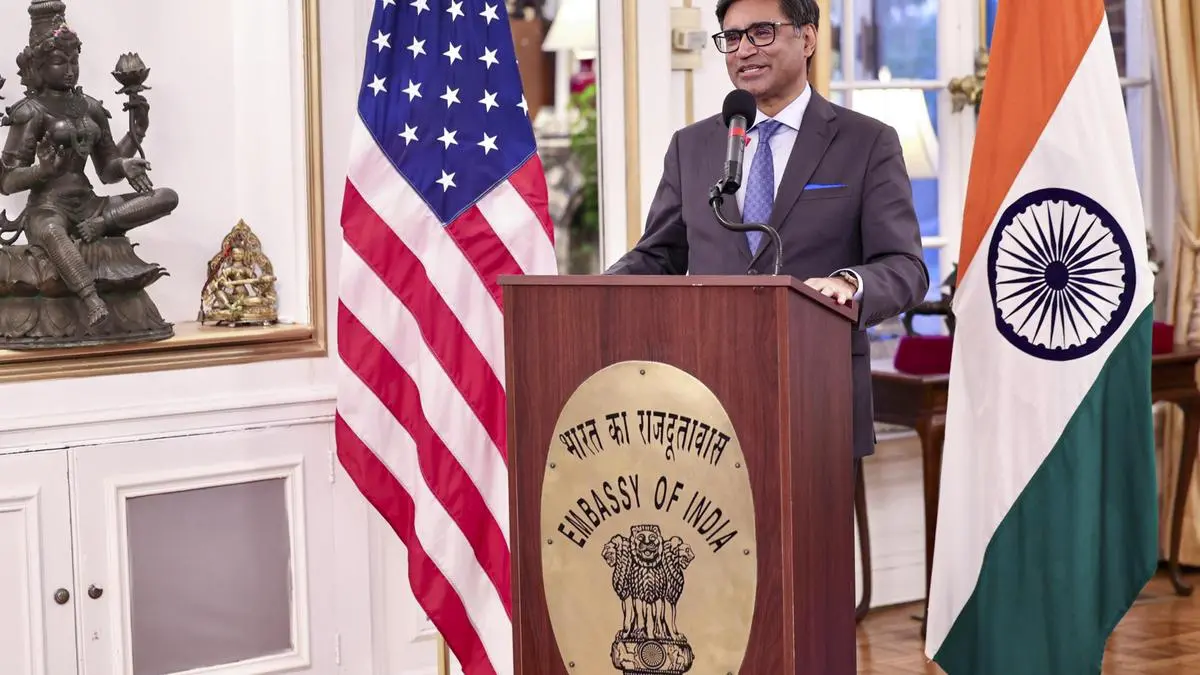
Foreign Secretary Vikram Misri isn't just taking a routine flight to Europe this week. He’s carrying the weight of a nation trying to insulate itself from a literal firestorm. As he touches down in Paris and Berlin for a three-day mission starting April 12, 2026, the subtext is impossible to ignore. West Asia—India's primary source of energy and home to nearly 10 million of its citizens—is locked in a dangerous escalatory cycle.
You might think India would be hunkering down at home. Instead, New Delhi is moving fast to cement ties with the heavyweights of the European Union. It’s a calculated play. If the Gulf remains a powder keg, India needs more than just hope; it needs diversified trade routes, high-tech defense partnerships, and a nuclear energy roadmap that actually works.
Navigating the Energy Minefield
Let’s be real about the situation in the Gulf. Since the conflict intensified in late February 2026, the stakes for Indian energy security have skyrocketed. We’re talking about a region that feeds India’s massive industrial hunger. When tankers are being harassed and shipping lanes are under threat, "business as usual" is a fantasy.
Misri’s talks in Paris and Berlin aren't just about "green energy" in a vague, feel-good sense. They’re about survival. France is a titan in civil nuclear energy. India has been eyeing an expansion of the Jaitapur Nuclear Power Project for years, but now the urgency is different. Every megawatt generated by a reactor is a megawatt that doesn't depend on a vulnerable oil tanker crossing the Strait of Hormuz.
In Berlin, the focus shifts to the "Green and Sustainable Development Partnership." Germany has the engineering clout India needs to scale up hydrogen and solar at a pace that keeps up with its GDP growth. If you're wondering why Misri is there now, look at the gas prices at your local station. That’s the answer.
Defense Ties in a Fractured World
India has spent the last few years trying to shed its reputation as the world's biggest arms importer. It wants to be a manufacturer. But you don't get there by buying off-the-shelf equipment from the usual suspects. You get there through co-development.
Misri's consultations with Martin Briens in Paris and Géza Andreas von Geyr in Berlin are deep-diving into the "Atmanirbhar Bharat" (Self-Reliant India) initiative. France has already shown it’s willing to share the "crown jewels" of technology—think jet engine tech and underwater drones—that other nations keep under lock and key.
- The French Connection: Expect movement on the Scorpene-class submarine deal and further integration of Rafale-related ecosystems.
- The German Shift: Berlin has traditionally been more cautious with defense exports. However, since the "Zeitenwende" (historic turning point), Germany is looking for stable, democratic partners. India fits that bill perfectly.
If the West Asia crisis shuts down traditional supply chains, India needs defense partners who can help build a domestic industrial base that won't freeze up when a regional war breaks out.
The Trade Reality Check
Don't let the diplomatic jargon fool you. The "India-EU Free Trade Agreement" (FTA), which saw a breakthrough in early 2026, is the bedrock of this trip. We’re currently in the implementation phase, and that’s where the real friction happens.
India is pushing for better market access for its professionals and its agricultural products. Europe, meanwhile, is obsessed with "strategic autonomy"—reducing its reliance on China. This creates a massive opening for India. If you’re a business owner in New Delhi or Mumbai, you’re looking at a European market that is desperate for a reliable alternative to Beijing’s manufacturing dominance.
Misri is there to ensure that the technicalities of the FTA don't get bogged down in bureaucracy. With the U.S. moving toward more protectionist "America First" policies under the current administration, the EU has become India’s most logical hedge. It’s about not putting all your eggs in one basket.
The Human Element and Maritime Security
One thing that often gets lost in high-level diplomacy is the human cost. India is the only country that has officially lost mariners in the recent attacks on merchant shipping in the Gulf. This isn't just a statistic; it’s a national security crisis.
Misri is using this trip to build a coalition for "freedom of navigation." He’s not just asking for sympathy. He’s coordinating with European naval forces—specifically EUNAVFOR—to ensure that the sea lanes remain open. India’s maritime security isn't just about its own coast anymore; it’s about the entire Indian Ocean and the gateways to the Mediterranean.
What This Means for You
This isn't just "foreign policy stuff" that happens in fancy rooms. The outcomes of Misri’s meetings in April 2026 will dictate:
- Fuel Costs: The success of nuclear and green energy deals determines how much you’ll pay for electricity in five years.
- Job Opportunities: Faster FTA implementation means more Indian tech and service firms can operate in Europe without the current red-tape headache.
- National Safety: Defense co-production means India becomes less reliant on foreign supply lines that could be cut off during a global crisis.
This trip is a pivot. India is realizing that while West Asia is its immediate neighborhood, Europe is its strategic anchor. Misri is in Paris and Berlin to make sure that anchor holds while the storm rages elsewhere.
Keep an eye on the joint statements coming out of Berlin on April 14. If there’s a specific mention of a "fast-track mechanism" for trade or a new "defense industrial roadmap," you’ll know the mission was a success. The era of India playing it safe in the middle is over; now, it’s about picking the partners that can actually deliver.
Check the Ministry of External Affairs' official portal for the specific breakdown of the co-chaired consultations once they wrap up. If you're in the export-import business, pay close attention to the new "Digital Public Infrastructure" (DPI) interoperability talks—they’re going to change how cross-border payments work between India and the Eurozone faster than you think.