Standing in the middle of the Haskell Free Library and Opera House means you're literally in two countries at once. It’s a bizarre, beautiful geographical anomaly where a thick black line on the floor separates Stanstead, Quebec, from Derby Line, Vermont. But lately, this symbol of international harmony has felt more like a cage than a bridge. If you've been following the news about the U.S.-Canada border, you know things have changed.
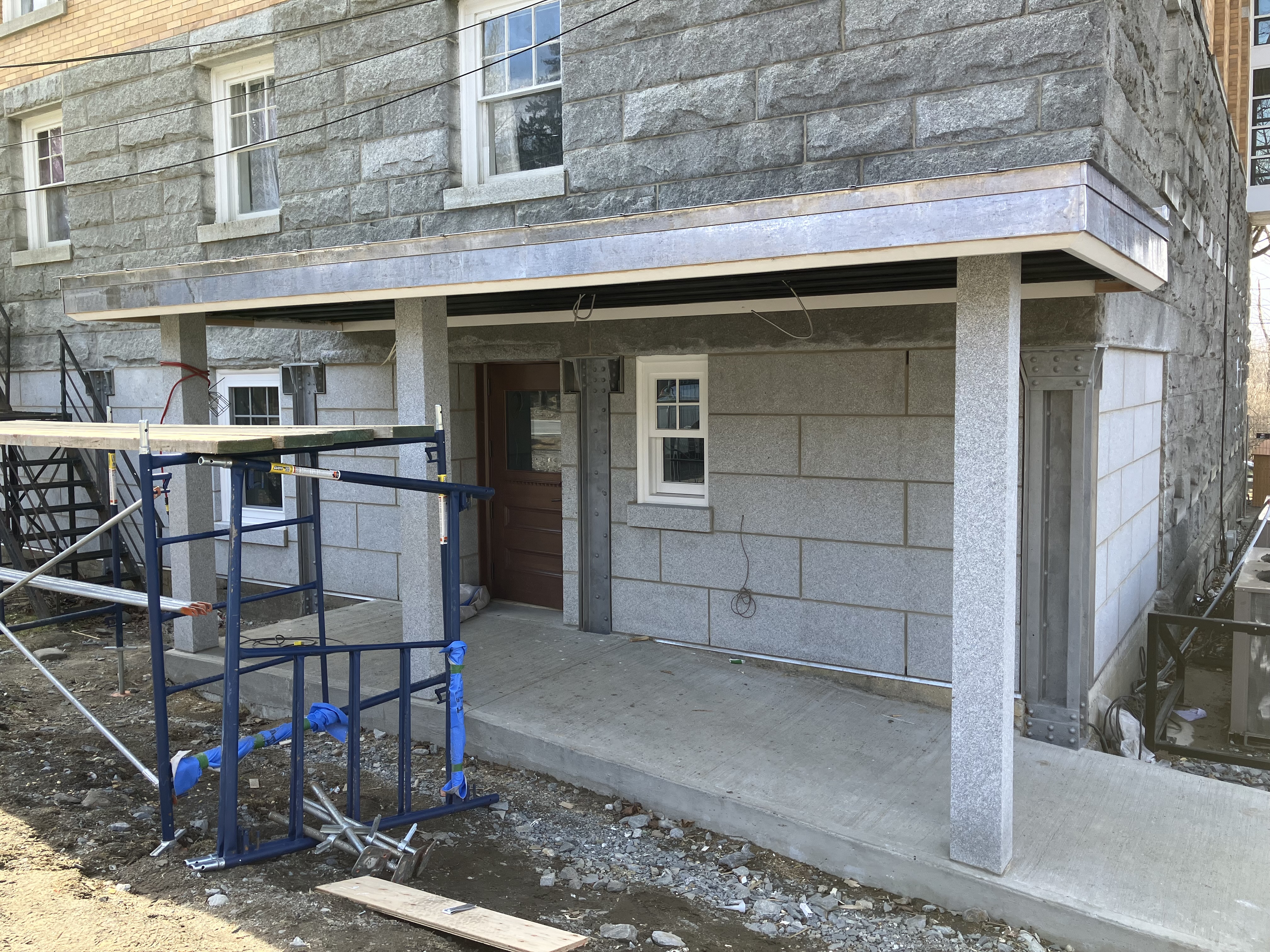
The library is currently building a new entrance for Canadians. This isn't just a minor renovation or a cosmetic facelift. It's a survival tactic. For over a century, the only way into the building was through the American side. For Canadians, that meant walking across an invisible line, which technically constitutes an international crossing. While the authorities looked the other way for decades, the current political climate has turned a simple trip to return a book into a potential legal nightmare. For another view, check out: this related article.
The End of the Honor System
For most of its history, the Haskell functioned on a sort of "gentleman's agreement." Residents of Stanstead could walk across the line to the front door, do their business, and walk back. As long as they didn't wander off into the rest of Vermont, U.S. Customs and Border Protection (CBP) generally left them alone.
That grace period is over. Related reporting on the subject has been published by NBC News.
In recent years, the atmosphere around the 45th parallel has tightened. We're seeing more patrols, more cameras, and less tolerance for "accidental" crossings. The library, which was built specifically to straddle the border as a gift from Martha Stewart Haskell and her son Horace, is now caught in the crosshairs of national security. You can't just expect border agents to ignore federal law because a building is historic. They've got a job to do, and that job is increasingly focused on rigid enforcement.
The new entrance on the Canadian side of the building solves a problem that shouldn't exist. It allows Canadians to access the stacks and the reading rooms without technically "entering" the United States. It's a workaround for a world that has become obsessed with walls and barriers.
Why Border Restrictions Hit This Library Hardest
Most people think of the border as a fence or a gate. In Stanstead and Derby Line, it's often just a curb or a row of flower pots. This proximity created a unique culture. The library isn't just a place for books; it’s the heart of the community. When you restrict access to the Haskell, you're not just enforcing a border; you're gutting a neighborhood.
The restrictions didn't happen overnight. It started after 9/11, but the real squeeze came during and after the pandemic. The library was forced to shut down for a long stretch because keeping it open required navigating two different sets of health mandates and border closure rules. Even after things "opened back up," the old ease was gone.
I've talked to locals who are genuinely afraid to visit. There's a fear that if you step two feet onto the pavement in front of the library, you'll be detained or flagged for future travel. That’s not an exaggeration. People have been questioned for less. The "new" normal involves a level of surveillance that makes the Haskell’s old-school charm feel increasingly fragile.
The Architecture of a Loophole
Building a new door sounds simple until you realize the Haskell is a designated historic site in both countries. You can't just take a sledgehammer to a wall built in 1904. The logistics are a nightmare. Every nail and every board has to satisfy heritage committees and building codes from two different nations.
The new entrance is being carved out of the Canadian side of the structure. It’s designed to funnel Canadian patrons directly into the library’s interior without them ever having to set foot on the sidewalk that belongs to the U.S.
Why the Opera House is Still a Problem
While the library gets a new door, the Opera House upstairs remains a logistical headache. The stage is in Canada, but the seats are in the United States. Think about that for a second. If you're a Canadian performer, you're technically working in Canada while the audience watches you from America.
The new entrance helps the library patrons, but it doesn't fully solve the "split personality" of the theater. This is the kind of stuff that keeps lawyers and border agents up at night. The Haskell is a living example of why strict, linear borders don't always work in the real world.
The Political Reality of 2026
We have to be honest about why this is happening now. The U.S. border policy has shifted toward a "zero-tolerance" approach, regardless of whether you're at the Rio Grande or a sleepy street in Vermont. The pressure on CBP to document every single crossing is immense.
There's also the issue of asylum seekers. The Roxham Road crossing in New York made headlines for years, and while that specific path was closed, the ripple effects are felt all along the northern border. Agents are on high alert. A library that allows people to bypass a checkpoint is, in the eyes of a security-first bureaucrat, a liability.
It’s a tragedy, honestly. The Haskell was meant to show that culture and learning transcend national boundaries. Now, it’s being forced to adapt to a world that insists those boundaries are absolute.
More Than Just Bricks and Mortar
You might wonder why they don't just move the books. Or why they don't just build a new library in each town. That misses the point. The Haskell is a symbol. It’s one of the few places left where the "longest undefended border in the world" actually feels undefended—or at least it did.
The library’s collection is unique because it’s curated for a bilingual, binational audience. You have French-language novels sitting next to American history books. You have kids from both sides of the line participating in the same summer reading programs. If you split the library, you lose that exchange.
The construction of the Canadian entrance is a defensive move. It’s an attempt to preserve the spirit of the place by bowing to the reality of the border. It’s a compromise. And in today’s political climate, compromises are about as good as it gets.
The Costs of Staying Open
Running a binational non-profit isn't cheap. The Haskell relies on donations and grants from both sides of the border. When access is restricted, visitor numbers drop. When visitor numbers drop, funding often follows.
The new entrance project is expensive. It involves heritage conservationists and specialized contractors. But the board of directors realized that without this change, the library would eventually become a museum—a place you look at but can’t enter. By creating a dedicated Canadian access point, they’re ensuring that the "Free" in Haskell Free Library remains true for everyone, regardless of which side of the line they call home.
What This Means for Your Next Visit
If you’re planning a trip to the Haskell, things are going to look a bit different. The days of casually strolling through the front door from the Canadian side are likely numbered. Once the new entrance is operational, there will be a clear, legal path for Canadians that doesn't involve the risk of a CBP interrogation.
Don't let the construction or the security talk scare you off. The Haskell is still one of the most fascinating places in North America. There’s something surreal about browsing for a book while a border agent watches the street outside. It’s a reminder that even in a world of high-tech surveillance and political tension, people will still go to great lengths to keep a library open.
If you're a Canadian resident, check the library's official website for the latest updates on when the new entrance will be fully functional. For those on the American side, the entrance remains the same, but be mindful of where you park. The street is literally the border, and the local police don't have much of a sense of humor about "border jumping" these days.
Support the Haskell by visiting, buying a membership, or simply spreading the word. Libraries like this are rare. Once they're gone, they're gone forever. The new entrance isn't just a door; it's a lifeline for a community that refuses to be split in two.
Keep an eye on the signage when you arrive. Follow the rules to the letter. The goal is to keep the library open for another hundred years, and that only happens if everyone plays by the new, stricter rules. It's a small price to pay for access to a place where the floorboards are the only thing separating two nations.
Go see the line on the floor. Take a photo (where allowed). Buy a book from the local shops in Stanstead or Derby Line while you're at it. These towns depend on each other, and the Haskell is the glue holding them together. Don't let the new door be a barrier; let it be the reason the library stays alive.


