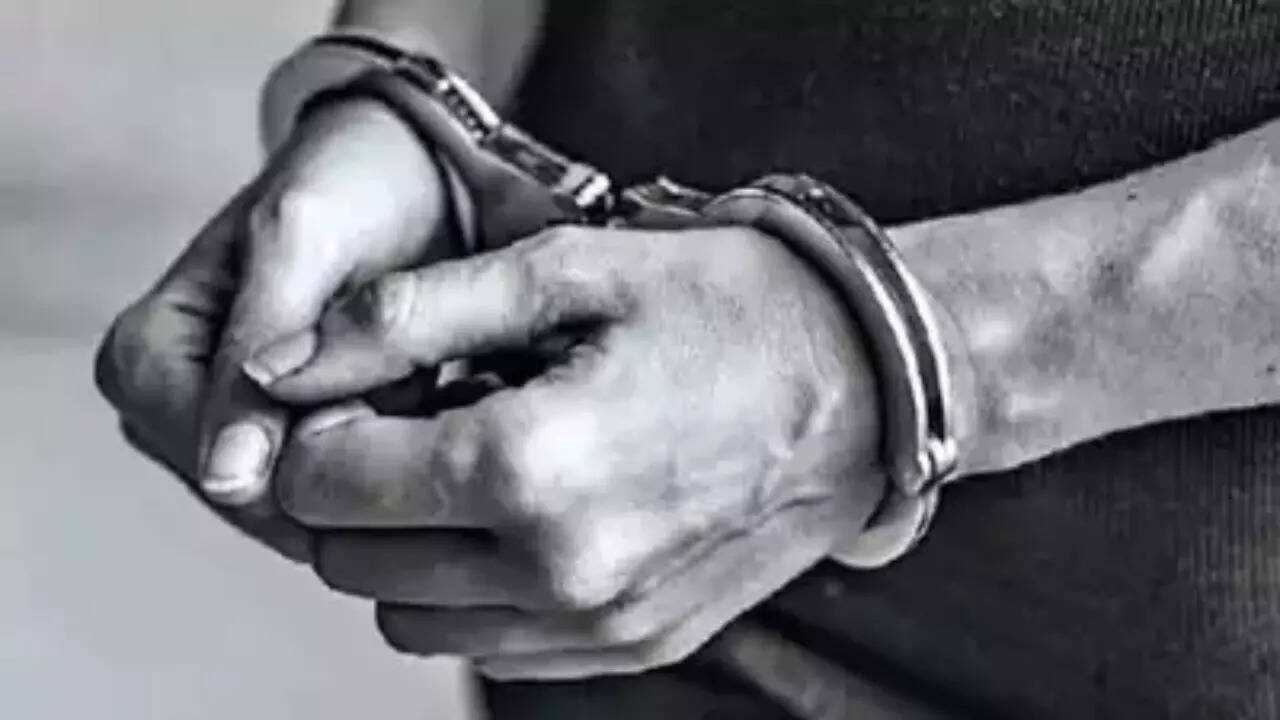
The light in the rearview mirror is never just a light. It is a sudden, rhythmic pulse of crimson and cobalt that severs the night. For most, that flash triggers a momentary spike in adrenaline—a frantic glance at the speedometer, a mental inventory of the last three blocks. But for thousands of people across California over the last decade, that light was the beginning of a mechanical lie.
Precision is the silent contract we sign with the state. We agree to follow the rules, and in exchange, the state agrees to measure our transgressions with unerring accuracy. We trust the scale at the deli. We trust the pump at the gas station. Most of all, we trust the black plastic tube of a breathalyzer, assuming it possesses a cold, mathematical honesty.
We were wrong.
A quiet admission from the California Department of Justice recently pulled the curtain back on a decade of systemic failure. For nearly ten years, the very machines used to strip citizens of their licenses, their livelihoods, and their liberty were operating on a foundation of flawed data. It wasn't a single broken bulb or a frayed wire. It was a ghost in the code.
The Chemistry of a Conviction
To understand the weight of this failure, consider a hypothetical driver named Elena.
Elena is a middle-school teacher. She has no criminal record. She had two glasses of wine with dinner, waited an hour, and felt perfectly clear-headed. When she is pulled over for a rolling stop, the officer asks her to blow into a handheld device. She isn't worried. She trusts the science.
The machine clicks. A number flashes: 0.08%.
In that instant, Elena’s world shifts. That number is the legal "per se" limit in California. It doesn't matter if she was driving perfectly. It doesn't matter if her speech was clear. The number is the law. Because of that 0.08%, Elena loses her license. She loses her job because she can’t commute. She spends thousands on legal fees. She carries the stigma of a "drunk driver" for years.
Now, imagine that the machine was lying. Imagine that Elena’s actual blood alcohol content was 0.07%—a legal level—but the device had been calibrated using a faulty standard.
This isn't just a "what if" scenario. It is the reality for an unknown number of Californians. The Department of Justice revealed that for years, the "reference samples"—the chemical solutions used to check if breathalyzers are working correctly—were themselves inaccurate. It is the equivalent of a carpenter using a ruler where every inch is actually 1.1 inches. Every house built with that ruler will be crooked, but the carpenter will never know why.
The Mathematics of Injustice
The technical term for this is a "calibration error," but that phrase is too sterile for the damage it causes.
Law enforcement agencies use a "dry gas" or "wet bath" solution to test their machines. Think of it as tuning a piano. If the tuning fork is out of pitch, the entire concerto will be sour. For years, the state was sending out "tuning forks" that were flat.
The discrepancy might seem microscopic. We are talking about digits two or three places behind a decimal point. But in the world of forensic science, the margin of error is the only thing that separates a citizen from a convict.
The legal system treats these machines as if they are infallible oracles. In a courtroom, a breathalyzer result is often the "silver bullet" for the prosecution. Defense attorneys can argue about the weather, the officer's temperament, or the driver's fatigue, but they struggle to argue against a digital readout. When the Department of Justice admits the calibration was wrong, they aren't just admitting to a technical glitch. They are admitting that the "silver bullet" was a blank.
The Human Toll of a Decimal Point
Statistics are useful for policy, but they are useless for empathy. To feel the impact of this decade of error, you have to look at the collateral damage.
A DUI conviction is a wrecking ball. It triggers an immediate suspension of driving privileges. In a state like California, designed around the car, losing a license is often synonymous with losing a career. It hikes insurance premiums into the stratosphere. It creates a "prior" on a person’s record that can be used to escalate penalties for any future interaction with the law.
Consider the parent who couldn't drive their child to soccer practice. The construction worker who was fired because he couldn't reach the job site. The immigrant whose path to citizenship was derailed by a misdemeanor conviction based on a faulty sensor.
These people didn't just suffer a "technical error." They suffered a betrayal of the social contract. We grant the government the power to punish us on the condition that they do so fairly. When the state uses "science" that it knows—or should have known—is flawed, it isn't just an administrative lapse. It is a breach of trust that echoes through every courthouse in the state.
The Silence of the Machines
Perhaps the most haunting aspect of this revelation is how long it stayed hidden. Ten years.
A decade is a lifetime in technology. In ten years, we went from the iPhone 5 to the era of generative AI. Yet, throughout that entire span, the calibration protocols remained broken. How many technicians noticed a discrepancy and stayed silent? How many supervisors looked at the data and decided it was "close enough"?
The state’s admission came only after internal reviews became impossible to ignore. It highlights a terrifying reality: the systems we rely on for justice are often "black boxes." We aren't allowed to see the source code. We aren't allowed to inspect the manufacturing process of the sensors. We are told to trust the experts.
But expertise without transparency is just authority. And authority, as we have seen, can be wrong for a very long time before it bothers to apologize.
Reclaiming the Truth
The fallout from this admission will be a legal hurricane. Thousands of cases are now vulnerable to appeal. Convictions that have stood for years may be vacated. The cost to the taxpayer for the inevitable lawsuits and retrials will be staggering.
But money is the least of the concerns.
The real task is restoring the integrity of the process. We need to move toward a system where forensic tools are subject to independent, third-party audits. We need to ensure that when a machine takes away a person’s freedom, that machine is held to a higher standard of scrutiny than the person it is accusing.
Science is supposed to be the search for truth. In the hands of a bureaucracy, however, it can easily become a tool for convenience. It is much easier to process a thousand drivers using a flawed machine than it is to treat each stop with the nuance and skepticism that justice requires.
Tonight, somewhere on the 101 or the I-5, a light will flash in a rearview mirror. A driver will pull over, heart hammering against their ribs. An officer will produce a small plastic device and ask for a breath.
The driver will exhale, a long, steady stream of air. They will wait for the machine to speak. And for the first time in a long time, the question won't just be whether the driver is telling the truth.
The question will be whether the machine is.
The ghost is still in the code, and until every calibration is verified and every conviction is reviewed, the numbers on the screen are just ink in the dark.