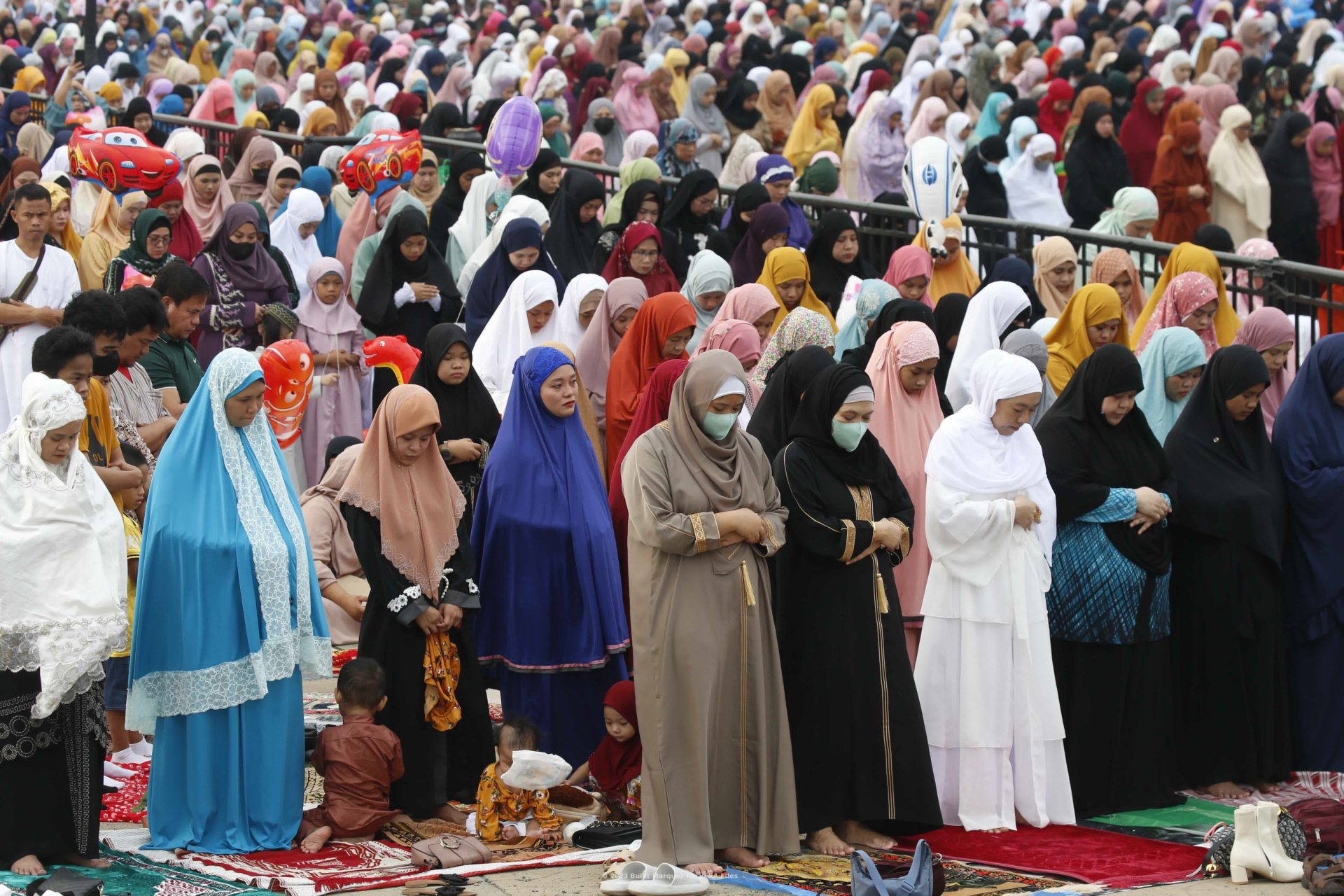
The global observation of Eid al-Fitr in 2024 and 2025 has transitioned from a purely religious milestone into a high-stakes study of social resilience and economic redirection. While traditional narratives focus on the "shadow of war," a rigorous analysis reveals a more complex mechanism at play: the divergent paths of celebratory consumption and humanitarian crisis management. The intersection of the Islamic lunar calendar with active kinetic conflicts in Gaza, Sudan, and Ukraine creates a friction point where cultural continuity meets systemic collapse.
The Dual-Track Economy of Eid
The celebration of Eid al-Fitr operates on a dual-track economic model. In stable regions, the period is defined by a surge in discretionary spending, particularly in the retail, travel, and hospitality sectors. In conflict zones, this model collapses into a "survivalist liturgy" where the objective is not the accumulation of goods, but the preservation of communal identity under resource scarcity.
Discretionary Surge in Stable Markets
In the Gulf Cooperation Council (GCC) and Southeast Asian hubs like Jakarta and Kuala Lumpur, Eid represents a primary fiscal driver. The "Balik Kampung" or "Mudik" phenomenon—the mass migration of urban workers to rural ancestral homes—functions as a massive wealth transfer mechanism.
- Logistical Load: Transport infrastructure in Indonesia faces a 30% to 50% increase in capacity requirements over a 10-day window.
- Capital Flow: Remittances from urban centers to rural provinces peak, stimulating local micro-economies that remain dormant for the remainder of the fiscal year.
- Retail Velocity: The "Ramadan Effect" on consumer goods typically sees a 20% spike in food and beverage sales, followed by a pivot toward luxury goods and apparel in the final 72 hours leading to Eid.
Resource Scarcity in Active Conflict Zones
In contrast, the Gaza Strip and regions of Sudan demonstrate a complete inversion of this economic cycle. Here, the traditional "Zakat al-Fitr" (charitable giving) shifts from a voluntary religious obligation to a critical survival subsidy.
- Inflationary Pressures: In besieged environments, the price of basic commodities (flour, sugar, oil) can appreciate by 400% to 1,000% due to supply chain severance. This renders traditional celebratory meals mathematically impossible for the median household.
- Substitute Goods: The absence of new clothes—a hallmark of the holiday—leads to a rise in secondary markets for repaired or exchanged goods, marking a shift from consumption to circular maintenance.
The Psychological Infrastructure of Communal Resilience
The persistence of Eid rituals during wartime is not merely a matter of sentiment; it is a strategic deployment of psychological infrastructure. Rituals provide a predictable framework in an unpredictable environment, serving as a counter-entropic force against the chaos of war.
The Stabilizing Function of Ritual
When external governance and physical safety fail, the internal architecture of religious law provides the only remaining social order. The collective performance of Eid prayers (Salat al-Eid) serves three primary functions:
- Validation of Presence: The physical gathering of a population, even in ruined landscapes, asserts continued occupancy and social cohesion.
- Information Exchange: In areas where digital communication is severed, the congregational prayer serves as a vital node for the transmission of survival data—location of resources, casualty updates, and security warnings.
- Stress Mitigation: The structured nature of the holiday provides a temporary "cognitive break" from the hyper-vigilance required in active war zones.
The Weaponization of Public Space
In conflict-ridden urban centers, the choice of prayer location becomes a political act. Utilizing the ruins of destroyed mosques or public squares for Eid prayers is a form of non-kinetic resistance. It signals to opposing forces that the social fabric remains intact despite the destruction of physical assets. This creates a psychological stalemate where the occupier or aggressor realizes that territorial control does not equate to cultural submission.
Quantifying the Humanitarian Gap
The disparity between the global Muslim population's capacity for aid and the actual delivery of relief during Eid is measurable through the "Aid Velocity" metric. During Ramadan and Eid, charitable donations (Zakat) reach their annual zenith. However, the bottleneck is rarely capital; it is access.
The Logistical Bottleneck
The primary constraint on Eid relief is the "Last Mile" problem in conflict zones. While billions of dollars are committed globally, the actual delivery of a "Fitrana" meal package is governed by:
- Border Permeability: The number of calories entering a zone vs. the number required for a standardized celebratory meal.
- Fuel Parity: The cost of transporting aid often exceeds the value of the aid itself in fuel-starved regions like Sudan or Yemen.
- Securitization of Aid: The risk that aid distribution points become targets or are co-opted by combatants for tactical advantage.
The Remittance Displacement
A significant trend in 2024-2025 is the shift from physical goods to digital cash transfers. In previous decades, Eid aid consisted of bulk food shipments. Modern strategy favors mobile money and cryptocurrency transfers where banking infrastructure is compromised. This allows individuals within conflict zones to navigate local black markets with greater agility, though it exposes them to extreme currency volatility and predatory exchange rates.
Global Sentiment and the Polarization of the Ummah
The "shadow of war" mentioned in conventional reporting is better defined as a "divergent empathy gap." There is a growing tension between the celebratory reality of the global North and West and the existential reality of the Levant and East Africa.
The Protest Aesthetic of 2024-2025
Eid celebrations in London, New York, and Paris have increasingly adopted a somber, politicized tone. The "Eid of Mourning" concept has gained traction, where traditional festivities are scaled back in favor of vigils and fundraising.
- Visual Signaling: The integration of the Keffiyeh and national flags into Eid attire serves as a global branding of solidarity.
- Consumer Boycotts: The selection of goods for Eid feasts is now heavily influenced by boycott lists targeting corporations perceived as complicit in regional conflicts. This has led to a measurable shift in market share for local or "ethically aligned" brands.
The Risk of Social Fragmentation
This polarization carries long-term risks for the global Muslim community. When the experience of a holiday is so fundamentally different across geographic lines, the sense of a unified "Ummah" or global community is strained. The divergence creates two distinct classes of observers: those for whom Eid is a celebration of abundance, and those for whom it is a testament to endurance.
Structural Variables Influencing Future Observations
To predict the trajectory of Eid observances in the next three to five years, we must monitor four critical variables:
- Urbanization Rates in Sub-Saharan Africa: As more populations move to cities, the "Mudik" style migration will increase, putting unprecedented pressure on transport and energy grids during the lunar month.
- Digital Zakat Integration: The move toward blockchain-based charity will likely bypass traditional NGOs, leading to more direct, albeit less regulated, aid flows.
- Climate Volatility: Since the Islamic calendar follows the lunar cycle, Eid will eventually rotate back into the peak summer months for the Northern Hemisphere. This will exacerbate water and food security issues in conflict zones that already lack cooling infrastructure.
- Sovereign Debt Crises: Many Muslim-majority nations are facing significant debt-to-GDP ratios. The ability of states to subsidize basic foodstuffs during Eid is diminishing, shifting the burden of social stability entirely onto religious charities and the private sector.
The resilience observed during Eid al-Fitr in the face of war is not an accident of faith, but a calculated survival strategy. The ritual serves as a decentralized operating system for a society under siege. To support these populations effectively, global actors must pivot from sentimental aid to structural intervention, focusing on the restoration of supply chains and the protection of the "ritual space" as a fundamental human right.
The strategic play for international observers and humanitarian agencies is the immediate decoupling of aid from political negotiation during the 72-hour window of Eid. Creating "Ritual Ceasefires" or protected corridors specifically for the holiday provides a low-stakes testing ground for broader diplomatic efforts. This utilizes the cultural weight of the holiday as a pragmatic tool for conflict de-escalation rather than just a moment of quiet reflection.


