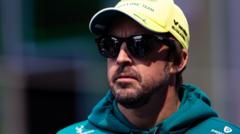
The Formula 1 paddock is a pressure cooker that never stops simmering. Between the wind tunnel data, the tire degradation curves, and the endless political maneuvering, it's easy to forget that the guys behind the wheel are actually human. Fernando Alonso just reminded everyone of that fact. By choosing to skip the official media day ahead of the upcoming Grand Prix to be present for the birth of his first child, the oldest driver on the grid is making a statement that transcends championship points.
It’s a refreshing break from the "win at all costs" mentality that usually defines the sport. For a man who has spent over two decades obsessing over apexes and exit speeds, this shift in focus is massive. He isn't just missing a few interviews; he's setting a boundary in a sport that famously tries to own every second of a driver’s life.
The logistics of a last minute F1 absence
Modern F1 contracts are dense. They usually dictate exactly how many hours a driver must spend in front of a microphone, wearing team gear, and smiling for sponsors. Skipping a mandatory FIA media session usually triggers a cascade of paperwork and potential fines. However, the stewards almost always grant a waiver for "force majeure" or significant personal events. Births definitely qualify.
Aston Martin hasn't scrambled for a replacement driver for the race itself yet. That’s because the media day happens on Thursday, while the heavy lifting on track doesn't start until Friday practice. Alonso is a master of the "parachute entry." He’s the type of driver who can roll out of a trans-Atlantic flight, hop into the cockpit, and be within a tenth of his teammate's time by lap three.
If the birth gets complicated or he decides he needs more time, the team has reserves like Stoffel Vandoorne or Felipe Drugovich on standby. But let's be real. Alonso thrives on the adrenaline of a tight schedule. He’ll likely arrive in the paddock late Thursday night or early Friday morning, smelling like baby powder and high-octane fuel, ready to go.
Why this matters for the 2026 season dynamics
We’re currently in a weird transition period for the sport. The 2026 regulations are looming, and every team is trying to figure out their long-term driver lineups. Alonso recently signed a multi-year extension with Aston Martin, taking him into the new era of Honda power units. Some critics wondered if a 40-plus driver would still have the "hunger" once life outside the cockpit started getting more crowded.
This news answers that. It shows a matured version of the Spaniard. Earlier in his career, Alonso was known for a scorched-earth policy when it came to his personal life and his teams. Now, he’s showing that you can be a ruthless competitor on Sunday and a present father on Thursday.
It also puts a spotlight on the grueling F1 calendar. With 24 races on the schedule, the toll on families is astronomical. When a veteran like Alonso says "I’m sitting this one out," it gives the younger drivers on the grid the unspoken permission to prioritize their own lives when it matters most.
Managing the media circus without the star
The PR team at Aston Martin is currently doing damage control, but not the bad kind. They have to fill a three-hour block of scheduled interviews with other personnel. Usually, this means Mike Krack or Lance Stroll will have to field a barrage of questions about Alonso’s diapers and sleep schedule instead of talking about the new front wing upgrades.
It’s annoying for the journalists who flew halfway across the world for a specific quote, but it's a non-issue for the fans. Honestly, most fans would rather see a photo of the new "Baby Alonso" than hear another rehearsed line about "maximizing the package" or "focusing on our own race."
The impact on team morale
Teams often rally around these moments. F1 mechanics work 16-hour shifts in windowless garages. They miss their own kids' birthdays constantly. Seeing their lead driver take a stand for his family actually builds a weird kind of loyalty. It humanizes the guy they’re busting their knuckles for.
- Alonso stays in Spain for the birth.
- Reserve drivers prep the seat just in case.
- The FIA grants a formal exemption for the press conference.
- Alonso flies private to make it for FP1.
What happens when he gets back in the car
There’s an old racing superstition that "a baby costs you half a second a lap." The theory is that once you have something to live for, you stop taking the massive risks required to be fast.
I don't buy it.
Look at Max Verstappen or even legends from the past like Michael Schumacher. Having a family didn't make them slow; it made them more efficient. They wanted to win faster so they could get home sooner. Alonso has nothing left to prove to anyone. He’s already a two-time champion. He’s already a legend. This new chapter might actually take the edge off his famous temper, making him a more calculated and dangerous driver in the long run.
If you're following the championship standings, don't expect this to change the trajectory of his season. If anything, the "dad strength" phenomenon is real. He’ll be back in the seat before the green light flashes on Friday.
Watch the FP1 times closely this weekend. If Alonso is purple in the first sector during his first out-lap, you know his head is exactly where it needs to be. For now, let the man enjoy the one trophy that doesn't require a podium ceremony.