The convergence of industrial accidents and coordinated kinetic strikes against energy infrastructure in the Persian Gulf represents a systemic failure in regional risk mitigation. While individual events—such as a refinery fire in Kuwait or a drone incursion in Saudi airspace—are often reported as isolated tactical incidents, they are more accurately understood as stressors on a tightly coupled energy delivery system. The primary threat to global energy markets is not the total destruction of assets, but the precision-targeting of "choke point" components within the downstream and midstream sectors. These components, often requiring long-lead-time replacements, create a disproportionate impact on operational continuity compared to the cost of the offensive munitions used.
The Triad of Infrastructure Vulnerability
To quantify the risk to Gulf energy assets, one must look beyond the surface damage of a fire and analyze the three pillars of operational vulnerability: functional criticality, recovery latency, and defensive saturation. Also making waves in this space: The Cuban Oil Gambit Why Trump’s Private Sector Green Light is a Death Sentence for Havana’s Old Guard.
1. Functional Criticality
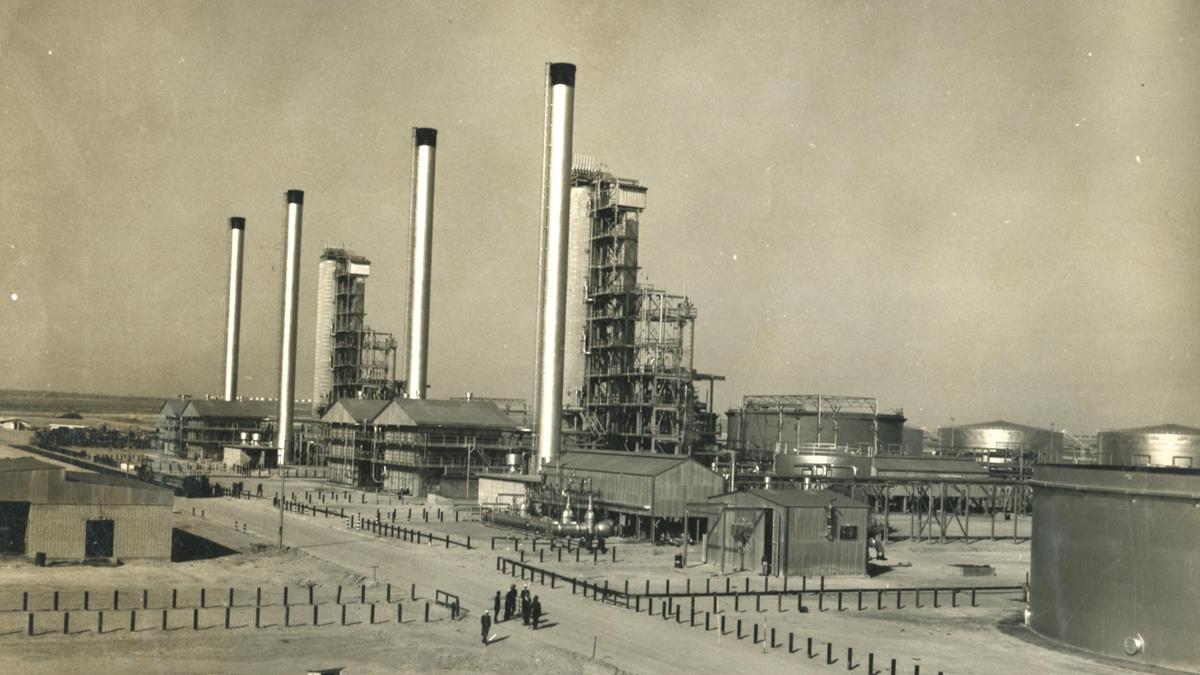
Not all square footage within a refinery or a liquified natural gas (LNG) terminal carries equal weight in the production chain. Modern refineries are complex chemical processors where the flow of hydrocarbons is governed by specific high-pressure units.
- Atmospheric and Vacuum Distillation Units: These are the entry points for crude processing. Damage here halts all downstream operations.
- Fluid Catalytic Crackers (FCC): These units convert heavy distillates into high-value products like gasoline. Because they operate at extreme temperatures and pressures, any breach leads to catastrophic thermal events.
- Control Hubs: The digitization of infrastructure means that a single kinetic strike on a Supervisory Control and Data Acquisition (SCADA) room can render an entire multi-billion dollar facility inert, even if the storage tanks remain untouched.
2. Recovery Latency
The true cost of an attack is measured in "Time to Resumption." The global supply chain for specialized petroleum equipment is currently brittle. Lead times for bespoke heavy-walled reactors or high-capacity pumps can exceed 18 to 24 months. A competitor’s report might focus on the immediate spike in oil prices; a structural analysis focuses on the permanent loss of refining margin during the multi-year repair cycle. This latency creates a "bottleneck effect" where even if crude oil is abundant, the capacity to turn it into usable fuel is severely restricted. Further information regarding the matter are explored by The Wall Street Journal.
3. Defensive Saturation
The proliferation of Low-Slow-Small (LSS) drones and cruise missiles has altered the cost function of defense. Patriot missile batteries and similar high-altitude interceptors are designed for ballistic threats. Using a multimillion-dollar interceptor to down a $20,000 loitering munition is a losing economic proposition. This "asymmetric attrition" forces regional powers to choose between exhausting their defensive inventory or allowing "leaky" defenses where a small percentage of low-tech threats inevitably reach their targets.
The Mechanics of Kinetic Disruption
The recent escalation in regional tensions reveals a shift from symbolic strikes to a doctrine of economic exhaustion. This strategy utilizes three distinct delivery mechanisms to bypass traditional security layers.
Swarm Dynamics and Sensor Saturation
Radars are optimized to filter out birds and ground clutter. Swarm attacks utilize many small signatures to overwhelm the processing capacity of automated defense systems. By attacking from multiple vectors simultaneously, the adversary ensures that even a 90% interception rate results in several successful impacts on critical infrastructure. This is a mathematical certainty in saturation modeling: the defense must be perfect every time, while the offense only needs a single success to achieve a "mission kill" on a refinery unit.
The Cyber-Kinetic Hybrid
The vulnerability of Kuwaiti or Saudi facilities is exacerbated by the integration of Industrial Internet of Things (IIoT) sensors. An adversary does not need to destroy a tank if they can manipulate the pressure sensors to trigger an emergency blow-off or a manual shutdown. Physical fires often serve as a kinetic "distraction" while cyber-intrusions attempt to lock out operators from fire suppression systems. This creates a compounding effect where the physical damage is worsened by the inability to deploy automated countermeasures.
Precision Targeting of the "Soft Underbelly"
Refineries are surrounded by expansive networks of pipelines, pumping stations, and desalination plants. While the core refinery might be "hardened" with blast walls and point defenses, the ancillary infrastructure—specifically the power and water supplies required for refining—is often exposed. A strike on a desalination plant feeding a refinery’s steam system is just as effective at halting production as a strike on the distillation tower itself, yet it requires significantly less precision and payload.
Quantifying the Economic Fallout
The market reaction to infrastructure fires is typically categorized by "Fear Premia" and "Structural Deficits."
The Fear Premium Feedback Loop
The immediate 2-5% jump in Brent or WTI prices following an incident is rarely based on a physical shortage of oil. Instead, it reflects the market’s reassessment of the "Security-of-Supply" (SoS) variable. Traders price in the probability of a second, more damaging strike. This creates a volatility tax on global manufacturing and logistics, regardless of whether a single barrel of oil was actually lost.
Refined Product Dislocation
A critical distinction must be made between crude oil supply and refined product supply. The world has strategic crude reserves (e.g., the SPR in the United States), but it has very little "strategic gasoline" or "strategic jet fuel." If a major Gulf refinery goes offline, the disruption hits the regional and global markets for specific fuels immediately. This leads to localized price spikes that can be several orders of magnitude higher than the rise in crude prices, impacting aviation and maritime trade routes that depend on these hubs.
The Limits of Hardened Infrastructure
Reliance on physical hardening—building thicker walls or burying pipes—is a legacy strategy with diminishing returns. The velocity of modern missile technology and the pinpoint accuracy of GPS-guided munitions mean that static targets are increasingly indefensible.
The second limitation is the human element. High-intensity industrial environments require specialized personnel. Attacks that threaten the safety of the workforce lead to "operational paralysis," where staff are unwilling or unable to perform high-risk maintenance during periods of heightened alert. This reduces the overall efficiency of the plant even in the absence of a direct hit.
Strategic Realignment of Energy Defense
The current model of "Point Defense" (protecting the asset) must transition to "Systemic Resilience" (protecting the output). This requires a fundamental shift in how Gulf states and their corporate partners manage infrastructure.
Decentralization of Processing
The era of the "Mega-Refinery" may be reaching its peak utility. While centralized facilities offer economies of scale, they represent single points of failure for national economies. Strategic redundancy requires the development of smaller, modular processing units that can be networked. If one unit is compromised, the system continues to function at 90% capacity.
Automated Threat Neutralization
Investment must shift from expensive, manned interceptors to automated, directed-energy weapons (lasers) and high-power microwave (HPM) systems. These technologies offer a "near-zero" cost per shot, solving the economic imbalance of drone defense. Furthermore, these systems must be integrated directly into the refinery’s automated safety protocols, allowing for millisecond response times that human operators cannot match.
Supply Chain Hardening
Operators must move from "Just-in-Time" to "Just-in-Case" inventory management for critical long-lead components. Maintaining onsite or regional "cold spares" for turbines, pumps, and control systems is the only way to mitigate the recovery latency that currently makes these facilities such attractive targets.
The regional security environment is no longer defined by traditional warfare, but by a continuous state of low-intensity attrition. Entities that treat refinery fires as "accidents" or "unfortunate incidents" fail to recognize the calculated logic of modern economic warfare. The objective is not to win a territory, but to make the cost of energy production and insurance so high that the target's economic engine stalls. Resilience, therefore, is not a technical specification; it is a competitive advantage in an increasingly volatile global market.
Implement a comprehensive "Systemic Vulnerability Audit" that prioritizes the identification of long-lead-time components and creates a decentralized spare-parts consortium among regional players to reduce individual recovery latency.
Would you like me to develop a detailed risk-assessment framework for evaluating the "Time to Resumption" (TTR) for specific petrochemical sub-units?