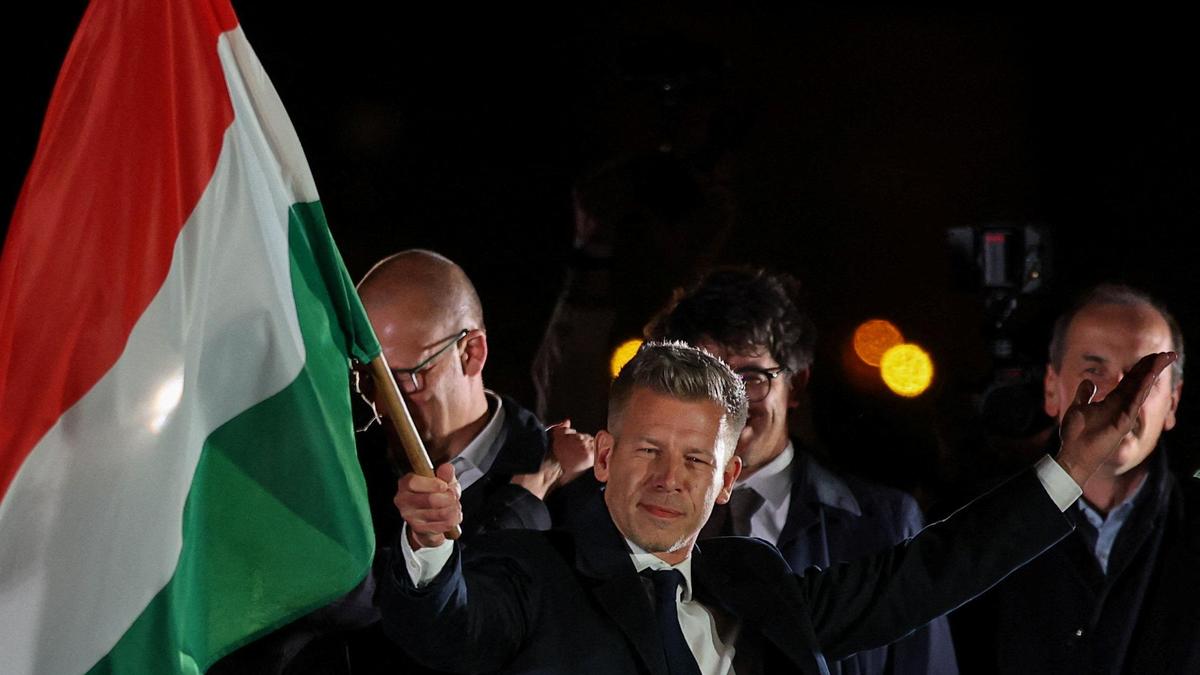
The iron grip of Viktor Orbán has finally shattered. On April 12, 2026, Hungarian voters delivered a verdict that few thought possible two years ago, ending sixteen years of Fidesz dominance and elevating Péter Magyar from a disgruntled whistleblower to the nation’s next Prime Minister. The Tisza Party’s victory was not just a narrow win; it was a tectonic shift. With a high turnout exceeding 79%, Hungarians chose a man who was, until recently, a cog in the very machine he just dismantled.
Magyar’s ascent is the most improbable story in Central European politics. He did not come from the traditional "old opposition" that Orbán had successfully neutralized for over a decade. He came from within. As the ex-husband of former Justice Minister Judit Varga and a former diplomat, Magyar understood the internal mechanics of the "System of National Cooperation" better than anyone. He knew where the bodies were buried because he had been in the room when the shovels were bought. If you found value in this post, you should check out: this related article.
The Whistleblower Who Kept the Receipts
The downfall of the Orbán government can be traced back to February 2024, but the momentum peaked when Magyar stopped being a victim of the system and became its prosecutor. While the competitor narratives often focus on the soap-opera elements of his divorce or the presidential pardon scandal, the real story is about tactical leverage.
Magyar understood a fundamental truth about the Orbán regime: it was built on an image of moral superiority and national protection. When a pardon for a man involved in covering up child sex abuse was revealed, that moral image cracked. Magyar stepped into that crack with audio recordings. He didn't just claim corruption; he provided proof of evidence tampering within the Justice Ministry, involving powerful figures like Antal Rogán. For another angle on this event, refer to the latest update from NBC News.
[Image of the Hungarian Parliament Building in Budapest]
This was not the usual "liberal" critique that Fidesz could easily dismiss as foreign interference. This was a conservative lawyer, a father, and a former insider speaking the language of the Fidesz base. He spoke of God, country, and family, but he pointed out that the "family" the government was protecting was actually a small circle of billionaire oligarchs.
Breaking the Propaganda Monopoly
For years, the Fidesz strategy was simple: control the media and frame every opponent as a puppet of Brussels or George Soros. Magyar bypassed this entirely through a relentless, one-man social media blitz and a grueling physical campaign. He didn't wait for an invite to the state-run news channels. He went to the rural villages that had been Fidesz strongholds for decades.
The Strategy of the Third Way
Magyar’s genius lay in his refusal to join the existing opposition parties. He recognized that many Hungarians were tired of Orbán but terrified of the "failed" left-wing leaders of the past. By taking over the obscure Respect and Freedom (Tisza) Party, he created a vessel that was:
- Ideologically familiar: Conservative enough to not scare off Fidesz defectors.
- Pro-European: Committed to unlocking billions in frozen EU funds.
- Anti-Corruption: Focused on the "mafia state" rather than abstract social theories.
This "Third Way" allowed him to capture 29.5% of the vote in the 2024 European elections, a warning shot that the Orbán camp failed to heed. Instead of pivoting, the government doubled down on character assassination, using state media to portray Magyar as a "traitor" and a "foreign agent." It didn't work. The more the state attacked him, the more he looked like a martyr to a population struggling with a cost-of-living crisis and a crumbling healthcare system.
The Zebra Symbolism and the Wealth Gap
While Orbán campaigned on the threat of the war in Ukraine, Magyar campaigned on the price of bread and the absurdity of the elite's wealth. The 2026 campaign was defined by images that became memes of resistance—specifically, zebras. When drone footage revealed a sprawling estate belonging to Orbán’s father, complete with exotic animals, it became the ultimate symbol of a regime that had lost touch with the people.
Hungarians weren't just voting for Magyar; they were voting against the "Hatvanpuszta" lifestyle. They were voting against a system where a childhood friend of the Prime Minister, Lőrinc Mészáros, could become the richest man in the country through state contracts.
The Governance Challenge
The euphoria in the streets of Budapest is real, but the road ahead is treacherous. Magyar inherits a state where the judiciary, the media, and the economy are deeply entwined with Fidesz loyalists. Orbán spent sixteen years "bulletproofing" the system, placing allies in long-term positions that are legally difficult to remove.
Magyar has promised to:
- Join the European Public Prosecutor’s Office to tackle systemic graft.
- Restore media independence by dismantling the state propaganda apparatus.
- Modernize the education and health sectors, which have seen a massive brain drain.
The skepticism from the international community remains. Some ask if a man who spent his career in the Fidesz bubble can truly be a democrat. Others wonder if his conservative "critical" pro-European stance will actually lead to friction with Brussels once the honeymoon period ends.
The New Reality
Péter Magyar’s victory proves that no regime is permanent if it stops delivering for the people. He did not defeat Orbán with a better ideology; he defeated him with better information and a more authentic connection to the average citizen’s frustrations.
The era of the "illiberal state" has hit a wall. Whether Magyar can build a functional democracy in its place is the next great question for Europe. For now, the "Now or Never!" slogan that carried him to the Prime Minister’s office has been fulfilled. The system has changed. The insider has become the architect.
The transition of power begins tomorrow.