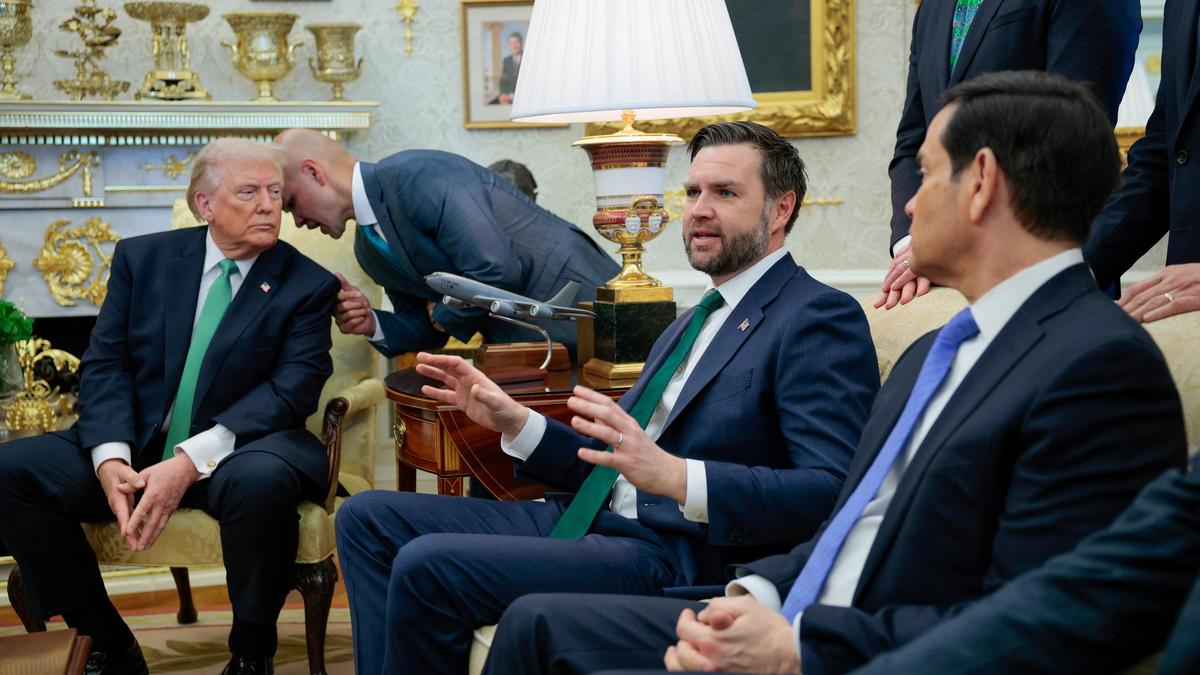
Cuba is falling apart, and the political fallout is hitting American shores faster than ever. When Donald Trump recently claimed the island is in "very bad shape," he wasn't just recycling a campaign talking point. He was pointing to a reality that millions of Cubans face every single day: a country where the lights stay off for eighteen hours, the pharmacy shelves are empty, and the government has effectively run out of money.
If you've been watching the news lately, you've seen the clips. Trump has stepped up his rhetoric on the Caribbean nation, linking its internal collapse to the broader issues of border security and regional stability. It’s a calculated move. By highlighting the desperation in Havana, he's signaling to voters in Florida and beyond that the current administration's approach isn't working. But beyond the stump speeches, there is a legitimate, grinding humanitarian disaster unfolding just 90 miles from Key West.
The Reality of a State in Freefall
To understand why Trump is leaning into this, you have to look at the actual data coming out of the island. This isn't just about "bad management." It’s about a total systemic failure. In 2024 and 2025, the Cuban government admitted it could no longer guarantee the basic food rations that have kept the population from starving for decades. When the state stops being able to provide bread, the social contract is dead.
The numbers are staggering. Inflation has gutted the local peso. Most people can't afford a single carton of eggs with a week's worth of wages. You're seeing a mass exodus. More than 400,000 Cubans arrived at the U.S. border in a single recent fiscal year. That is the largest wave of migration in the island's history—bigger than the Mariel boatlift and the 1994 rafter crisis combined.
Trump's "very bad shape" comment is an understatement. The power grid is a relic. Every few months, the entire island goes dark because the thermoelectric plants, many built with Soviet technology from the 1970s, simply give up. Without fuel from Venezuela—which has its own set of massive problems—Cuba is literally powerless.
Why the Trump Approach Matters for 2026
Critics often argue that Trump’s "Maximum Pressure" campaign during his first term contributed to the current misery. They point to the 243 sanctions he slapped on the regime, including designating Cuba as a state sponsor of terrorism. But from Trump’s perspective, and that of many in the Cuban-American community, those sanctions are the only way to force a change.
The logic is simple. Why would you fund a military-run tourism industry that keeps a dictatorship in power?
Trump’s recent comments suggest he’s ready to double down. He’s betting that the American public is tired of "stable" decline and wants a more aggressive stance. He views Cuba not as a sovereign neighbor to be negotiated with, but as a failed project that threatens U.S. national security. When he says it's in "very bad shape," he’s also blaming the Biden-Harris policies for being "too soft" and allowing the Cuban government to lean on rivals like Russia and China for support.
The Geopolitical Stakes Nobody is Talking About
This isn't just about refugees and old cars. It’s about who owns the backyard. While the U.S. debates sanctions, Russia has been busy. They’ve been sending oil, sure, but they’ve also been talking about "increased technical cooperation." That’s code for military presence.
Then there’s China. Reports of a Chinese "spy base" on the island have been circulating for a couple of years. If Cuba is truly in such bad shape that it’s willing to sell its territory to the highest bidder for a few months of electricity, the U.S. has a massive problem.
Trump knows this. He’s framing the Cuban crisis as a security threat. If the island collapses completely, the power vacuum won’t be filled by democracy activists. It’ll be filled by the people currently propping up the regime.
A Broken Economy by Design
The Cuban government recently tried to "fix" things by raising fuel prices by 500 percent. Imagine waking up tomorrow and gas is five times more expensive. It didn't work. It just made everything else more expensive because you can't move goods without trucks.
People are tired. You see it in the protests that keep bubbling up in cities like Santiago de Cuba. These aren't just political rallies. They are "we are hungry" rallies. The government responds with arrests and internet blackouts, but you can't eat a blackout.
What This Means for Your Next Move
If you’re watching this from the outside, the "very bad shape" of Cuba is a warning sign of a regional shift. For investors, it means the Caribbean remains a volatile zone. For voters, it’s a preview of the foreign policy battles that will dominate the next election cycle.
The situation in Cuba is a pressure cooker. Trump is betting that by pointing it out, he can prove the current strategy has failed. Whether he’s right or wrong about the solution, he’s objectively right about the problem. Cuba is at a breaking point.
Keep an eye on the migration numbers. If they spike again, expect the rhetoric to get even sharper. The island’s misery is no longer an internal affair; it’s a domestic American issue. You should pay attention to the upcoming policy shifts regarding remittances and travel. These are the lifebloods of the Cuban people, and they are about to become the primary weapons in a high-stakes diplomatic war. Watch the Department of State's travel advisories closely; they often signal deeper unrest before it hits the mainstream news cycles. Change is coming to the island, but it’s going to be messy, loud, and incredibly fast.