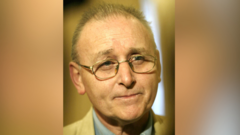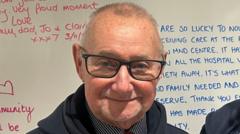
Geoff Burrow is dead. The headlines will tell you he died after a "short illness," framing it as a tragic postscript to the saga of his son, Rob. They will paint a picture of a devoted father who fought the "good fight" against Motor Neurone Disease (MND) alongside his boy, only to succumb to the weight of grief and biology shortly after. This narrative is comfortable. It is also a lie.
The media loves the "warrior" trope. It simplifies the messy, agonizing reality of neurodegenerative disease and the systemic failures that surround it into a tidy story of personal grit. By focusing on the "short illness" and the "devoted father," we ignore the brutal physiological tax of long-term caregiving and the scientific vacuum that still exists around MND. We are obsessed with the hero’s journey, but we are blind to the casualty list.
The Caregiver Tax is a Biological Debt
We treat grief like a purely emotional state. It isn't. It is a metabolic arsonist. When Geoff Burrow spent years watching his son’s body dismantle itself, he wasn't just "being a good dad." He was burning through his own biological reserves.
The medical community often looks at the patient and ignores the shadow patient standing right next to them. Chronic stress—the kind that comes from 24/7 advocacy and the looming shadow of a terminal diagnosis—shatters the immune system. It elevates cortisol to levels that become toxic. It creates a state of "allostatic load" that makes a "short illness" a death sentence for someone who should have had years left.
To call Geoff’s death a "short illness" is to ignore the decade of systemic erosion he endured. We celebrate the strength of these families while ignoring the fact that we are asking them to perform biological miracles without a safety net.
The False Hope of the Awareness Industry
Since Rob Burrow’s diagnosis, the UK has seen an explosion of "awareness." We’ve seen the marathons, the documentaries, and the viral clips of Kevin Sinfield carrying Rob across a finish line. It is moving. It is also, in many ways, a distraction from the cold, hard math of medical research.
Awareness does not equal a cure. While the Burrow family raised millions, the underlying infrastructure of MND research remains fragmented. We are still throwing money at a wall and hoping a pattern emerges. The "lazy consensus" is that if we just care enough, or run enough miles, the science will follow.
Science doesn't care about your feelings. It cares about funding, data, and the brutal reality of clinical trials. The tragedy of the Burrow family—now claiming the father just months after the son—highlights the terrifying pace of the disease versus the glacial pace of institutional change. We are winning the PR war and losing the actual war.
The Myth of the Short Illness
"Short illness" is a euphemism used by journalists when they don't want to dig into the reality of a broken heart or a broken body. In Geoff’s case, the illness wasn't short. It was years in the making.
Imagine a scenario where we treated the physical health of caregivers with the same rigor we treat the athletes they once raised. If Geoff Burrow had been monitored for inflammatory markers or cardiac strain during the height of Rob’s battle, would he still be here?
Probably.
But we don't do that. We expect the family to be the bedrock, and when the bedrock finally cracks, we act surprised. We call it "unfortunate timing." It’s not timing; it’s a predictable outcome of extreme, unmitigated physiological strain.
Why We Need to Stop Hero-Worshipping Suffering
Every time a headline calls a family "inspirational" for enduring the unendurable, it lets the system off the hook.
- It excuses the lack of professional social care.
- It masks the inadequacy of hospice funding.
- It turns a medical catastrophe into a motivational poster.
Geoff Burrow shouldn't have had to be an activist. He shouldn't have had to spend his final years pleading with the government for the £50 million they promised for MND research. The fact that he died so soon after his son isn't a poetic ending to a story of devotion; it is a grim indictment of how much we demand from individuals when the state fails to provide.
The Data of Grief
If you look at the statistics on spousal or parental mortality following the death of a loved one—often called the "widowhood effect" but applicable here—the risk of death spikes by as much as 30% to 90% in the first few months. This isn't mysticism. It’s a cardiovascular and immunological collapse.
By framing this as a "short illness," we miss the chance to talk about the lethal nature of the caregiving vacuum. We miss the chance to demand that the NHS and global health bodies treat the families of MND patients as high-risk patients themselves.
The Professional Insider's View
I have seen families dismantled by this. I have seen the "strongest" people I know become shells because they were told their only job was to be the pillar.
We need to stop asking families to be pillars. Pillars don't have blood pressure. Pillars don't have immune systems. Humans do.
Geoff Burrow’s legacy isn't just that he was Rob’s dad. His legacy—if we are brave enough to acknowledge it—is the stark realization that the fight against MND is a meat grinder. It doesn't just take the person with the diagnosis. It takes the people around them. It consumes the entire orbit.
If you want to honor the Burrows, stop posting crying emojis and start demanding why caregiver support is treated as an afterthought in the medical hierarchy. Stop accepting "awareness" as a substitute for aggressive, centralized research. Stop romanticizing the "good fight" when the soldiers are being sent to the front lines with nothing but a pair of running shoes and a smile.
Geoff Burrow didn't just die of an illness. He died because the burden of being the face of a movement while being the hands of a caregiver is a weight no human body was designed to carry.
The story isn't over. It’s just getting uglier, and it’s time we looked at it without the filter.