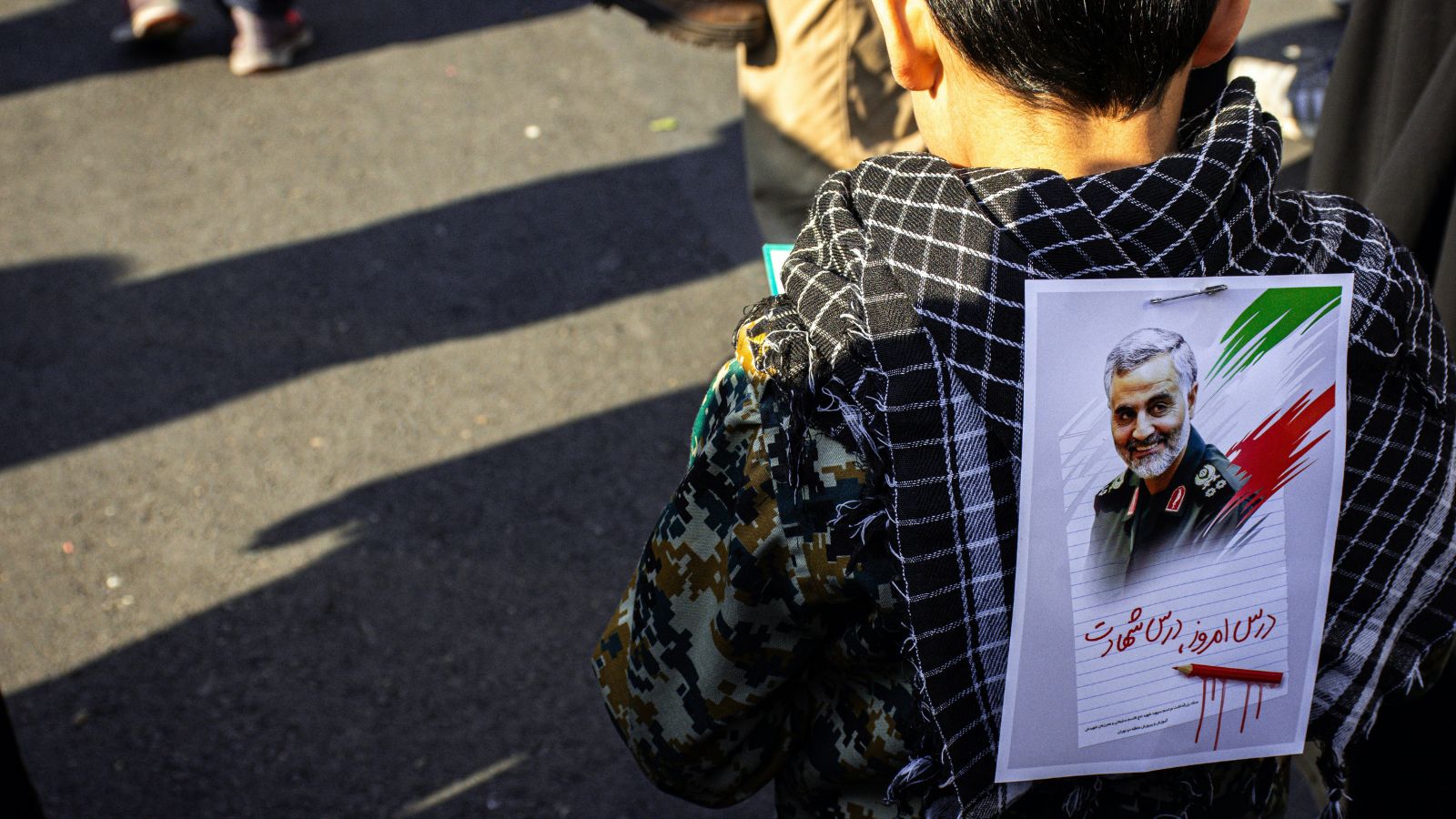
Western media loves a morality play. When the headline mentions an 11-year-old Iranian boy dying in a "war duty" capacity, the outrage machine hits high gear. The narrative is pre-written: a "desperate regime" is "harvesting its youth" to maintain power. It is a comfortable, linear story that allows the reader to feel morally superior while ignoring the structural reality of how asymmetric defense actually functions in the Global South.
If you think this is just about "recruitment," you are missing the point. You are looking at a 21st-century ideological militia through the lens of a 19th-century Prussian conscription model. It doesn't fit.
The death of a minor is a tragedy in any context, but using it to frame the Basij—Iran’s large-scale paramilitary volunteer force—as a simple kidnapping operation for kids is intellectually lazy. It ignores the sociological glue that holds these organizations together and, more importantly, it ignores how "war duties" have been redefined in the era of hybrid conflict.
The Basij is Not an Army
Most commentators treat the Basij like a junior version of the Islamic Revolutionary Guard Corps (IRGC). This is the first mistake. The Basij is a social ecosystem. It is a civic-religious fraternity that functions as a safety net, a social club, and a local governance tool.
When people cry "child soldier," they imagine a kid with an AK-47 in a trench. In reality, the vast majority of youth involvement in the Basij involves logistics, neighborhood watch, religious ceremonies, and disaster relief. During the COVID-19 pandemic, the Basij was the primary force for mask distribution and sanitation. During floods in Sistan and Baluchestan, they were the ones digging out houses.
Does this involve risk? Yes. Is it "war"? In the eyes of the Iranian state, which views itself as being under a permanent state of economic and "soft" siege, every civic action is a defense of the revolution.
By calling everything "war duty," critics flatten the nuance. They ignore the fact that these kids aren't being snatched off the street; they are brought in by their families. Their parents see it as a path to university quotas, better jobs, and social standing. It is a transactional, ideological, and deeply embedded part of the Iranian social contract. To ignore the agency of the families involved is to fail to understand why the system hasn't collapsed under the weight of "backlash."
The Hypocrisy of Total Mobilization
Western critics point at Iran and scream "violation of international law," citing the Optional Protocol to the Convention on the Rights of the Child. Meanwhile, the West lionizes the "total defense" models of countries like Finland or Switzerland, where the entire civilian infrastructure is geared toward potential war.
Consider the "National Cadet Corps" in various Commonwealth countries or the massive JROTC programs in the United States. These programs funnel millions into military-adjacent training for minors, often in impoverished areas where the "poverty draft" is the only way out. We call it "leadership training" when it happens in a democracy. We call it "state-sponsored child abuse" when it happens in a theocracy.
The difference is purely a matter of aesthetic and geopolitical alignment. The actual mechanics—the indoctrination, the early exposure to military hierarchy, the promise of future benefits—are strikingly similar.
If we want to dismantle the use of youth in state-sanctioned violence, we have to address the fact that the nation-state, as a concept, relies on the early psychological capture of its citizens. Iran is just more honest about the stakes. They don't hide it behind "civic duty" or "extracurriculars." They call it what they believe it is: a struggle for survival.
The Logic of the Asymmetric Underdog
Why does Iran do this? Why take the PR hit of having a child die on duty?
It isn't because they are short on adult soldiers. Iran has a massive standing army and a dedicated elite corps. They do it because the Basij is their ultimate deterrent. It is a "people's defense" model.
In a conventional war, a superpower can wipe out a standing army in weeks. But you cannot "defeat" a population where every third person identifies as a defender of the state. By involving the youth, the state ensures that the revolutionary identity is passed down through a lived experience of service. It creates a psychological barrier to regime change.
If you are an 11-year-old helping the Basij during a local crisis, you aren't just a "volunteer." You are a stakeholder. When you grow up, you are far less likely to turn on the system that gave you your first sense of purpose. This isn't "recruitment" for war; it is demographic engineering.
The Failure of the Backlash Narrative
The "backlash" mentioned in the headlines is often a mirage. Yes, there is a segment of the Iranian population—largely urban, Western-facing, and middle-class—that finds the militarization of childhood abhorrent. Their voices are the ones amplified by international media because they speak the language of human rights that we want to hear.
But go to the rural provinces. Go to the working-class neighborhoods of South Tehran. There, the Basij is the local power broker. It is where you go when you need a loan, a job, or protection. In these communities, the death of a young volunteer isn't a "backlash" trigger; it's a "martyrdom" event.
Martyrdom is the currency of the Iranian state. It is a psychological asset that the West has no counter for. Every time an "11-year-old dies for the sake of the homeland," the state doesn't cower. It builds a shrine. It holds a funeral that doubles as a recruitment rally. They turn a logistical failure or a tragic accident into a narrative of eternal defiance.
Dismantling the "Desperation" Myth
The most dangerous misconception is that the use of youth volunteers is a sign of weakness. Historically, regimes use child soldiers when they are at death's door—think the Hitler Youth in 1945 or the Khmer Rouge.
But Iran isn't in 1945. They are a regional hegemon with a sophisticated drone program and a deep-seated influence across the Levant. Their use of youth organizations is a sign of institutional strength, not desperation. It shows they have the social capital to mobilize families at the most granular level.
They aren't scraping the bottom of the barrel; they are filling the barrel with the next generation.
The Problem with Your Questions
People ask: "How can we stop Iran from recruiting kids?"
The question is flawed. You can't stop it through sanctions or strongly worded UN resolutions. You are trying to treat a cultural and structural phenomenon as a policy violation.
The better question is: "What happens to a region when an entire generation is raised to believe that civic engagement and military readiness are the same thing?"
The answer is a permanent state of mobilization. You are looking at a society that has effectively bypassed the "civilian-military" divide. Every school, every mosque, and every community center is a potential cell of the state.
The Brutal Reality of the Frontline
We have to admit the downside: this model is inherently prone to tragedy. When you blur the lines between civilian and combatant, you make everyone a target. When you allow minors to participate in "duties" in high-tension areas, they will die.
The Iranian state accepts this. They have calculated that the survival of the system is worth the periodic loss of "expendable" youth. It is a cold, utilitarian calculation that is entirely consistent with their revolutionary ideology.
If you want to disrupt this, you have to offer something better than "democracy" and "human rights" slogans that the local population sees as hollow. You have to provide a social safety net that competes with the Basij. You have to provide an identity that is more compelling than martyrdom.
Until then, the "backlash" will remain a headline, while the reality on the ground remains a solid, unmoving wall of mobilized youth.
Stop looking for the "collapse" around every corner. Start looking at the architecture of the wall.
The child isn't a victim of a "desperate" state. The child is a brick in a very stable house. Until you understand the house, you’ll never find the door.