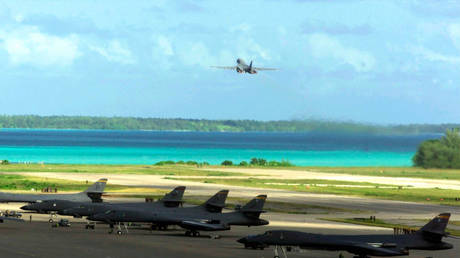
At 10:00 AM ET on April 13, 2026, the global energy market entered a period of volatility that most analysts previously dismissed as a rhetorical bluff. The United States has officially commenced a naval blockade of Iranian ports, a move that effectively attempts to surgically remove one of the world's largest oil producers from the maritime map. While the United Kingdom Maritime Trade Operations (UKMTO) confirmed that "maritime access restrictions" are now in force along the Iranian coastline, the implications go far beyond simple naval patrols. This is a high-stakes play to bankrupt a nation by choking its only viable economic artery.
The blockade, ordered by President Donald Trump following the collapse of peace negotiations in Islamabad led by Vice President JD Vance, represents a fundamental shift in how the West interacts with Tehran. Unlike previous sanctions regimes that relied on financial pressure and diplomatic shaming, this is a kinetic enforcement of isolation. The United States Navy is no longer just watching; it is actively intercepting.
Beyond the Exclusion Zone
The geography of this operation is meticulously designed to maximize economic pain while technically avoiding a total closure of the Strait of Hormuz—an act that would constitute a declaration of war against every energy-dependent nation on earth. The blockade targets Iranian ports, oil terminals, and coastal facilities specifically. According to CENTCOM, the enforcement applies "without distinction to vessels of any flag."
This means a Greek-owned tanker or a Chinese-flagged VLCC (Very Large Crude Carrier) attempting to dock at Kharg Island now faces the same reality: a "right of visit" procedure from a US destroyer that likely ends in a forced turnaround or seizure. The UKMTO has been blunt in its warnings to mariners, noting that while transit passage for non-Iranian destinations remains theoretically open, the density of military presence makes any movement through the region a gamble.
The "why" behind this sudden escalation is rooted in the failure of the "Pakistan Rounds." Negotiations faltered primarily over Iran's refusal to dismantle its nuclear infrastructure, which Tehran views as its ultimate insurance policy. Washington, having grown tired of what it terms "endless cycles of bad-faith stalling," has pivoted to a strategy of total economic strangulation.
The Ghost Fleet and the Technology of Enforcement
For years, Iran has relied on a "dark fleet" of aging tankers to move its crude. These vessels operate with transponders turned off, often using spoofed AIS (Automatic Identification System) data to appear as though they are in the South China Sea when they are actually loading in the Gulf.
The US Navy is countering this with a massive deployment of unmanned surface vessels (USVs) and persistent aerial surveillance. This is not 1942; you cannot hide a 300-meter tanker from modern thermal imaging and satellite synthetic aperture radar. The blockade is being enforced through a "layered sensor net" that makes the old tactics of nighttime loading nearly impossible.
- Satellite Constellations: Near-real-time tracking of every hull in the Gulf.
- AI-Driven Pattern Analysis: Detecting "dark" ships by analyzing wake patterns and sea-state disruptions even when transponders are silent.
- Interception Drones: Small, high-speed USVs used to shadow and identify vessels before manned assets move in for boarding.
This technological superiority creates a digital cage. If a ship is caught paying "transit tolls" to Tehran—a common practice where Iran charges vessels for "protection" or passage—the US has signaled it will treat that vessel as a participant in the Iranian war effort.
The Reciprocity Doctrine
Tehran’s response has been predictable but dangerous. Lieutenant Colonel Ebrahim Zolfaghari of the Khatam al-Anbiya Central Headquarters stated that security in the Gulf is "either for everyone or for no one." This is not just a slogan; it is the "Reciprocity Doctrine."
If Iran cannot export oil, it intends to ensure no one else can either. We are seeing the beginning of a symmetrical escalation where Iranian fast-attack craft and "kamikaze" drones target commercial traffic destined for Saudi or Emirati ports. This creates a nightmare scenario for global insurance markets. When Lloyd’s of London marks a region as "uninsurable," the ships stop moving regardless of what the US Navy promises regarding freedom of navigation.
The risk of a miscalculation is astronomical. A single boarding operation that turns violent, or a stray missile hitting a neutral container ship, could trigger a regional conflagration that no amount of naval posturing can contain.
The Fragility of the Global Supply Chain
The immediate fallout is already visible in the commodities markets. Oil prices are not just rising; they are "gapping" higher as traders price in the total loss of Iranian barrels. But the pain isn't limited to energy. Iran is a significant exporter of urea and other fertilizers. Australia has already begun emergency measures to secure urea supplies to prevent a collapse in its agricultural transport sector.
The blockade also forces a recalculation for China. As the primary buyer of "sanctioned" Iranian oil, Beijing now faces a choice: challenge the US blockade directly, or allow its energy security to be dictated by Washington’s naval deployments. Currently, China is maintaining a cautious silence, but their history suggests they will seek back-door channels or use their own naval escorts, which would put two nuclear-powered superpowers into a direct maritime standoff.
A Strategy with No Exit Ramp
The fundamental flaw in a naval blockade is that it is a tool of attrition, not a solution. It assumes the target will break before the enforcer grows weary or the global economy collapses under the weight of $200-a-barrel oil.
The US is betting that the Iranian regime is brittle enough to fracture under this level of pressure. However, historical precedents—from the Continental System to the blockade of Cuba—suggest that such measures often entrench the targeted regime, allowing them to frame the resulting civilian hardship as an act of foreign aggression.
There is also the logistical reality of the US Navy itself. Maintaining a high-tempo blockade requires an immense amount of "on-station" time for crews and ships. With tensions also simmering in the South China Sea, the US is stretching its fleet to the breaking point. If this blockade doesn't produce a political result within ninety days, the US may find itself in a quagmire where the only options are to retreat or escalate to a full-scale kinetic strike on Iranian soil.
The blockade of Iranian ports is a gamble of historic proportions. It is a move born of frustration, executed with high-tech precision, and fraught with the potential for catastrophic failure. The waters of the Gulf have always been a graveyard for diplomatic nuance; they are now the front line of a global economic war.
The "limited grace period" for neutral vessels to depart Iranian ports is ticking away. Once those ships are out, the sea becomes a no-man's-land. We are no longer waiting for a crisis; we are in the middle of it.