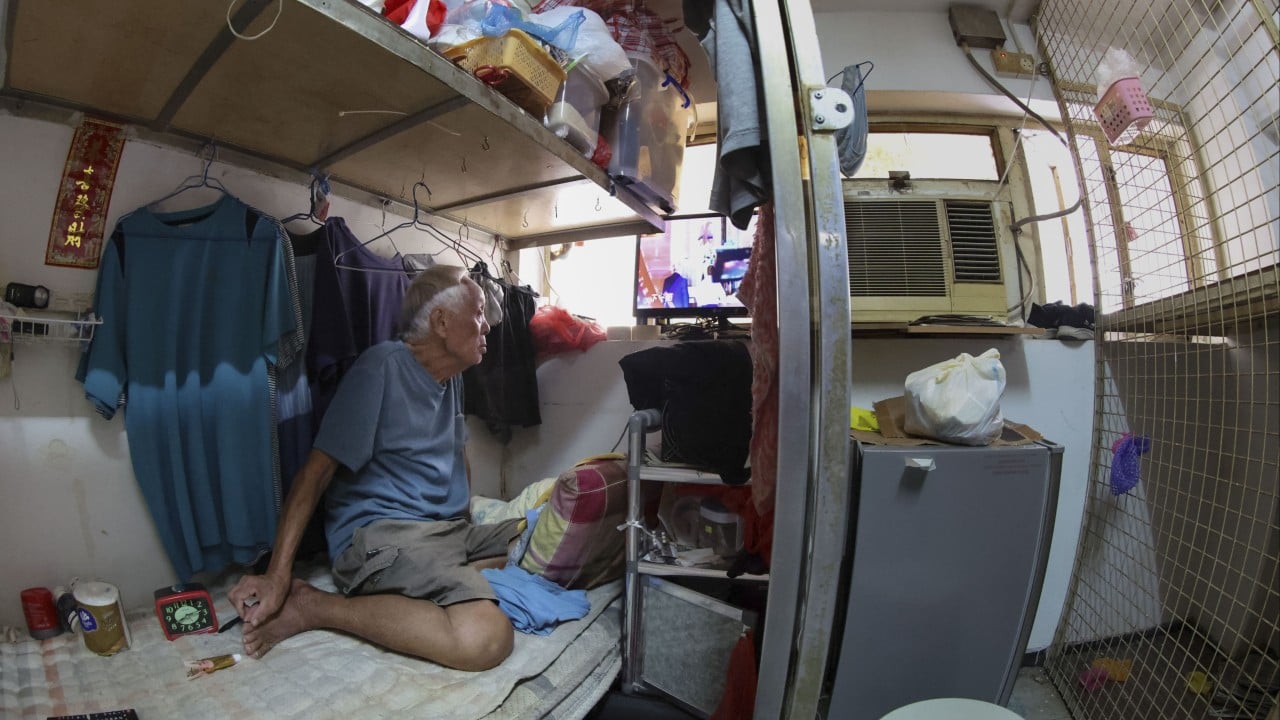
The demand for a three-year grace period by landlords representing 5,557 subdivided housing units is not a request for administrative breathing room. It is a calculated survival tactic. These property owners are currently staring down the barrel of new legislative standards designed to eradicate "coffin homes" and substandard living conditions, but the logistics of the proposed conversion suggest a massive market displacement is imminent. If the government refuses to blink, thousands of units could vanish from the supply almost overnight. If the government yields, it risks institutionalizing the very poverty traps it claims to be dismantling.
At the heart of this standoff is a fundamental clash between humanitarian standards and the cold math of urban real estate. Landlords argue that the structural requirements—minimum floor space, fire safety installations, and ventilation—cannot be met within the current proposed timelines without triggering a total collapse of the low-income rental sector. This is the reality of the Hong Kong housing crisis that few want to say out loud. The city's poorest residents rely on a shadow market that exists specifically because the formal market has failed them.
The High Cost of Minimal Standards
The proposed regulations require subdivided units to meet a minimum size of approximately 86 square feet. To a middle-class observer, this sounds like a pathetic baseline. To a landlord operating in a building from the 1960s, it is a mathematical nightmare. Many of the 5,557 units in question are currently carved into spaces significantly smaller than that. Expanding one unit means absorbing the footprint of another.
When you force a landlord to turn four units into three to meet size requirements, you aren't just asking them to pay for a renovation. You are asking them to accept a permanent 25% cut in their gross yield. These landlords are not philanthropic entities. They will attempt to recover those losses by spiking the rent on the remaining units or by exiting the market entirely to convert the property into a different asset class.
The three-year grace period is being framed as a "fix-it" window, but for many owners, it is actually an exit strategy. They need time to squeeze the remaining value out of their current configurations before the cost of compliance outweighs the potential for profit. The math of renovation involves more than just moving a few plywood walls. It requires upgrading decades-old electrical grids to support modern fire safety systems and hacking through reinforced concrete to install proper windows and drainage.
The Fire Safety Paradox
Fire safety is the primary justification for the crackdown, and rightfully so. Subdivided flats are notorious death traps during a blaze, with narrow corridors blocked by haphazardly stored belongings and internal rooms that lack any egress. However, the technical requirements for "fixing" these flats often run into a brick wall of building codes.
In many older buildings, the plumbing and ventilation systems were never designed to handle ten separate toilets and kitchenettes on a single floor. To bring 5,557 units up to code, contractors would need to overhaul the building's core infrastructure. This often requires the consent of the entire building's owners' corporation, not just the individual landlord of the subdivided units.
If a landlord wants to install a sprinkler system but the building's main water pipe lacks the pressure to support it, the project stalls. A one-year or even two-year window is a joke in the world of urban construction and permit approvals. By demanding three years, the landlords are highlighting a systemic bottleneck. They are essentially telling the government that the "fix" is physically and legally impossible under the current bureaucracy.
Market Displacement and the Empty Promise of Relocation
The biggest lie in the housing debate is that the residents of these 5,557 units will simply move into public housing once the "bad" units are closed. Public housing wait times are measured in years, often stretching past half a decade for single individuals. If these units are shuttered or renovated into higher-priced "luxury" micro-flats, the current tenants have nowhere to go.
The landlords know this. They are using the threat of mass homelessness as their primary bargaining chip. By asking for a three-year grace period, they are daring the government to be the "bad guy" who puts 10,000 people on the street. It is a hostage situation where the hostages are the city's most vulnerable laborers, cleaners, and elderly residents.
Consider the economics of a typical tenant in these units. They might be paying $4,500 HKD for a windowless cubicle. If the landlord renovates and complies with the law, the new rent will likely jump to $6,500 HKD to cover the capital expenditure and the lost volume of units. The tenant cannot afford that $2,000 HKD increase. The "fixed" housing is no longer for them. It is for a different class of renter—perhaps a struggling graduate or a young professional. The original tenant is pushed further into the margins, into even more illegal and dangerous "hidden" units that aren't on any government registry.
The Profit Margin of Poverty
We must examine why these 5,557 units exist in the first place. They exist because the "yield per square foot" on a subdivided flat is often double or triple what a landlord could get from renting the entire apartment to a single family. It is the most profitable way to own old property.
The landlords arguing for a grace period are not "mom and pop" owners who happened to find themselves in this situation. Many are professional syndicates that specialize in "poverty mining." They buy distressed assets in districts like Sham Shui Po or Mong Kok and maximize the density to an extreme degree. For these players, the grace period is a period of "milking" the asset.
If the government grants the three years, it must be paired with a rent freeze for those units. Allowing landlords to continue charging market rates for substandard housing while they "prepare" to fix it is a policy failure. It rewards the delay. Yet, a rent freeze would likely cause landlords to stop all maintenance immediately, letting the buildings rot until the deadline hits. It is a lose-lose scenario for the regulator.
The Failure of Incrementalism
The government's approach has been one of slow, incremental pressure. They hope that by setting a standard, the market will naturally move toward better quality. But the market for subdivided housing does not follow the rules of a healthy economy. It is a captive market.
When you have a captive market, the seller has no incentive to improve the product unless the alternative is total asset forfeiture. A three-year grace period is a form of incrementalism that the market will simply absorb. Landlords will spend the first two years doing nothing, and in the third year, they will lobby for another extension, citing "unforeseen economic headwinds" or a "shortage of construction labor."
We saw this pattern with the implementation of waste charging and other urban regulations. The "readiness" of the industry is a moving target that landlords will keep shifting as long as it remains profitable to do so.
Infrastructure as a Barrier to Reform
The physical reality of the buildings housing these 5,557 units is perhaps the most overlooked factor in the "fix it" debate. Many of these structures are "Tong Lau" or tenement buildings from the post-war era. Their structural integrity is already compromised by decades of unauthorized building works.
To install the required fire-rated doors and partitions—which are significantly heavier than the plywood currently used—might actually exceed the floor load capacity of the building. To provide "proper ventilation," you would need to knock holes in load-bearing external walls. In many cases, a "fix" is actually a structural risk.
The landlords’ demand for more time is often a mask for the fact that these buildings should probably be demolished and rebuilt from scratch. But redevelopment takes ten years, not three. By focusing on "fixing" the units, the government is essentially asking for a facelift on a patient with heart failure.
The Ghost of the Shadow Market
If the 5,557 units are forced to comply, and they cannot, they will go underground. We have already seen the rise of "industrial building" residential units, which are even more dangerous and harder for the authorities to track. When you tighten the noose on one segment of the illegal housing market without providing a massive influx of public supply, you simply move the problem to a darker corner.
A three-year grace period gives the government three years to build enough transitional housing to break the landlords' leverage. If the government doesn't use that time to create a state-run alternative to the subdivided flat, then the grace period is just a stay of execution for a broken system.
The landlords are betting that the government won't be ready. They are betting that in three years, the public housing queue will still be just as long, and the political will to evict thousands will be just as weak. They are playing a long game of chicken, using the residents' lives as their buffer.
Moving Beyond the Grace Period
The discussion should not be about whether the landlords get three years or two. The discussion should be about the immediate seizure of properties that fail basic life-safety checks. If a unit has no window and no fire exit, it shouldn't be "fixed" over three years—it should be vacated immediately, with the landlord footing the bill for the tenant's emergency relocation.
Putting the financial burden of relocation on the landlord, rather than the taxpayer, would suddenly make the "fix" happen much faster. As long as the landlord continues to collect rent during the grace period, they have every reason to stall. The moment the rent stops and the fines start, the three-year timeline will miraculously shrink to six months.
The 5,557 units are a test of sovereignty. Does the city belong to the people who need a roof over their heads, or to the investors who have turned a human necessity into a high-yield commodity? If the government allows the grace period without strict, punitive milestones, they have already lost the battle for the city’s soul.
Construction crews and inspectors need to be on the ground now, not in thirty-six months. The "grace" should be for the tenants who have lived in squalor, not for the owners who profited from it. Every day of delay is another day of risk for the thousands trapped in these wooden boxes.
The landlords want three years because time is money. The city should deny them that time because time, in a fire-prone subdivided flat, is life.