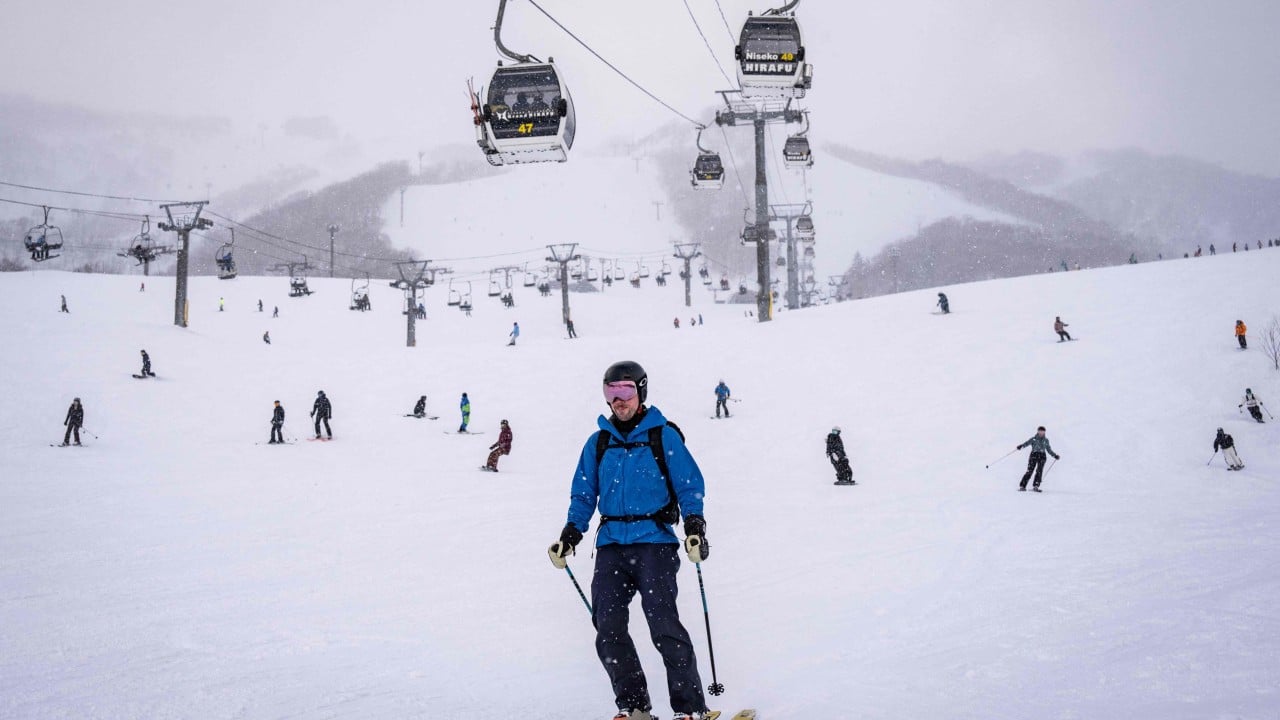
Hokkaido is currently the most expensive place to stand in a lift line in Asia. For decades, the town of Kutchan and the village of Niseko were sleepy agricultural outposts known more for potatoes than penthouses. Today, that identity is being methodically erased by a wave of global capital that has turned the region into a high-altitude laboratory for extreme inflation and social stratification. The "Japow" dream—the promise of endless, waist-deep dry powder—now comes with a price tag that is systematically excluding the very people who built the industry.
The core of the crisis is a total decoupling of local wages from the cost of living. While the yen has struggled on the international market, the internal economy of Niseko has detached itself from Japanese reality. A bowl of ramen that costs 800 yen in Sapporo or Tokyo often fetches 2,500 yen at the base of Grand Hirafu. This isn't just "resort pricing." It is a symptom of an enclave economy where the primary stakeholders no longer live in the prefecture, or even the country. Learn more on a similar subject: this related article.
The Mirage of Economic Growth
On paper, Niseko is a success story. It leads Japan in land price growth year after year. However, if you look closer at the ownership structures of the newest glass-fronted condominiums, you find a trail leading to developers in Hong Kong, Singapore, and Australia. These entities are not investing in a community; they are banking floor space.
Many of these luxury units sit empty for ten months of the year. They serve as "safe haven" assets, a way to park wealth far from the volatile regulatory environments of mainland Asia. When the owners do arrive, they exist in a bubble of private shuttles and pre-booked international catering. The local multiplier effect—the theory that tourist spending trickles down into the wider community—is failing. The money enters the resort through a foreign booking platform, stays in a foreign-owned hotel, and is spent at a restaurant staffed by seasonal workers from the Southern Hemisphere who will take their earnings home in April. Further journalism by National Geographic Travel highlights comparable perspectives on this issue.
The Staffing Breaking Point
The labor shortage in Hokkaido has moved past the point of being a mere inconvenience. It is now an existential threat to the quality of the product. Local Japanese youth cannot afford to live in the area. The "pension" style accommodations that once housed seasonal staff have been demolished to make way for boutique hotels.
To fill the gap, operators rely on a rotating door of Working Holiday Visa holders. While these workers bring energy, they lack the institutional knowledge and language skills to navigate the complexities of Japanese hospitality. We are seeing a "Disneyfication" of the mountains. The authentic omotenashi—the selfless Japanese approach to service—is being replaced by a generic, Westernized service model that you could find in Whistler or Aspen.
The friction between these temporary residents and the dwindling permanent population is palpable. In the grocery stores of Kutchan, elderly residents find themselves pushed aside by groups of young tourists who don't understand local trash sorting laws or noise ordinances. It is a slow-motion cultural collision where the locals are losing their sense of agency over their own backyard.
Infrastructure Rotting in Plain Sight
While the private sector builds skyscrapers, the public infrastructure is gasping for air. The roads leading into Niseko were never designed for the volume of heavy construction equipment and tour buses they now carry. Potholes are deep enough to swallow tires, and the snow removal budget is stretched to its limit.
The town of Kutchan faces a bizarre paradox. It sits on some of the most valuable real estate in the nation, yet its municipal coffers struggle to keep up with the demands of the boom. Property taxes from luxury developments help, but the cost of upgrading water treatment plants and emergency services to handle a seasonal population that triples the town’s size is astronomical.
There is also the matter of the Shinkansen extension. The high-speed rail link to Sapporo and eventually Tokyo is slated to arrive by 2030. While proponents argue this will bring even more wealth, skeptics point out that it may simply turn Niseko into a day-trip destination for the ultra-wealthy, further driving up prices while offering little to the people who work the lifts and clear the tracks.
The Environmental Debt
We cannot talk about Niseko without talking about the climate. The "Deep Powder" marketing machine relies on a very specific set of meteorological conditions created by cold Siberian winds hitting the Sea of Japan. These patterns are becoming less predictable.
Rain events in January, once unheard of, are becoming a seasonal anxiety. When a resort has marketed itself exclusively on "powder," a week of ice or slush is a catastrophic failure of the brand. To compensate, resorts are looking toward snowmaking technology. But snowmaking requires massive amounts of energy and water—two resources that are already under pressure. The irony is sharp: the carbon footprint of flying tens of thousands of people across the globe to a luxury hub is contributing to the very warming that threatens the snow they are coming to see.
A Two Tiered Mountain
The most visible sign of the region's polarization is the rise of "priority" access. In many Niseko resorts, the traditional lift line is being bifurcated. Those who can afford the premium can bypass the wait, creating a literal hierarchy on the slopes.
This is a fundamental shift in the culture of skiing in Japan. Historically, the mountains were a great equalizer. Whether you were a corporate executive from Tokyo or a local farmer, you stood in the same line and ate the same curry rice. That social cohesion is dissolving. The new Niseko is designed to ensure that the wealthy never have to interact with the "standard" guest. Private instructors now act as de facto bodyguards and concierges, whisking clients through secret entrances and into cordoned-off dining rooms.
The Survival of the Authentic
Is there a way back? Some smaller, family-owned operators in nearby areas like Rusutsu or Furano are watching Niseko’s trajectory with horror. They are intentionally limiting development to avoid the "Niseko Effect." They prioritize long-term sustainability and local integration over rapid capital appreciation.
For Niseko itself, the "Correction" may not come from a policy change, but from the market. As prices continue to climb, the middle-class skiers who were the backbone of the industry are looking elsewhere. They are heading to Tohoku, to Nagano, or even to emerging markets in Central Asia. If Niseko becomes a playground exclusively for the 1%, it becomes incredibly vulnerable to global economic shifts. A downturn in the Hong Kong stock market or a diplomatic rift can empty the hotels overnight.
The residents who remain are caught in a gilded cage. Their land is worth millions, but they can no longer afford to buy a loaf of bread at the local bakery. They are wealthy on paper and impoverished in practice, living in a town that increasingly feels like a movie set designed for someone else.
The next time you see a glossy ad for a Hokkaido ski tour, look past the pristine white slopes. Look at the temporary housing on the outskirts of town. Look at the "Closed" signs on the local businesses that can't find staff. Look at the faces of the people who have lived there for generations and are now wondering when they will be priced out of their own memories. The snow is deep, but it isn't deep enough to bury the structural inequality that is hollowing out the heart of Japan’s premier winter destination.
If you are planning a trip to Hokkaido, bypass the international booking conglomerates. Seek out the minshuku and the small-scale operators in the surrounding valleys who still view snow as a seasonal blessing rather than a leveraged asset. Use your currency to support the infrastructure that keeps these communities alive, rather than feeding the offshore accounts of the developers currently carving up the mountainside.
-Boeing-777-337(ER)-VT-ALN.jpg)


