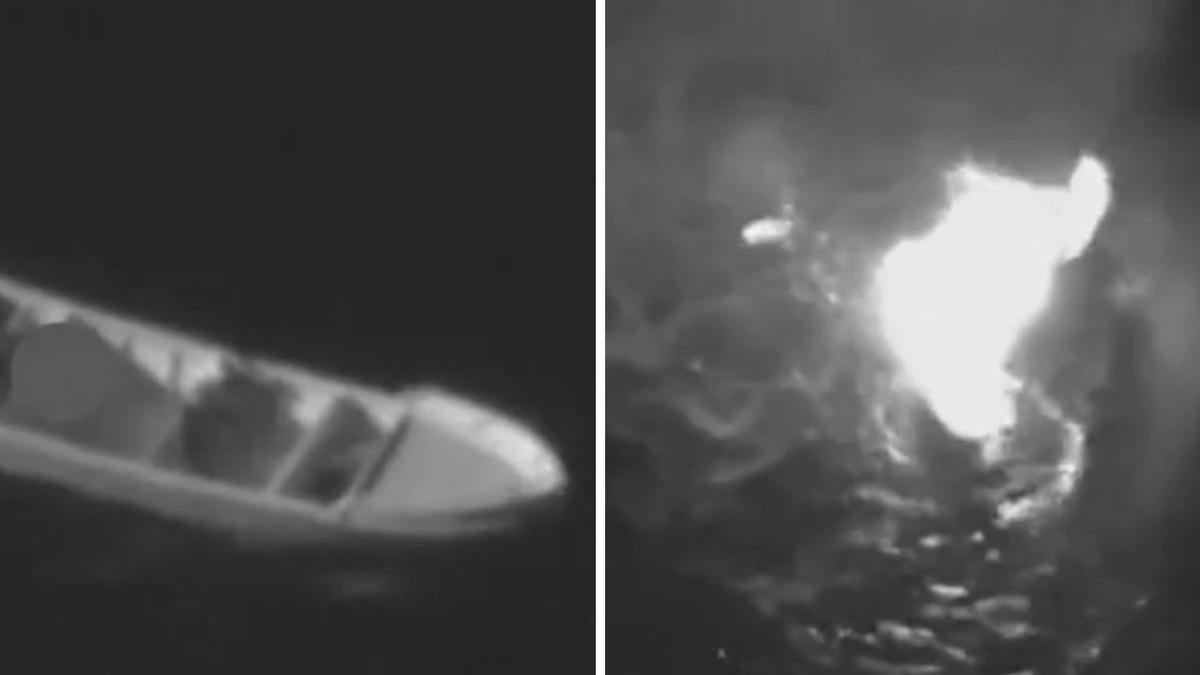
A high-stakes chase in the open ocean just ended in a body count. The U.S. military recently confirmed that strikes on suspected drug-running vessels in the eastern Pacific Ocean killed five people. Only one person survived the encounter. This isn't a scene from a movie. It's the messy, violent front line of the war on drugs that rarely makes the nightly news until something goes this wrong.
When the U.S. Navy or Coast Guard spots a "low-profile vessel"—essentially a homemade submarine-like boat—they don't have much time to react. These boats are designed to sit low in the water to dodge radar. They're often packed with tons of cocaine and manned by crews who are paid to be invisible. When the military moves in, the situation turns volatile in seconds.
Why these Pacific drug boat strikes are turning deadly
The U.S. Southern Command (SOUTHCOM) oversees these operations. They've been ramping up pressure in the eastern Pacific because that's the primary highway for cartels moving product from South America toward the U.S. border. But the tactics are getting more aggressive on both sides.
The military says the strikes were necessary. We don't always get the full picture of what "necessary" looks like on a pitching deck in the middle of the night. Usually, these engagements involve precision fire to disable engines. If a boat is moving fast or the crew shows signs of resistance, the risk of a lethal outcome skyrockets. In this specific case, the result was five dead. That’s a high price for a drug bust, and it raises questions about the Escalation of Force (EOF) protocols used in international waters.
The sole survivor is now in U.S. custody. They’ll likely face federal charges in a U.S. court. That's the standard procedure. The survivor becomes a witness, a source of intel, and a defendant all at once.
The engineering of a narco sub
You have to understand the tech these guys use. They aren't using speedboats you'd see at a lake. They use Self-Propelled Semi-Submersibles (SPSS).
These crafts are built in the jungles of Colombia or Ecuador. They’re made of fiberglass and wood. They’re cramped. They’re hot. They’re incredibly dangerous to operate even without the U.S. military shooting at them. Cartels build them for one-way trips. Once the cargo is delivered or the boat is spotted, the crew often scuttles the ship. They pull a plug, the boat sinks, and the evidence disappears into the abyss.
This scuttling tactic is exactly why these encounters get so dangerous. If a crew decides to sink their boat while the Navy is trying to board it, people get trapped. If the military fires on a boat that’s already unstable, it’s a recipe for a mass casualty event.
The role of surveillance in the eastern Pacific
The U.S. doesn't just stumble onto these boats. It’s a massive grid of surveillance.
- P-3 Orion and P-8 Poseidon aircraft fly long-range patrols.
- Drones keep eyes on the water for 24 hours at a time.
- Satellite imagery flags anomalies in wave patterns.
Once a "blip" is confirmed as a suspect vessel, a nearby destroyer or Coast Guard cutter is vectored in. The goal is a "cold hit"—stopping the boat without firing a shot. But as this latest incident shows, the "cold hit" is becoming a rarity.
The legal gray zone of international waters
Most of these strikes happen in international waters. This creates a complex legal environment. The U.S. relies on bilateral agreements with countries like Colombia and Panama to exercise jurisdiction.
Under the Maritime Drug Law Enforcement Act (MDLEA), the U.S. can prosecute anyone on a vessel that's "without nationality." If a boat doesn't fly a flag and the crew doesn't claim a country, the U.S. treats it as fair game. This law is powerful. It allows the U.S. to act as the world's maritime police. But when people die, the legal justification has to be airtight.
Critics often argue that these operations are a form of extrajudicial punishment. The military’s job isn't to be judge, jury, and executioner. Their job is to stop the flow of narcotics. When a strike results in five deaths, the line between "disabling fire" and "lethal force" gets blurry.
What happens after the smoke clears
The military usually stays quiet about the specifics of the weaponry used. We know they use everything from marksmen in helicopters to 25mm chain guns on ships. The goal is to hit the engine block. Fiberglass doesn't stop bullets. If a person is standing near that engine, they don't stand a chance.
The survivor from this strike will be interrogated by the Drug Enforcement Administration (DEA) and the FBI. They’ll want to know who built the boat. They’ll want to know the GPS coordinates of the departure point. In exchange for this info, the survivor might get a reduced sentence. It’s a cynical trade, but it’s how the system works.
The cycle of cartel adaptation
Every time the U.S. military gets better at spotting these boats, the cartels change their design.
- First, it was go-fast boats.
- Then, it was semi-submersibles.
- Now, we're seeing fully submersible vessels and "dead drops" where cargo is attached to buoys with GPS trackers.
The five people killed in this latest strike were likely low-level "mules." They aren't the kingpins. They’re the replaceable labor force of the drug trade. Losing them doesn't stop the cartel; it just changes their recruitment strategy for the next run.
Why this matters for regional stability
The eastern Pacific is a chaotic space. It's not just about drugs. These same routes are used for human trafficking and arms smuggling. By maintaining a heavy military presence, the U.S. is trying to signal dominance.
But there's a cost. Each lethal encounter stains the reputation of U.S. maritime operations in the eyes of South American partners. If the U.S. wants to keep its bilateral treaties, it has to prove it can handle these intercepts without a body count.
The public deserves more than a brief press release from SOUTHCOM. We need to know if the rules of engagement are shifting. If we're moving from "interdiction" to "elimination," that's a policy change that hasn't been debated in Congress.
Tactical takeaways for the future of maritime interdiction
Military planners are likely looking at this incident to refine their approach. Expect to see a push for more "non-lethal" tech.
- Directed energy weapons to fry the boat's electronics.
- Foulers—huge nets dropped in the water to tangle propellers.
- Increased drone use to provide better visual clarity before shots are fired.
The tech exists, but it's expensive and not always reliable in heavy seas. Until those tools become standard, the military will keep using what it knows: kinetic force.
If you're following these developments, look at the quarterly reports from the U.S. Coast Guard and SOUTHCOM. They track the tonnage of seized drugs versus the number of "disrupted" missions. The "disrupted" category is where these stories hide.
Don't expect the violence to stop. As long as the demand for cocaine remains high and the "narco sub" remains the best way to move it, these high-seas showdowns will keep happening. The only question is how many more people will die before the tactics change. Check the official SOUTHCOM newsroom for updates on the survivor's legal status and any further transparency on the rules of engagement used in this strike.