The twelve-day mark of the joint American and Israeli offensive against Iranian infrastructure has moved past the initial shock of "limited" strikes and into a phase of systemic dismantlement. While early reports focused on specific missile sites or the elimination of localized command hubs, the current theater shows a much wider, more permanent intent. The objective is no longer deterrence. It is the physical removal of Iran’s ability to project power across the Middle East. This transition from a defensive posture to an offensive campaign of attrition marks the most significant shift in regional security since the 1967 war.
To understand why this is happening now, one has to look at the collapse of the "shadow war" doctrine. For years, Tehran and its adversaries engaged in a carefully choreographed exchange of proxy attacks and targeted assassinations that stayed just below the threshold of open conflict. That era is dead. On day twelve, the operational tempo suggests that Washington and Jerusalem have calculated that the risk of a full-scale regional collapse is now lower than the risk of allowing Iran to remain a nuclear-threshold state with an intact ballistic inventory. Also making headlines lately: The Kinetic Deficit Dynamics of Pakistan Afghanistan Cross Border Conflict.
The Infrastructure of Collapse
The bombardment has transitioned from the "low-hanging fruit" of mobile launchers to the deep-tissue targets that sustain a modern military. Intelligence analysts point to a specific pattern in the last forty-eight hours: the systematic targeting of the Iranian energy grid and internal communications hubs. This isn't just about stopping missiles. It is about severing the nervous system of the Islamic Revolutionary Guard Corps (IRGC).
When you take out a power station in Isfahan or a fiber-optic node in Tehran, you aren't just darkening homes. You are forcing military commanders to use unencrypted, secondary radio channels that are easily intercepted. This creates a feedback loop of vulnerability. The more the IRGC tries to coordinate a defense, the more electronic signatures they emit, which leads to the next wave of precision strikes. It is a meat grinder of modern signals intelligence. Additional insights regarding the matter are covered by Reuters.
The human cost is, as always, the silent variable. While the Pentagon emphasizes the use of precision-guided munitions to minimize "collateral damage," the reality of urban warfare is rarely so clean. In the densely packed neighborhoods surrounding the Parsian oil refinery and various military-industrial complexes, the line between combatant and civilian has blurred into a gray zone of smoke and rubble.
The Proxy Paradox and the Failure of the Ring of Fire
Tehran’s primary defense strategy for the better part of two decades was the "Ring of Fire"—a network of armed proxies in Lebanon, Yemen, Iraq, and Syria designed to overwhelm Israeli defenses. On day twelve, that ring is not just fraying; it is being incinerated.
Hezbollah, long considered the crown jewel of Iranian influence, has found its logistical lines from Damascus severed. The Israeli Air Force has turned the border crossings into a graveyard of burnt-out transport trucks. Without a steady supply of fresh munitions and Iranian technicians, Hezbollah's ability to launch sustained rocket volleys has plummeted. They are firing in spasms, not salvos.
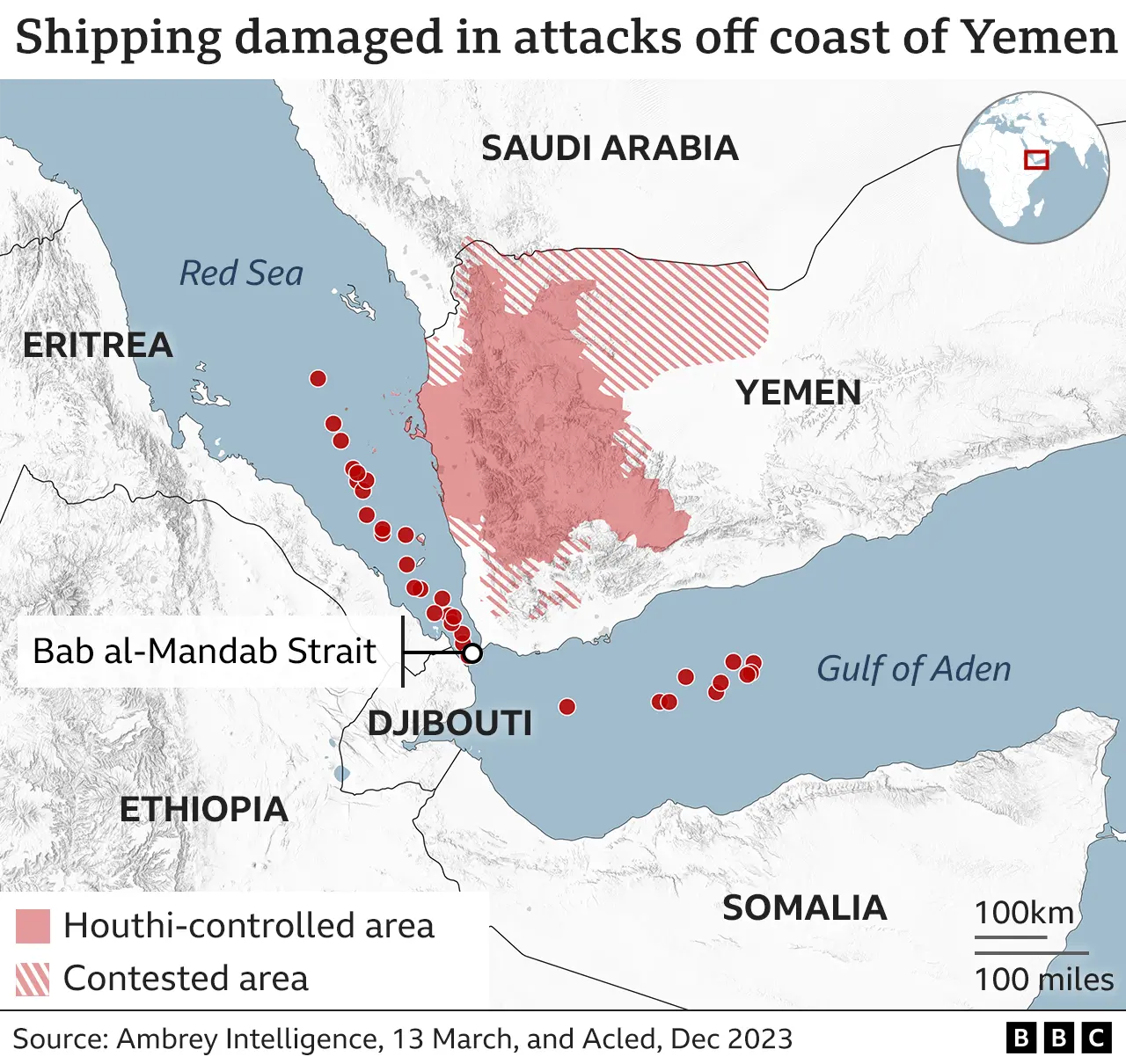
In Yemen, the Houthis remain a wild card, but their distance from the primary theater limits their impact. They can harass shipping in the Red Sea, but they cannot save the IRGC command structure in Tehran. The "unity of fronts" that Iranian generals boasted about has failed to materialize as a cohesive military force. Instead, each proxy is fighting for its own survival, trapped in its own localized nightmare.
The Economic Death Spiral
Wars are won with steel, but they are sustained with cash. Iran was already reeling from years of sanctions before the first bombs fell twelve days ago. Now, with its primary export terminals in the Persian Gulf either damaged or blockaded, the Iranian rial has entered a terminal freefall.
Markets don’t wait for official casualty counts to decide who is winning. The black market rate for currency in Tehran suggests a total loss of public confidence in the regime’s ability to weather this storm. If the government cannot pay its security forces, the internal threat from a restless, impoverished population becomes more dangerous than any F-35.
Historical precedent shows that regimes rarely collapse solely from external bombing. They collapse when the internal organs of the state—the police, the mid-level bureaucrats, the soldiers—realize that the "center" can no longer provide for them. We are seeing the early stages of that realization.
The American Calculation and the End of Restraint
For years, the United States acted as a brake on Israeli ambitions regarding Iran. The Biden-Harris administration, and those before it, prioritized "de-escalation" above all else. That policy was vaporized the moment the scale of Iranian-backed regional instability threatened the global energy supply chain.
The shift in Washington wasn't sudden. It was a slow-motion pivot born of exhaustion. The American intelligence community finally reached a consensus that "containment" had failed. The current strikes represent a total commitment to a new reality: the only way to stabilize the Middle East is to break the Iranian government's ability to destabilize it.
This is a high-stakes gamble. There is no guarantee that a weakened Iran leads to a peaceful region. A power vacuum in Tehran could trigger a civil war that makes the Syrian conflict look like a minor skirmish. Yet, the planners in the Pentagon seem to have decided that a chaotic Iran is preferable to a nuclear-armed Iran led by an apocalyptic clergy.
Tactical Innovations on the Modern Battlefield
This twelve-day campaign has served as a live-fire laboratory for technologies that were, until recently, theoretical. We are seeing the first large-scale use of AI-integrated drone swarms designed to hunt mobile missile launchers in the Iranian desert. These are not the slow-moving "moped drones" used in Ukraine. These are high-speed, autonomous hunters that can communicate with each other to map out enemy radar coverage in real-time.
- Autonomous Suppression: Drones are being used to force Iranian air defense batteries to "light up," exposing their positions to long-range stealth aircraft.
- Cyber-Kinetic Integration: Strikes are timed to coincide with the "glitching" of Iranian command-and-control software, creating a window of total blindness for the defenders.
- Hardened Target Penetration: The use of specialized "bunker busters" has targeted the Fordow and Natanz facilities, signaling that even hundreds of feet of rock are no longer a sanctuary.
The Nuclear Question
The elephant in the room remains the Iranian nuclear program. For twelve days, the world has held its breath, wondering if the strikes would directly target the known enrichment sites. Reports now suggest that the "outer shell" of these programs—the research labs, the centrifuge manufacturing plants, and the homes of the lead scientists—have been systematically erased.
Removing the physical capacity to enrich uranium is one thing. Removing the knowledge is another. You cannot bomb an equation. Even if every centrifuge is crushed, the intellectual blueprint for a weapon remains. This is why the current offensive is focused so heavily on regime change by proxy of total systemic failure. The goal is to ensure there is no state left with the resources or the will to build the bomb.
The Silence of the Neighbors
Perhaps the most telling aspect of day twelve is the relative silence from the rest of the Arab world. While there are the expected diplomatic condemnations for the sake of public consumption, the private reality is far different. From Riyadh to Abu Dhabi, there is a quiet, tense hope that the Iranian threat will finally be neutralized.
The "Abraham Accords" were the diplomatic precursor to this military reality. The regional powers have shifted their priorities from the Palestinian cause to a pragmatic alliance against Iranian hegemony. This has left Tehran isolated in a way it has never been before. Russia is too distracted in Europe to provide more than rhetorical support. China is too concerned with its own economic stability to risk a direct confrontation with the US over a failing gas station in the Gulf.
The Point of No Return
We are past the point where a ceasefire returns the world to the status quo. The damage to Iran’s military infrastructure is so extensive that it would take decades and hundreds of billions of dollars to rebuild. The regional balance of power has been forcibly reset.
The coming days will likely see an intensification of the "decapitation" strategy—the targeting of senior IRGC leadership in their bunkers. The objective is to trigger a total breakdown in the chain of command, leaving the rank-and-order soldiers with no choice but to abandon their posts.
The war is no longer about day twelve or day thirteen. It is about the decades of fallout that will follow the collapse of the post-1979 order. The "Grand Bargain" is dead. The "Shadow War" is over. What remains is the cold, hard math of a superpower and its regional ally deciding that the cost of war is finally lower than the cost of a fragile, deceptive peace.
The next phase will not be fought with missiles, but with the inevitable internal power struggle that occurs when a revolutionary state realizes its revolution is finally out of breath.
Would you like me to map out the specific logistical bottlenecks in the IRGC's domestic supply chain that are currently being targeted by these strikes?