The Echo in the Diplomatic Hall
In the gilded rooms of the Elysée Palace, words are weightless. They are drafted by aides, polished by consultants, and delivered with the practiced cadence of a statesman who believes his voice can steady a tilting world. But as those words travel east, crossing the Mediterranean and the jagged borders of the Levant, they gain a terrifying mass. By the time they reach the marble halls of Tehran, they have transformed from diplomatic suggestions into something much sharper.
When Emmanuel Macron speaks about the escalating violence in West Asia, he is not just delivering a speech. He is pulling a thread on a tapestry that has been unraveling for a century.
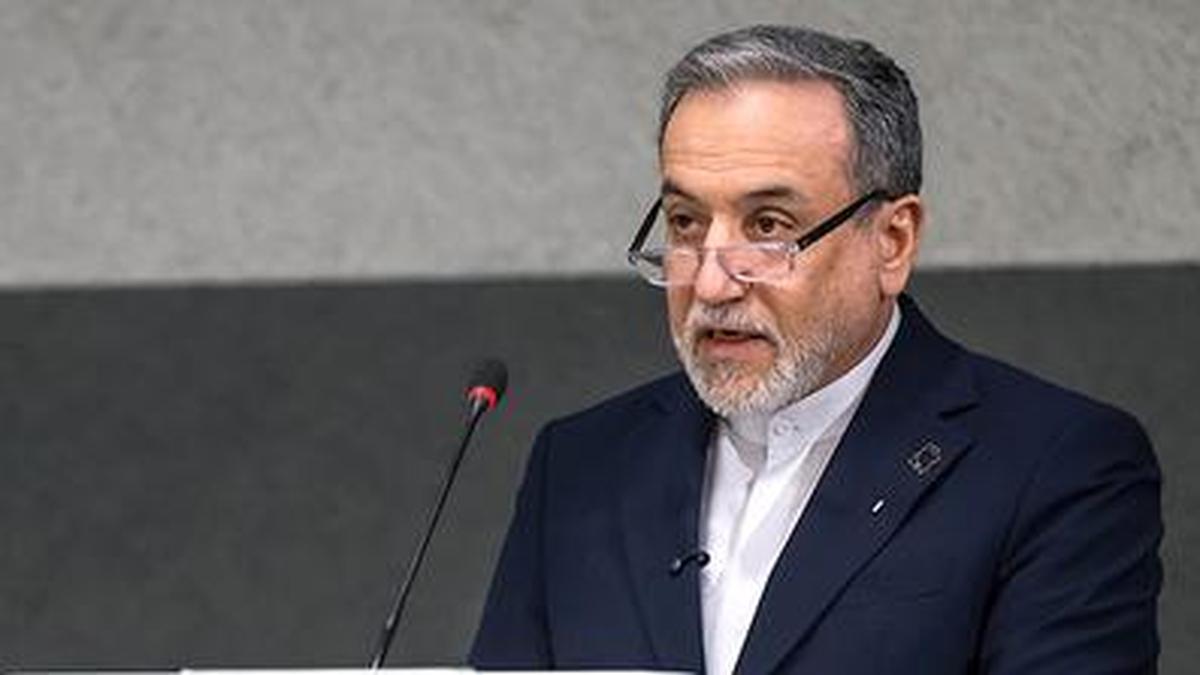
Recently, the French President took a stance that sent ripples through the Islamic Republic. He spoke of "restraint" and "civilizational values," terms that sound noble in a Parisian cafe but feel like a provocation to a nation that views itself as the primary defender of a besieged region. Tehran did not just disagree. They slammed the door. The Iranian Foreign Ministry’s response was not a mere rebuttal; it was a rejection of the West's right to define the rules of a war it does not have to bleed in.
The View from the Rooftop
Consider, for a moment, a hypothetical man named Elias.
Elias lives in a suburb of Beirut, a city that has become the unwilling stage for this grand geopolitical theater. He does not read the official communiqués of the French government, nor does he study the transcripts of the Iranian Foreign Ministry. He reads the sky. He listens to the hum of drones and the distant, rhythmic thud of artillery.
To Elias, Macron’s calls for a "balanced" approach feel like a cruel joke. Balance is a luxury for those who are not falling. When France suggests that Iran is the "root" of the region's instability, Elias sees a history of colonial maps and failed interventions. When Iran fires back, accusing France of "hypocrisy" and "fanning the flames" of Israeli aggression, Elias sees two giants shouting over his head while his windows rattle in their frames.
This is the human cost of the "slam." It is not just a headline. It is the widening gap between the people living the conflict and the leaders debating it from a distance. Iran’s fiery rhetoric against Macron is grounded in a deep-seated belief that Europe is playing a double game—acting as a humanitarian arbiter while providing the diplomatic cover and military hardware that keeps the engines of war running.
The Ghost of the Mandate
To understand why Iran reacts with such visceral intensity to French intervention, one must look past the 24-hour news cycle. History is the ghost in the room.
France was once the "protector" of the Levant. Following World War I, the Sykes-Picot Agreement and the subsequent French Mandate over Lebanon and Syria carved up the region into manageable squares. To the Iranian leadership, Macron’s current posturing is a spectral return of that colonial ego. They see a leader who believes he still holds the keys to a house he was evicted from decades ago.
Iran’s spokesperson, Nasser Kanaani, didn’t just criticize Macron’s policy; he questioned his "moral authority." This is a specific, calculated jab. It suggests that France has lost its standing as a neutral mediator. By aligning so closely with the narrative of "defense" while ignoring the structural causes of the regional fire, France has, in Tehran's eyes, forfeited its seat at the table of peace.
Politics is rarely about the truth. It is about the perception of truth.
The Language of the Red Line
The disagreement centers on a specific, jagged reality: the definition of a "terrorist" versus a "resistance fighter."
Macron speaks of the need to dismantle groups like Hezbollah and Hamas to ensure regional security. He frames it as a logical necessity for a modern world. But to Iran, these groups are the "Axis of Resistance." They are the only shield against what they perceive as an expansionist Western project.
When Macron warns Iran to "cease its influence," he is asking a revolutionary state to stop being revolutionary. It is like asking a fire not to be hot.
The friction is not just over what is being done, but how it is being described. Iran’s rebuke of France is a defense of their regional architecture. They argue that France is ignoring the "sovereign rights" of people to defend their land. They point to the mounting casualties in Gaza and Lebanon as evidence that the West's "values" are selective.
Is it possible for a leader in Paris to truly grasp the desperation of a father in a refugee camp? Or for a cleric in Tehran to understand the security fears of a family in Tel Aviv? The distance is too great. The signals are distorted by the time they arrive.
The Invisible Stakes
Behind the shouting match between Paris and Tehran lies a much quieter, more dangerous reality. Every time a diplomatic channel is severed, a door to a peaceful resolution is locked.
When Iran "slams" France, it isn't just a PR move. It is a signal to the militias, the proxies, and the underground movements that the time for talking is over. It is a green light for escalation. If France is no longer a credible interlocutor, then there is no one left to answer the phone when the crisis reaches a breaking point.
We are watching the death of nuance.
Macron’s attempt to walk a middle ground has left him stranded in a no-man’s-land where neither side trusts him. The "West Asia war stance" he hoped would project strength has instead highlighted a profound European irrelevance in the face of raw, ideological power. Iran knows this. Their public lashing of the French President is an exercise in exposing that weakness.
The Sound of the Last Gavel
The tragedy of this diplomatic spat is that it treats a burning region like a chess board.
We talk about "stances," "slams," and "rebukes" as if they are the moves in a game. But there are no winners here. There is only the slow, grinding erosion of the international order.
If France cannot speak to Iran, and Iran will not listen to France, the only language left is the language of the missile. It is a loud, final tongue that requires no translation. It doesn't care about "civilizational values" or "revolutionary dignity." It only knows how to destroy.
As the sun sets over the Mediterranean, the lights in the Elysée stay on. The lights in Tehran’s Foreign Ministry stay on. They will continue to draft their statements, each one more "robust" and "firm" than the last. They will continue to slam one another in the press, scoring points with their respective bases while the world watches with bated breath.
But in the suburbs of Beirut, Elias is not waiting for a statement. He is moving his family into the basement. He knows that when the giants stop talking, the sky begins to fall.
The air is cold. The silence between the explosions is the loudest thing in the world. It is a silence that no diplomatic "stance" can fill, and no "slam" can break. It is the sound of a world that has run out of words.


