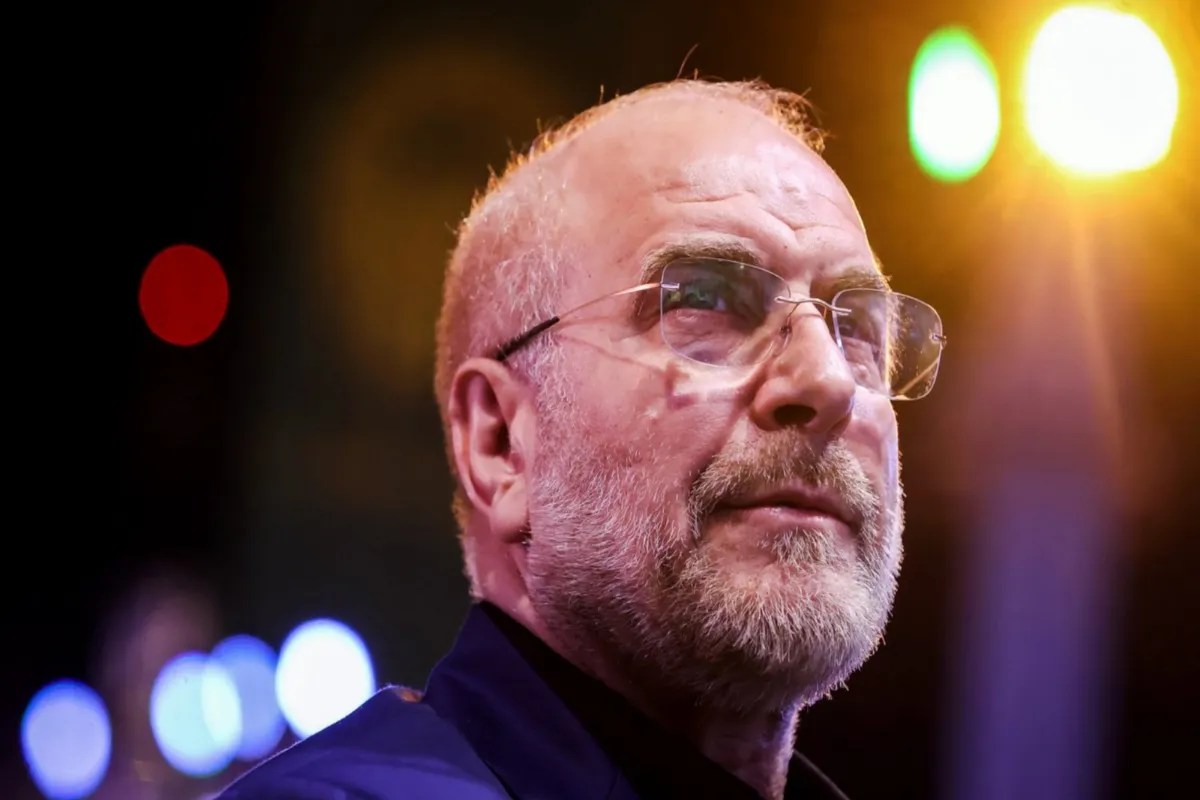
The salt air in Port Louis doesn't care about diplomatic protocols. It clings to the crisp white shirts of dignitaries just as aggressively as it does to the rusted hulls of the fishing trawlers bobbing in the harbor. When S. Jaishankar stepped off the plane in Mauritius for the 9th Indian Ocean Conference, the cameras captured the usual optics: the handshake, the red carpet, the curated smiles of a "strategic partnership." But maps are deceptive things. They suggest that the Indian Ocean is a void—a vast, blue emptiness between landmasses where people actually live.
The truth is much louder.
To understand why a foreign minister flies thousands of miles to a small island nation, you have to look past the press releases. You have to look at the water. For the people of Mauritius, the ocean isn't a "strategic theater." It is the grocery store, the highway, and the graveyard. It is everything.
The Weight of the Water
Consider a hypothetical fisherman named Aarav. He lives on the coast of Mauritius, waking up at four in the morning to a sky the color of a bruised plum. For generations, his family knew the currents like the veins on the back of their hands. But lately, the sea feels like a stranger. Strange ships—massive, gray, and silent—flicker on the horizon. The fish are moving. The storms are getting meaner.
When Jaishankar talks about "Enhanced Strategic Partnership," he isn't just talking to politicians in wood-paneled rooms. He is, effectively, talking to Aarav.
India and Mauritius share more than just a historical lineage or a postal code in the Global South. They share a vulnerability. The 9th Indian Ocean Conference (IOC) arrives at a moment when the world is looking elsewhere—at the grinding gears of Eastern Europe or the volatile sands of the Middle East. Yet, the heartbeat of global trade pulses right here. If the Indian Ocean catches a cold, the rest of the world stops breathing.
The "enhanced" part of this partnership isn't just a buzzword. It represents a shift from polite cooperation to a frantic, necessary intertwining. India is no longer just a "big brother" in the region; it is an anchor. As the two nations discuss maritime security and connectivity, they are trying to ensure that the "Blue Economy"—a fancy term for making sure the ocean stays alive and profitable—doesn't collapse under the weight of geopolitical greed.
The Ghost in the Machine of Diplomacy
Diplomacy is often seen as a game of chess, but in the Indian Ocean, it’s more like a game of Jenga. You pull one block—a fishing treaty here, a radar installation there—and the whole tower wobbles.
The 9th IOC isn't just a meeting; it's an admission. It’s an admission that no single nation, no matter how many aircraft carriers it possesses, can police the blue frontier alone. We often think of borders as lines drawn in the dirt. But how do you draw a line in a wave?
Jaishankar’s arrival signifies a specific kind of Indian intent. For years, India was accused of being "land-locked" in its thinking, obsessed with the Himalayas and the plains. That has changed. The gaze has shifted south. Mauritius is the gateway. If India wants to be a global power, it has to prove it can be a reliable neighbor to a country that could fit inside the city limits of New Delhi several times over.
The stakes are invisible until they aren't. We don't think about undersea cables until the internet goes dark. We don't think about shipping lanes until the price of a gallon of milk doubles. We don't think about maritime security until a pirate skiff or a rogue "research vessel" appears where it shouldn't be.
The Architecture of Trust
Building a partnership isn't about signing a piece of paper. It’s about infrastructure. During this visit, the discussions moved toward the tangible: community development projects, health care, and the digital bridges that allow a student in a Mauritian village to access the same information as a coder in Bengaluru.
India has been pouring resources into Mauritius, not as charity, but as an investment in a shared future. When India provides a patrol boat or helps build a hospital, it’s creating a debt of gratitude, yes, but it’s also creating a standard. It says: "We are the partner that shows up when the tide rises."
But there is a tension here. Small island nations are tired of being treated as "unsinkable aircraft carriers" for larger powers. They have their own agency. Mauritius knows its worth. It sits at the crossroads of Africa, Asia, and the Middle East. It is a prize, and as Jaishankar knows, prizes require constant polishing.
The skeptics will say this is just more talk. They’ll point to the slow pace of bureaucracy and the overlapping interests of other giants like China. They aren't entirely wrong. The ocean is big enough for everyone, but the "strategic space" is getting crowded. The real test of this 9th conference won't be the final communique. It will be whether or not the joint projects actually break ground, and whether the maritime domain awareness—the ability to see what’s happening on the water in real-time—actually gets shared.
The Human Cost of Silence
What happens if these talks fail?
If the "Enhanced Strategic Partnership" remains a collection of syllables in a briefing folder, the vacuum won't stay empty. Unregulated fishing will strip the reefs bare. Narcotics will continue to flow through the porous maritime borders. And most importantly, the sense of security that allows a region to thrive will evaporate.
I remember talking to a trader who moved goods between Mumbai and Port Louis. He didn't care about "geopolitics." He cared about the insurance premiums on his cargo. He cared about whether his ship would be detained or harassed. To him, Jaishankar’s visit was a signal to the insurance companies and the banks. It was a signal that the adults were in the room, trying to keep the lanes open.
The 9th Indian Ocean Conference is an attempt to turn a wild, lawless frontier into a regulated neighborhood. It is an attempt to prove that democracy and development can provide a better deal than the transactional, often predatory, alternatives.
The Unwritten Chapters
As the sun sets over the Le Morne Brabant mountain, the shadow stretches across the water toward the Indian subcontinent. The history of these two places is written in the sweat of indentured laborers and the dreams of traders who crossed the "Kala Pani" (Black Water).
Today, that water isn't black; it’s a terrifyingly clear blue that reveals everything beneath the surface.
Jaishankar isn't just there to advance a partnership. He is there to ensure that the story of the Indian Ocean remains one of cooperation rather than conflict. The "strategic" part is the hardware—the ships, the satellites, the radars. The "partnership" part is the software—the trust, the shared history, the mutual understanding that if one sinks, the other is pulled down by the wake.
The conference will end. The delegates will fly home. The red carpets will be rolled up and stored in some dark basement in Port Louis. But the ocean remains. It is a restless, shifting giant that demands constant attention.
We often make the mistake of thinking that history is made by the loudest voices. In reality, it is made by the steady, quiet work of maintaining the things we take for granted. Like the right to sail a boat. Like the safety of a harbor. Like the word of a friend across a vast, unforgiving sea.
The horizon is a line that moves as you move toward it. You never actually reach it. You just keep sailing, hoping the person at the other end of the radio is still listening.
The salt air continues to bite into the metal of the ships in the harbor, a reminder that nothing is permanent unless it is constantly maintained. The water is waiting. It always is.