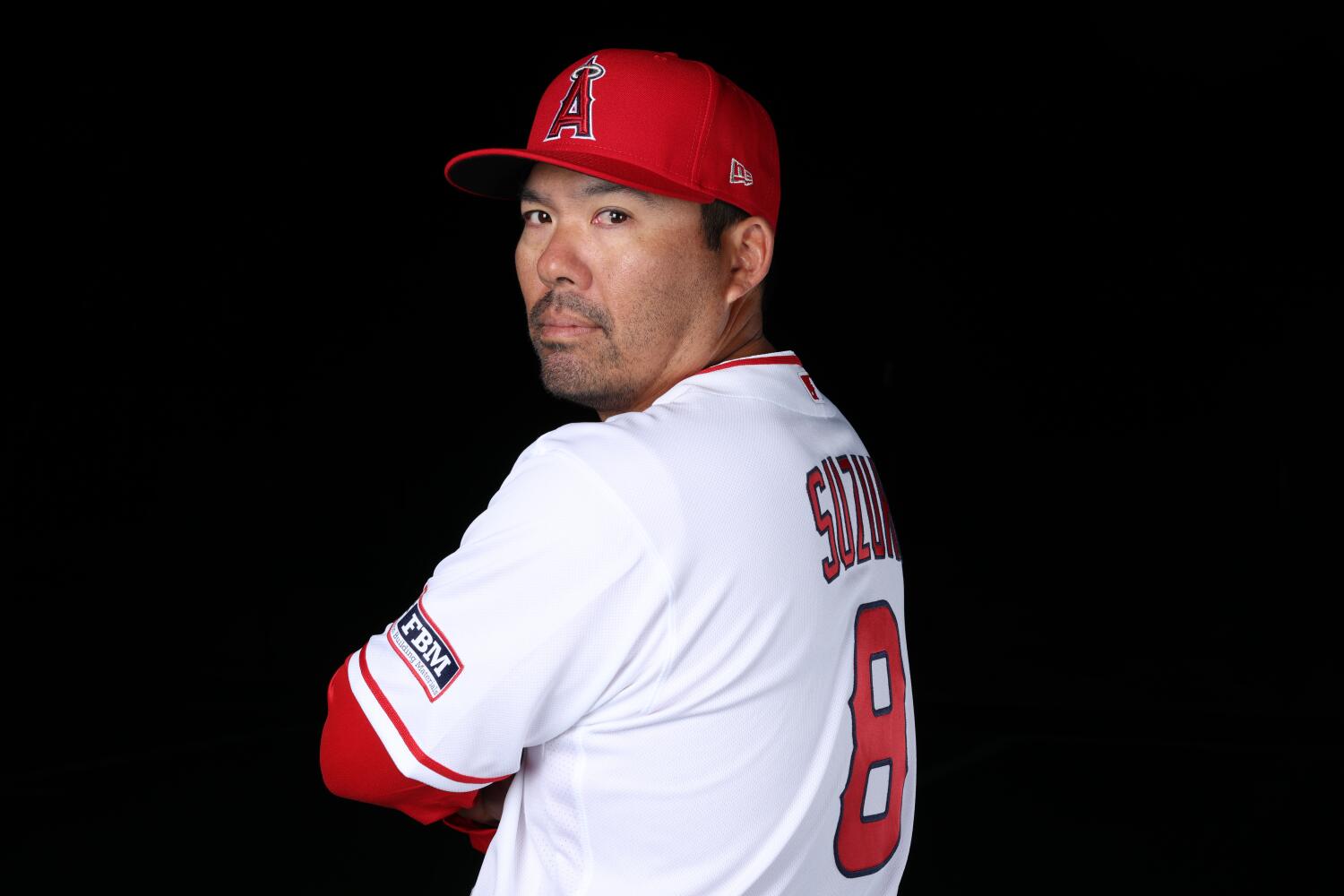
The Los Angeles Angels are not a baseball team. They are a high-end luxury tax sinkhole masquerading as a professional sports franchise. While the rest of the league plays chess with advanced biomechanics and predictive roster modeling, Arte Moreno’s front office is still trying to win a pennant with the 1990s "vibes and veterans" playbook.
Hiring Kurt Suzuki to manage this ship isn't a bold new direction. It is a white flag.
The mainstream media narrative is already predictable. You’ve seen the headlines: "Veteran Catcher Brings Leadership to Clubhouse," or "Suzuki’s Relationship with Pitchers Key to Ending Drought." It’s a comforting lie. It suggests that the Angels’ failure—a decade-long spiral into irrelevance despite rostering two of the greatest players to ever touch a diamond—can be fixed by a guy who knows how to frame a low fastball.
It can't. Suzuki is being set up as the fall guy for a structural rot that no amount of "clubhouse presence" can scrub away.
The Catcher-to-Manager Myth
Baseball has a fetish for former catchers. The logic is that because they spent their careers staring at the entire field, they possess a mystical, innate understanding of game management. Bruce Bochy did it. Mike Scioscia did it. Joe Torre did it.
But looking at a problem doesn't mean you know how to solve it.
The modern MLB manager isn't a "skip" who chews tobacco and yells at umpires. They are a middle manager. They are a human interface for a massive data department. They translate complex probability distributions into actionable instructions for 22-year-olds. Suzuki, a man who spent twenty years in the dirt, is now expected to walk into a room and master a technological ecosystem that the Angels have notoriously underfunded for years.
If you want to win in 2026, you don't hire a guy because he’s "well-liked." You hire a guy who understands why a pitcher’s horizontal break is dying in the fourth inning and has the authority to pull him before the three-run blast happens. Suzuki’s hire is a pivot back to "gut feel" in an era where the gut is a statistical liability.
The 11-Year Hangover
Let’s talk about the drought. It is the longest active streak in the league. It is a masterpiece of incompetence.
The Angels have spent over $2 billion on payroll since their last playoff appearance in 2014. They didn't lose because they lacked leadership. They lost because they have zero developmental depth. When you look at the Los Angeles Dodgers or the Atlanta Braves, you see a conveyor belt of league-minimum talent stepping in to replace injured stars.
The Angels? They have a crater where their farm system should be.
When Mike Trout or Anthony Rendon—the most expensive benchwarmer in sports history—inevitably hits the IL, the Angels fill the gap with waiver-wire scraps and aging veterans on one-year "prove it" deals. Hiring Suzuki does nothing to fix the fact that the roster is top-heavy and structurally brittle. You are putting a new hood ornament on a car with no transmission.
The Rendon Albatross and the Ghost of Ohtani
The real tragedy isn't the manager. It’s the math.
The Angels are currently paying Anthony Rendon roughly $38 million a year to play, on average, 50 games a season. That is nearly 20% of their payroll tied up in a player who has openly admitted that baseball isn't his top priority.
In any other industry, this would be a catastrophic breach of fiduciary duty. In Anaheim, it’s just Tuesday.
The departure of Shohei Ohtani should have been the moment the franchise admitted defeat and entered a total rebuild. Instead, they’ve doubled down on mediocrity. By hiring Suzuki, they are trying to signal to a frustrated fanbase that they are "competing." They aren't. They are treading water in a division where the Rangers and Astros are built for sustained dominance.
A real contrarian move would have been trading Trout two years ago while his value was astronomical, gutting the front office, and hiring a 30-year-old nerd from the Rays' pitching lab to run the whole show. But Moreno is terrified of a "bad" season, so he settles for a decade of "okay" ones.
The Problem with Being "One of the Boys"
The biggest argument for Suzuki is his rapport with players. This is actually his biggest weakness.
A manager needs to make cold, calculated decisions that make players unhappy. He needs to tell a veteran he’s being benched for a rookie with better peripherals. He needs to pull a starter who thinks he still has "stuff" left.
When you hire a guy who was in the locker room with these players as a peer just a few years ago, you aren't hiring a leader. You’re hiring a friend. And friends don't make the cutthroat decisions required to win 90 games in the American League West.
I’ve seen this play out in corporate turnarounds. The "internal hire" who everyone loves almost always fails to execute the layoffs or structural shifts needed to save the company. They are too tied to the existing culture. And the Angels' culture is one of losing with high-priced dignity.
The Tactical Void
What is the Suzuki Philosophy?
Does he believe in the opener? Does he favor aggressive base running despite the Angels' poor sprint speeds? Does he understand the shift-restriction nuances that have changed the infield defensive requirements?
The competitor's fluff piece won't tell you, because they don't know. Suzuki doesn't have a managerial track record. He has a "good guy" track record. In the high-stakes environment of modern baseball, "good guy" is a synonym for "unprepared."
Consider the 2024 season. The teams that overperformed were the ones that maximized every 1% edge. The Brewers used a revolving door of pitchers to stay fresh. The Guardians utilized elite bullpen management to steal one-run games.
The Angels, under Suzuki, are likely to revert to traditionalism. They will let starters go too long. They will bunt in situations where the expected run value says to swing. They will play "the right way," and they will finish 74-88.
Stop Asking if He Can Lead
The "People Also Ask" sections are filled with nonsense like "Can Kurt Suzuki fix the Angels' pitching staff?"
The answer is a hard no. A manager doesn't fix a pitching staff; a pitching coach and a scouting department fix a pitching staff. The Angels' staff is a collection of mid-rotation arms being asked to play like aces. No amount of catcher-whispering is going to turn a 92-mph fastball into a 98-mph heater with elite vertical carry.
The premise of the question is flawed. We are looking for a savior in the dugout when the problem is in the owner’s suite. Arte Moreno’s refusal to invest in a modern analytics infrastructure means that whoever manages this team is flying blind compared to their rivals.
If you want to fix the Angels, you don't hire Suzuki. You sell the team. You move the operations to a facility that isn't twenty years behind the curve. You stop signing 30-year-old free agents to seven-year deals.
The Brutal Reality of the 2026 Season
Expect a "honeymoon" period. The fans will cheer for Suzuki because they remember him as a gritty player. The media will write fluff pieces about the "new energy" in spring training.
Then, June will hit.
The injuries will pile up. The lack of depth will expose the bullpen. The superior scouting of the Mariners and Astros will neutralize the Angels' predictable offense. And Kurt Suzuki will sit in the dugout, looking at a roster he can't fix, wondering why he took the job.
The Angels aren't looking for a manager to win a World Series. They are looking for a manager to manage the decline. Suzuki is the perfect choice for that because he’s a likable face for a franchise that has lost its soul.
Stop buying the "veteran leader" narrative. It’s a marketing gimmick designed to sell tickets to a fanbase that deserves better. The Angels are a cautionary tale of what happens when celebrity and nostalgia are prioritized over process and evolution.
Kurt Suzuki isn't the solution. He is the final, undeniable proof that the Angels have no idea what the problem actually is.


