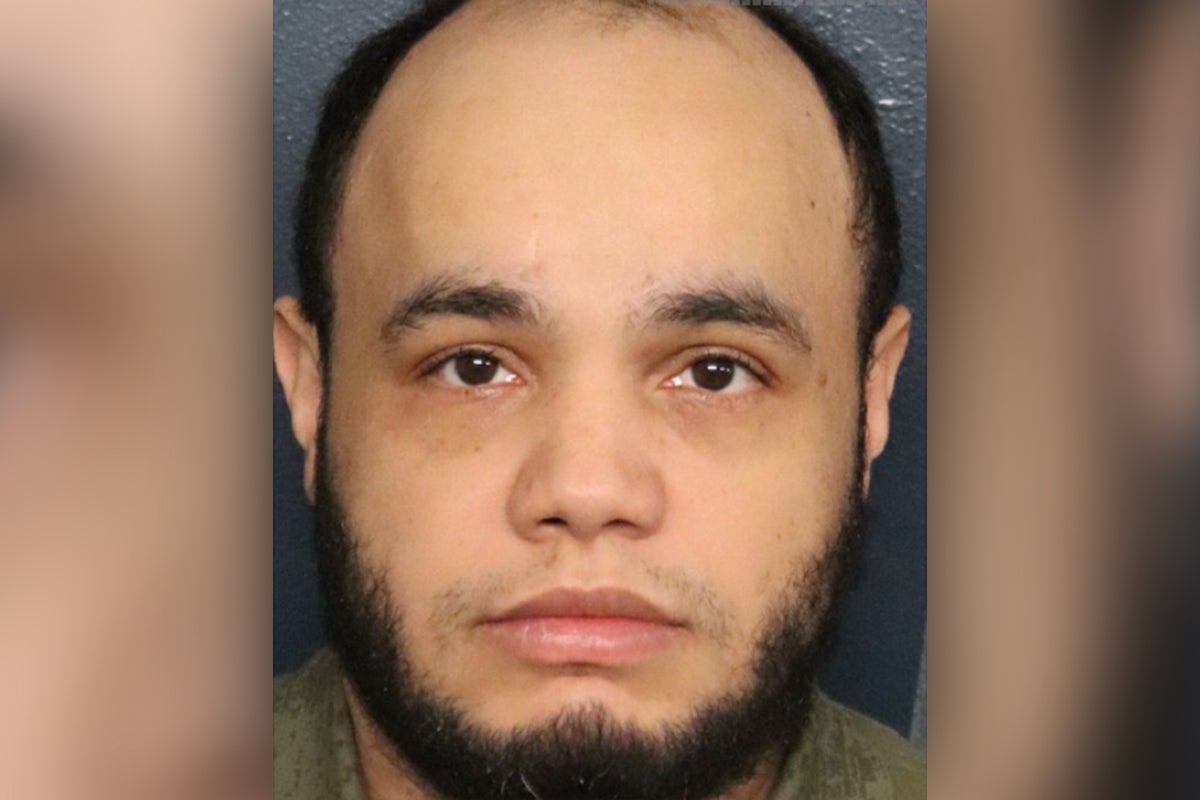
In five days, an unidentified man walked into six different banks across the most expensive real estate in Manhattan, demanded cash, and walked away with a total of $605. That is not a typo. It is a rounding error for the institutions he targeted. It is less than the cost of a single month’s groceries for a family of four in the outer boroughs.
This string of attempts across the Upper East Side and Midtown represents more than just a failure of criminal execution. It is a window into a dying "industry." The classic American bank robbery, once the centerpiece of noir cinema and FBI priority lists, has been gutted. It wasn’t just the police who ended it. The digital transformation of the financial sector and the post-pandemic hardening of urban architecture have turned the stick-up man into a desperate ghost chasing a currency that barely exists in physical form anymore.
When this individual entered a Chase branch on East 72nd Street or a TD Bank on Third Avenue, he wasn't fighting a vault. He was fighting an algorithm and a society that has largely moved past paper money.
The Shrinking Margin of Error
The mechanics of these six attempts reveal a pattern of diminishing returns that borders on the absurd. In most of the encounters, the suspect passed a note—the traditional "silent" method—and was simply rebuffed. At several locations, he walked out empty-handed because the teller refused to comply or claimed they didn't have the cash.
There is a gritty irony here. In the 1970s, a bank robber could expect to net the equivalent of $30,000 to $50,000 in adjusted dollars from a successful mid-tier branch hit. Today, the average haul from a bank robbery in the United States has plummeted to less than $4,000. In New York City, where security protocols are among the most stringent in the world, that number is often much lower.
Banks have shifted their defensive strategy. They no longer rely solely on armed guards—who are expensive and create liability. Instead, they use environmental design.
- Time-delay safes ensure that even if a teller wanted to hand over a massive stack of hundreds, they literally cannot.
- Minimal cash drawers are now the industry standard, with most physical currency moved to automated recyclers that require multiple authentication steps.
- High-definition facial recognition and 360-degree overhead arrays make the "getaway" almost impossible in a city blanketed by the NYPD’s Domain Awareness System.
The man who hit six banks for $605 wasn't just unlucky. He was operating on an obsolete mental map of how money works.
The Logistics of a Failed Spree
Let’s look at the timeline. Between a Tuesday and a Saturday, this individual struck locations including a Citibank on Park Avenue and an HSBC. To hit six locations in that timeframe requires a level of persistence that suggests absolute desperation rather than professional calculation.
In the world of professional theft, there is a concept known as the Risk-to-Reward Ratio.
If you rob a federal bank, you are facing a minimum of 10 to 20 years in a federal facility. To accept that risk for $100—which was his take at one specific branch—is a sign of a broken system. We are seeing the "retailization" of bank robbery. It has devolved from a high-stakes heist into a desperate form of panhandling with a high probability of life imprisonment.
Most modern bank robbers are not the sophisticated "heat" style crews of the past. They are often individuals struggling with severe mental health crises or acute substance withdrawal. They target banks because banks are perceived as places where "the money is," ignoring the reality that the money is actually in the cloud, protected by encrypted ledgers, not in the teller's top drawer.
Why the Banks Don't Fight Back
You might wonder why, after the first three failed attempts, this man wasn't caught mid-act during the fourth or fifth. The answer lies in the de-escalation policies of modern financial institutions.
Banks have done the math. The $605 lost in this spree is a microscopic fraction of the cost of a shootout or a hostage situation. If a teller is handed a threatening note, the instruction is almost always the same: give them a small, controlled amount of "bait money" and get them out of the building.
The goal is to move the threat from the lobby to the street, where the NYPD's massive surveillance net can take over. By the time this suspect walked out of his sixth target, his image was already being cross-referenced against every database in the tri-state area. The banks didn't "lose" $605. They paid $605 to ensure their employees remained safe and the suspect remained a tracked entity rather than a cornered animal.
The Illusion of the Cash Economy
We are currently living through the final act of physical currency dominance. In Manhattan, many retail businesses have attempted to go completely cashless, only stopped by city ordinances requiring them to accept legal tender. Banks are following suit by becoming "financial centers" rather than "vaults."
The Digital Wall
When you walk into a modern bank branch today, you are walking into a showroom. The actual cash-on-hand is kept to a functional minimum.
- ATM Dominance: Most cash transactions are handled by machines that are bolted to the floor and reinforced with manganese steel.
- Digital Transfers: High-value transactions are handled via wire or ACH, leaving nothing for a physical thief to grab.
- Traceability: Even the cash that is handed over is often tagged with GPS trackers or dye packs that render the currency useless within seconds of exiting the radius of the door.
The man who tried to rob six banks in five days was chasing a ghost. He was looking for the wealth of the 20th century in a 21st-century fortress of glass and silicon.
The Social Cost of the $100 Felony
This spree highlights a grim reality of urban life. When the barrier to entry for a "bank heist" is simply a handwritten note and a hoodie, it reflects a collapse in the social safety net. A person willing to risk decades in prison for the price of a cheap dinner is someone for whom the future has ceased to exist.
Law enforcement officials often see these "note-passers" as the most tragic and unpredictable element of the precinct. They aren't looking for a "score." They are looking for a solution to the next six hours of their lives.
The $605 represents more than a series of crimes. It is a metric of desperation in a city where the cost of living has outpaced the ability of the marginalized to survive. While the headlines focus on the audacity of hitting six banks in a week, the real story is the pitiful amount that prompted the risk.
The Institutional Response
Expect to see even more barriers in the coming months. Banks are already experimenting with friction-based entry, where customers must scan a chip-enabled card just to enter the vestibule. We are moving toward a reality where "the bank" is no longer a public space.
If you want to understand the future of crime, don't look at the man with the note. Look at the empty teller windows and the "By Appointment Only" signs. The physical bank robbery is being engineered out of existence, not by better locks, but by the total disappearance of the prize.
The next time a desperate soul walks into a Chase branch with a note, he might find that there isn't even a human there to read it. He will be standing in a lobby of screens, holding a piece of paper in a world that only recognizes data.
Go to your local branch and look at the teller's desk. Notice how little is actually there. That is the architecture of a world that has decided some people are no longer worth the risk of a robbery.